
A Pair of Engravings of a Neo Classical Urns by G.B. Piranesi/F. Piranesi
$3,500.00
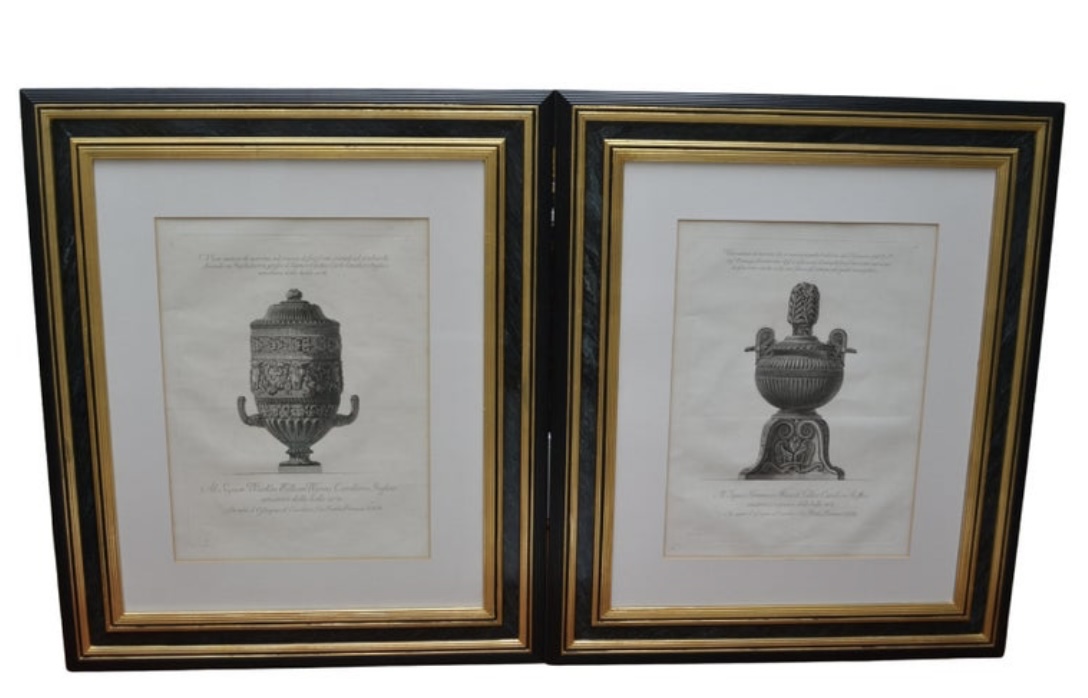
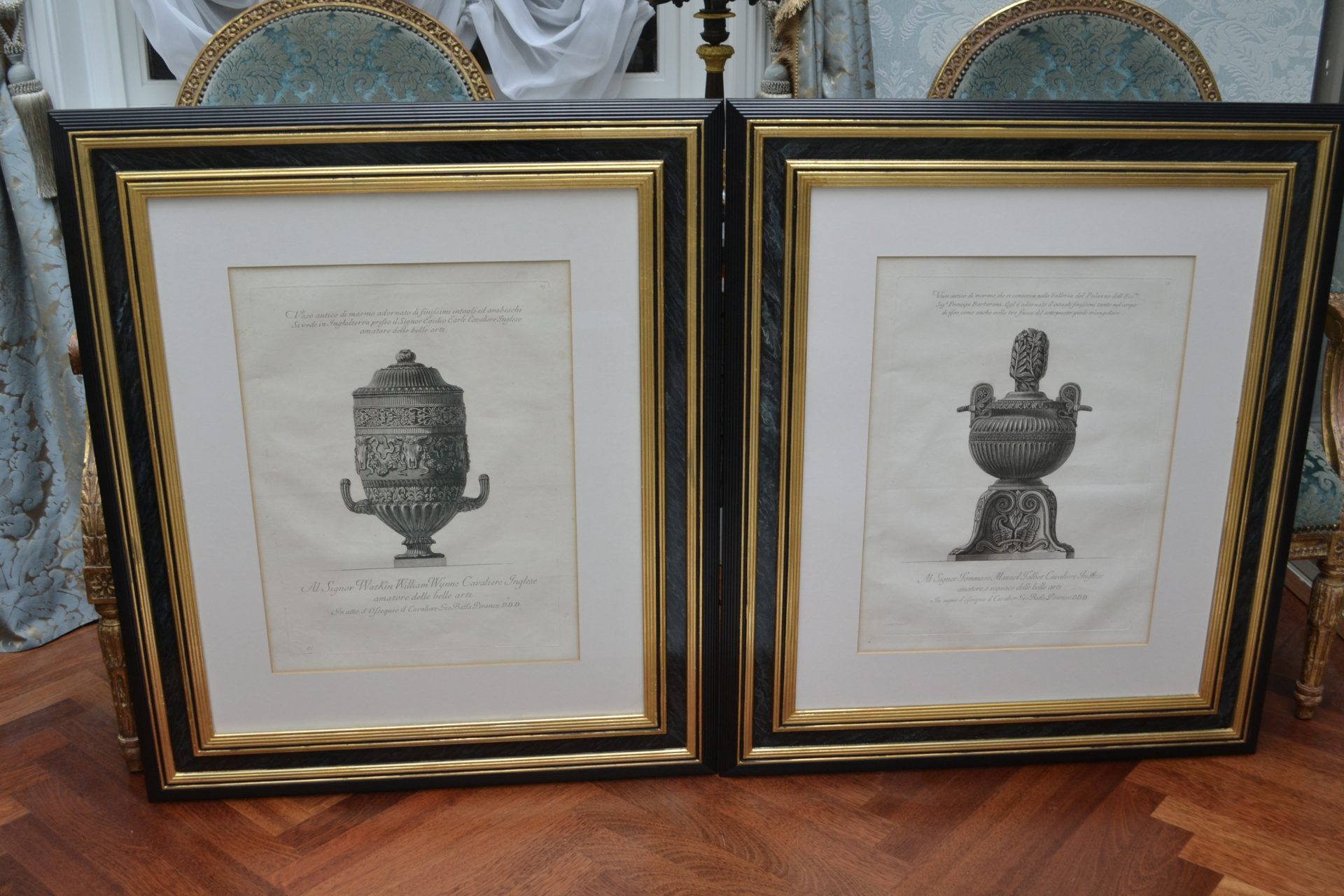
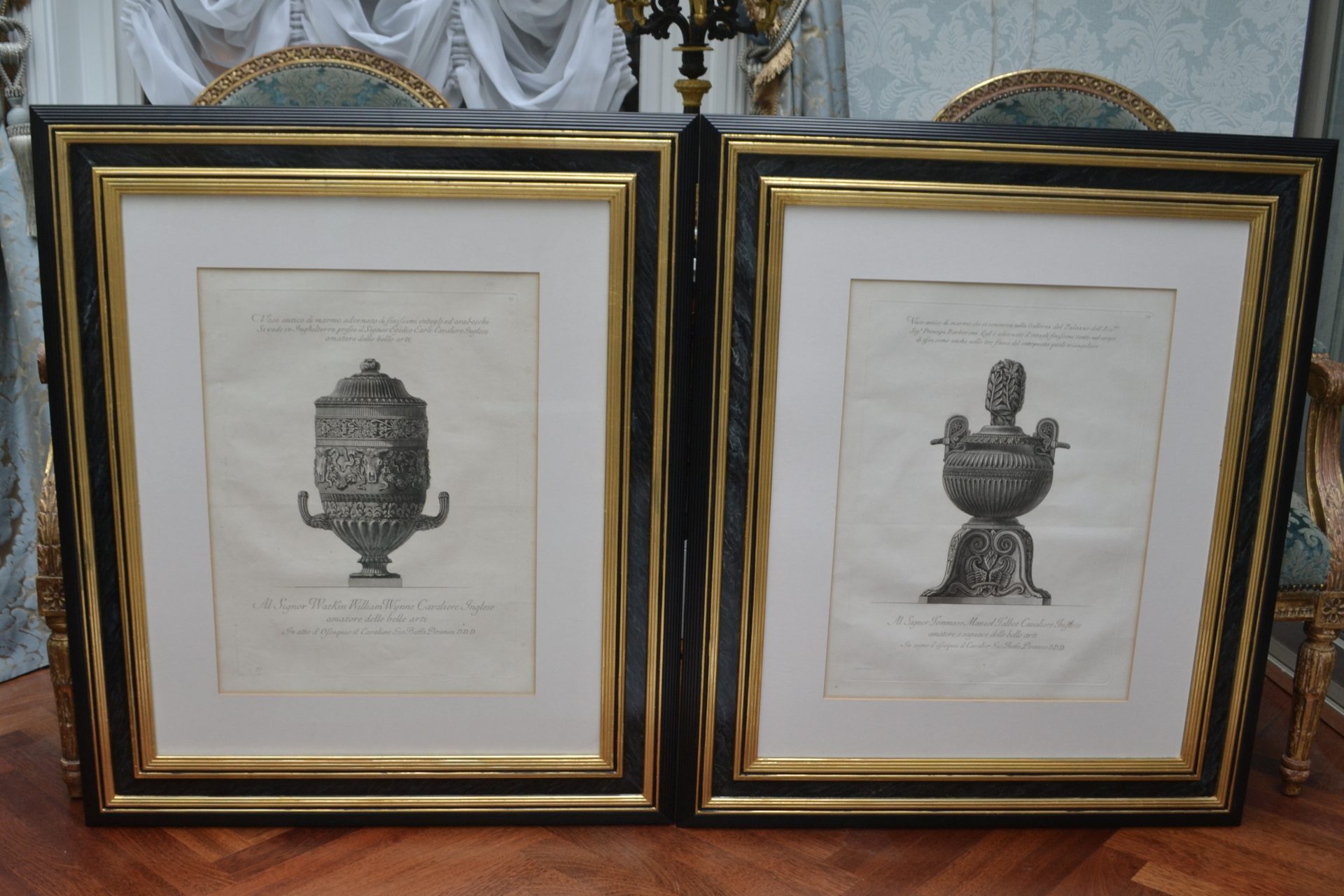
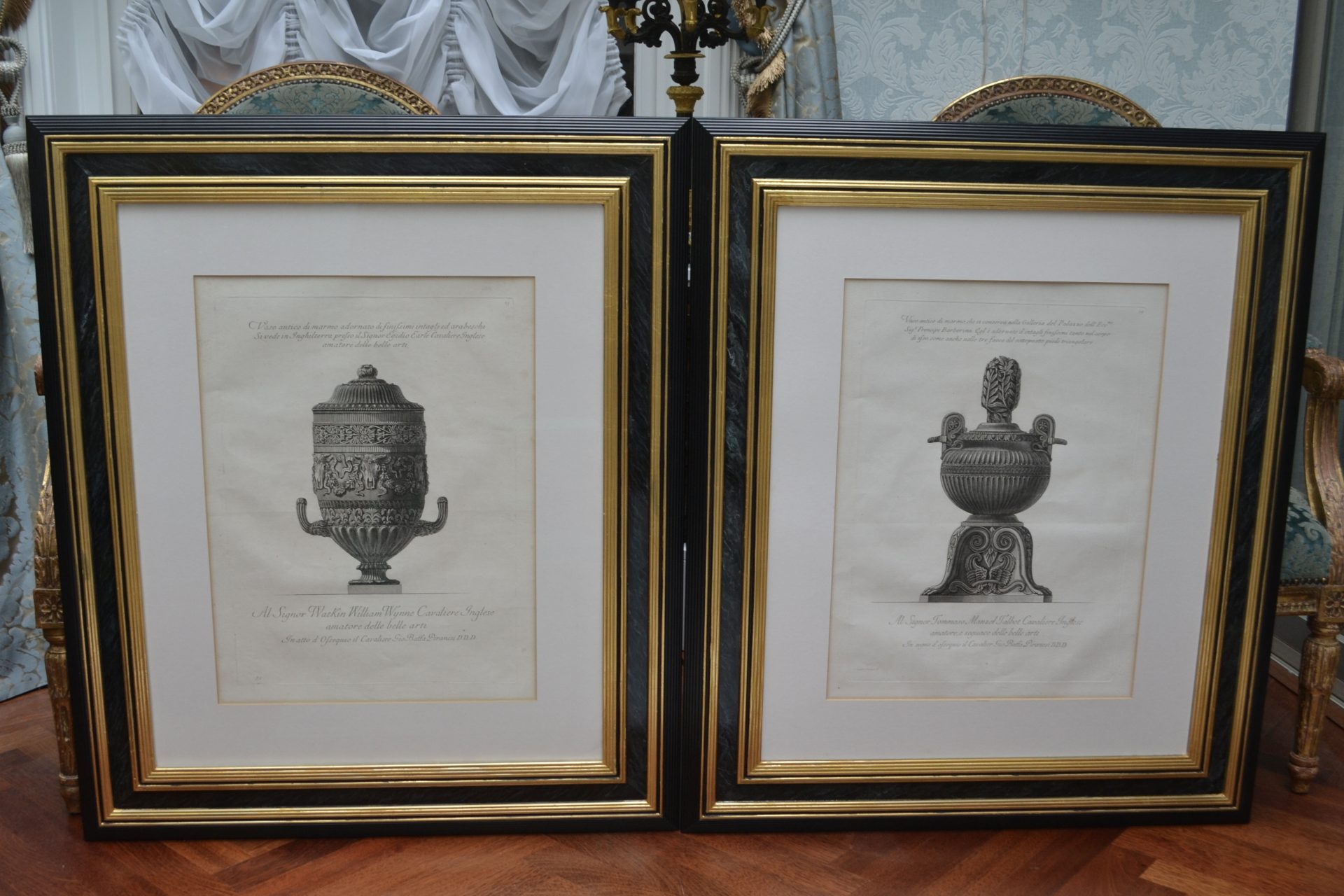
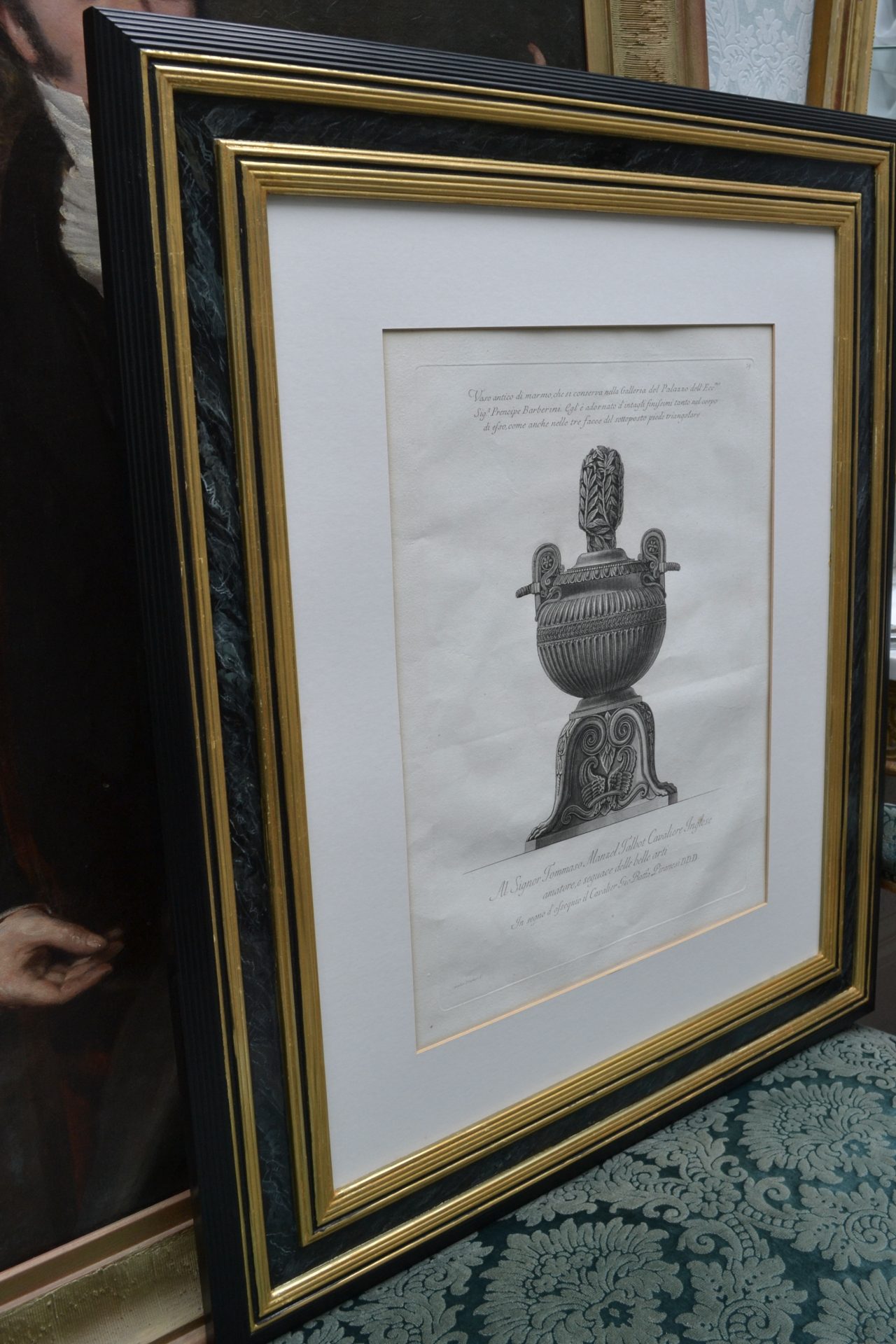
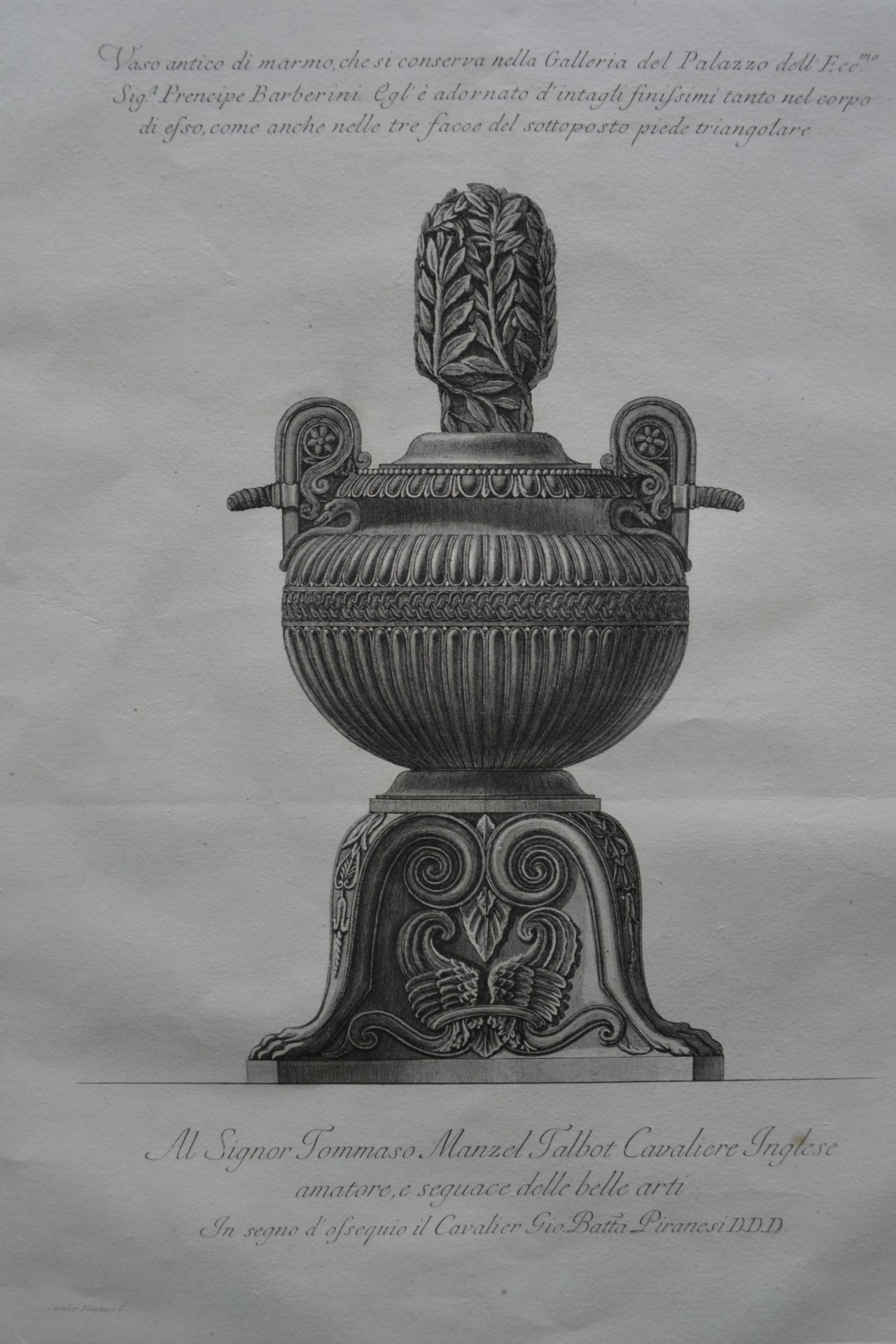
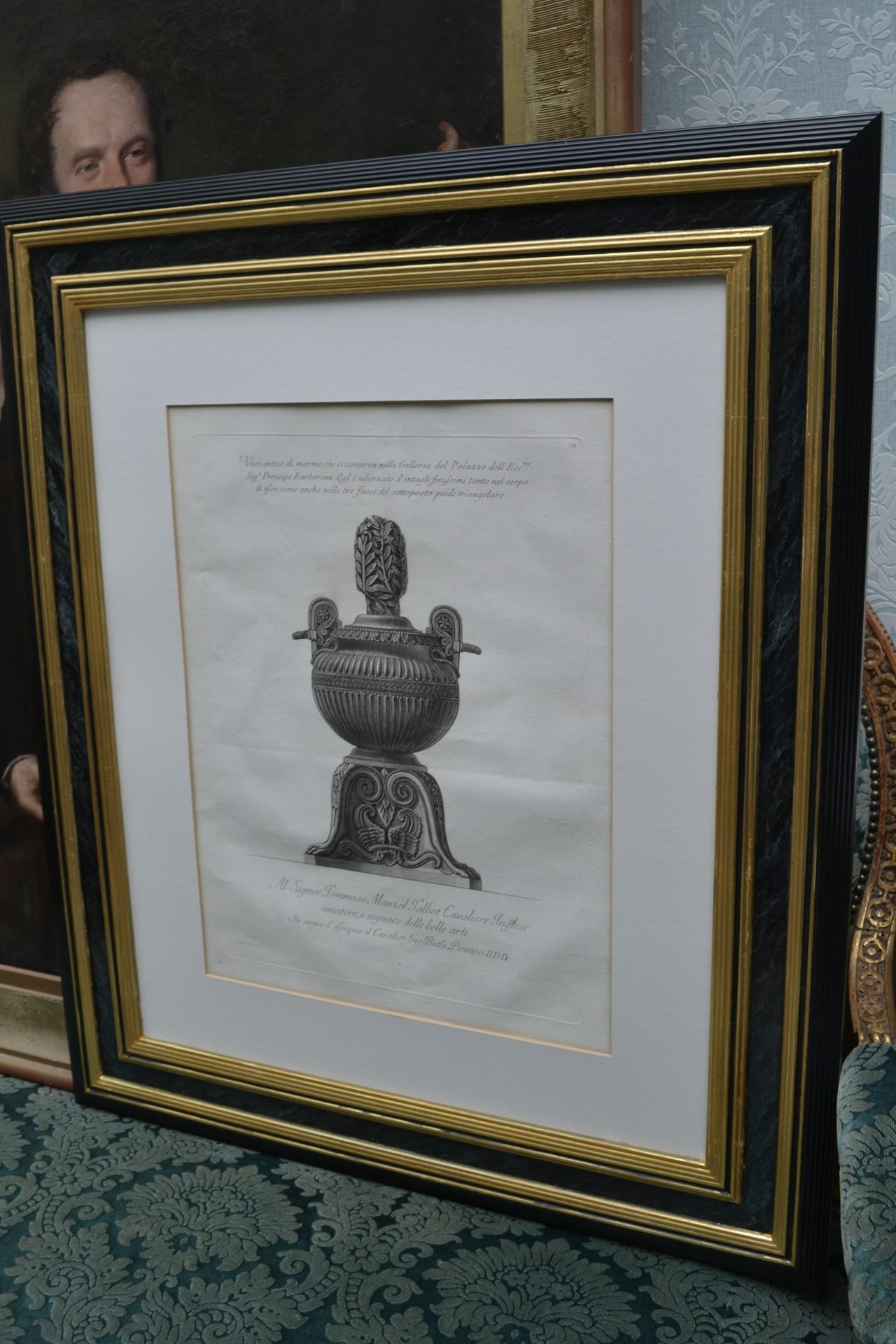
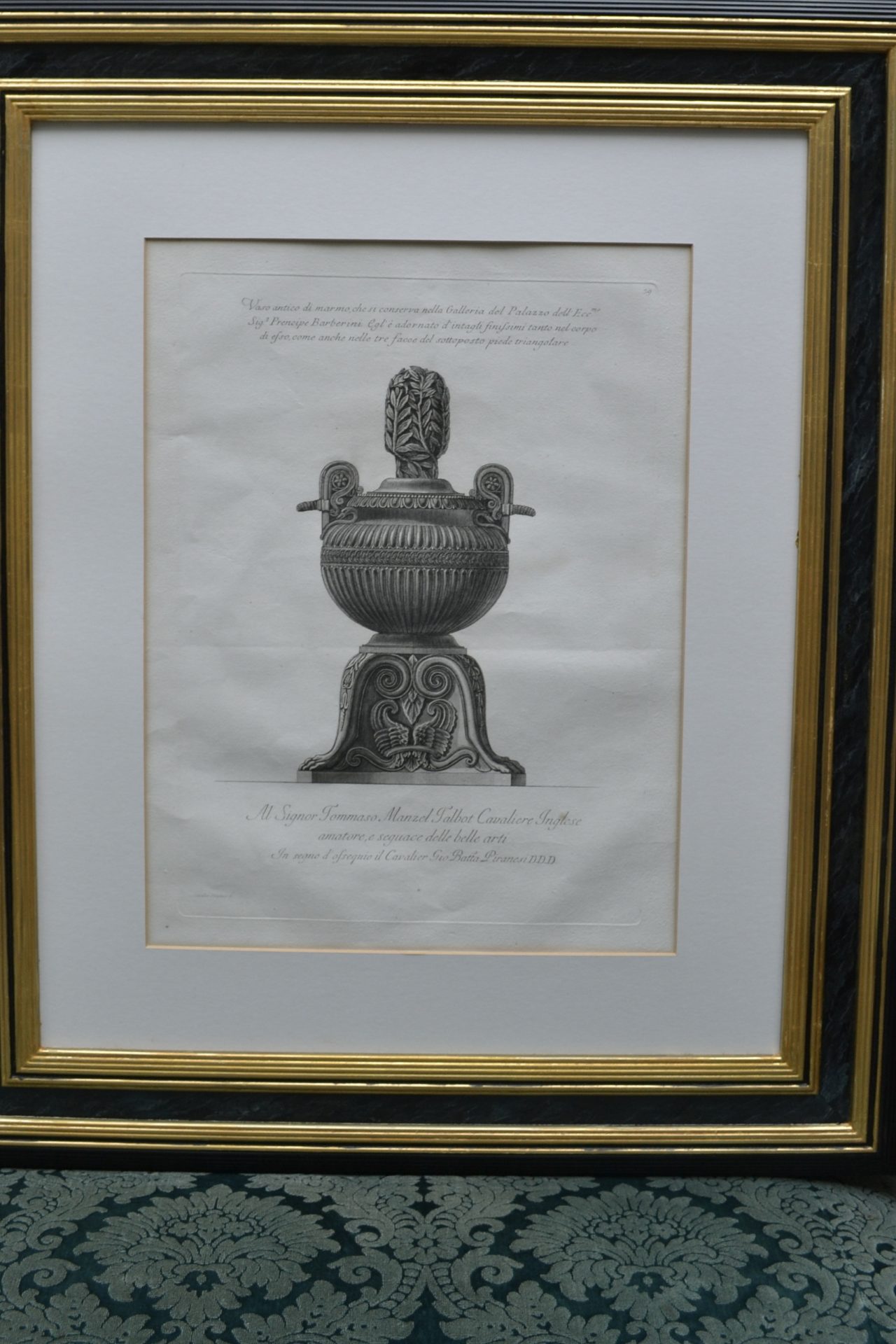
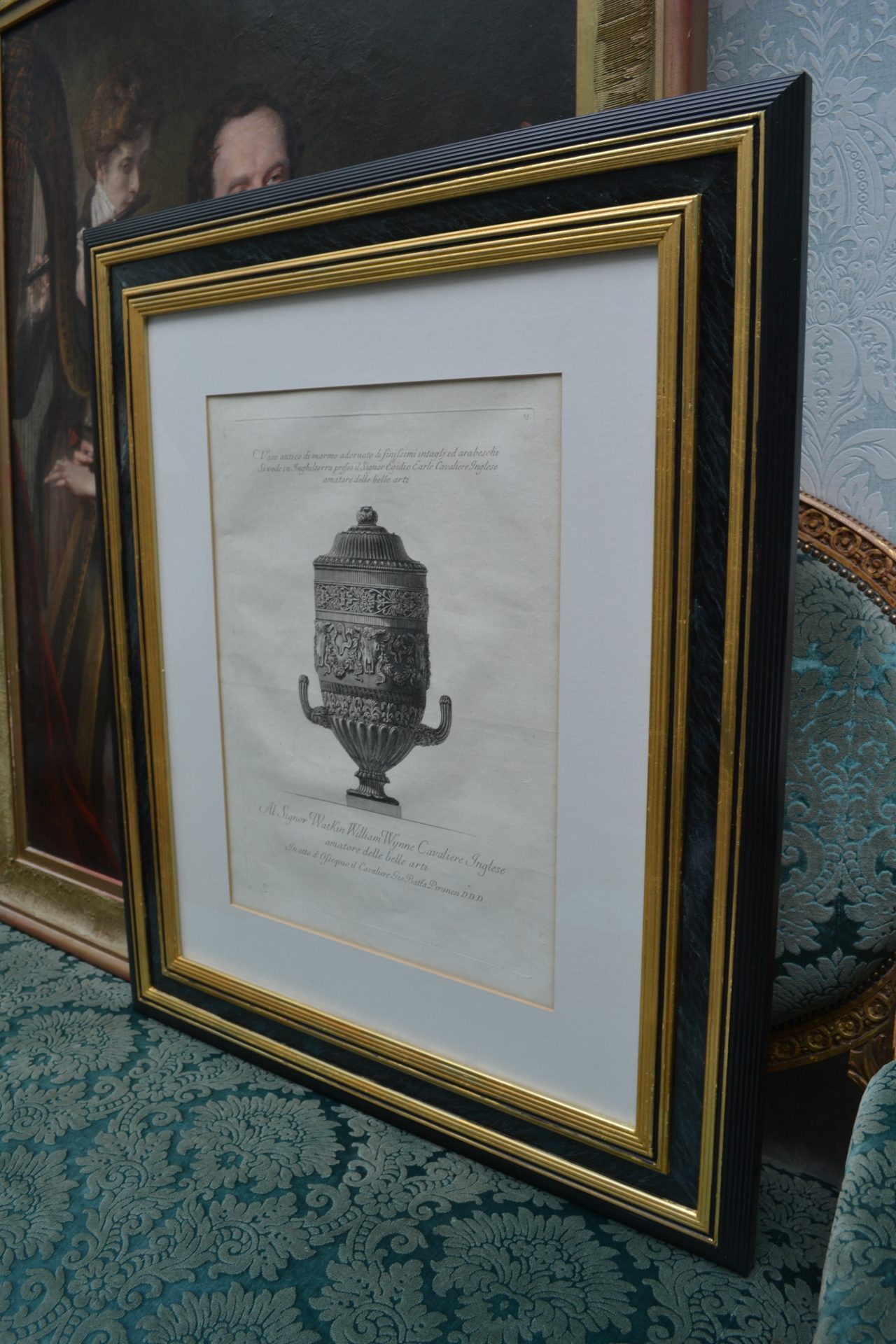
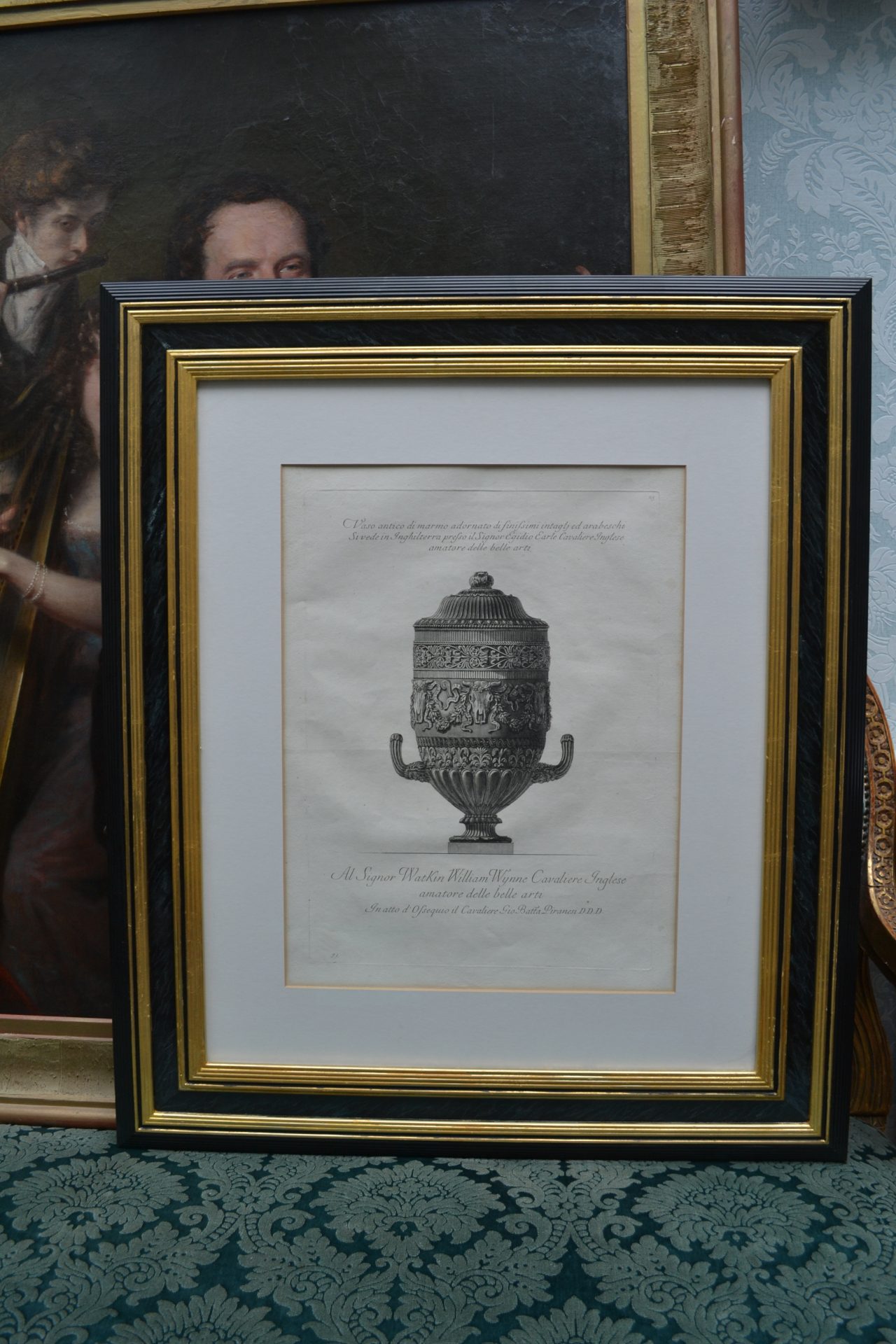
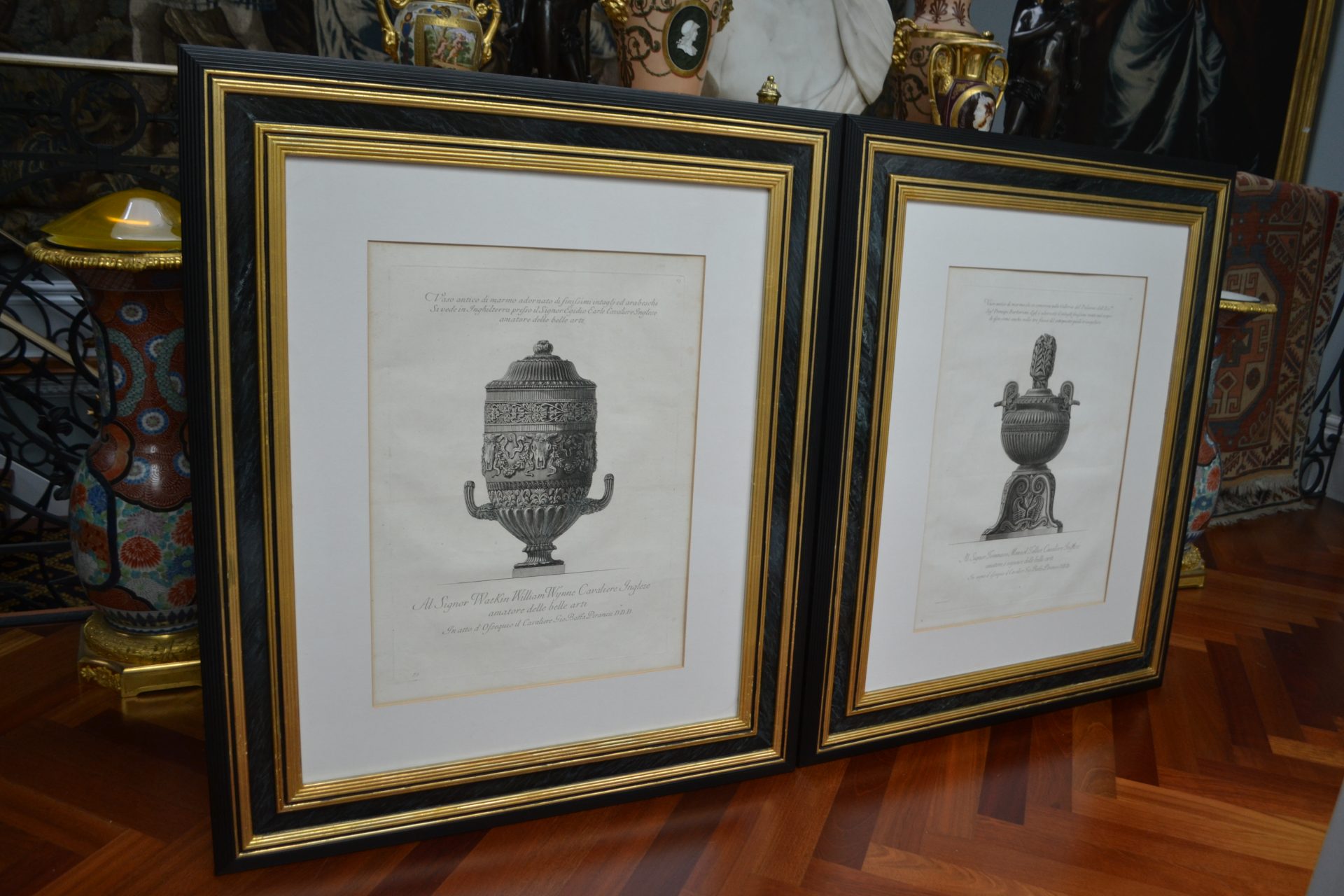
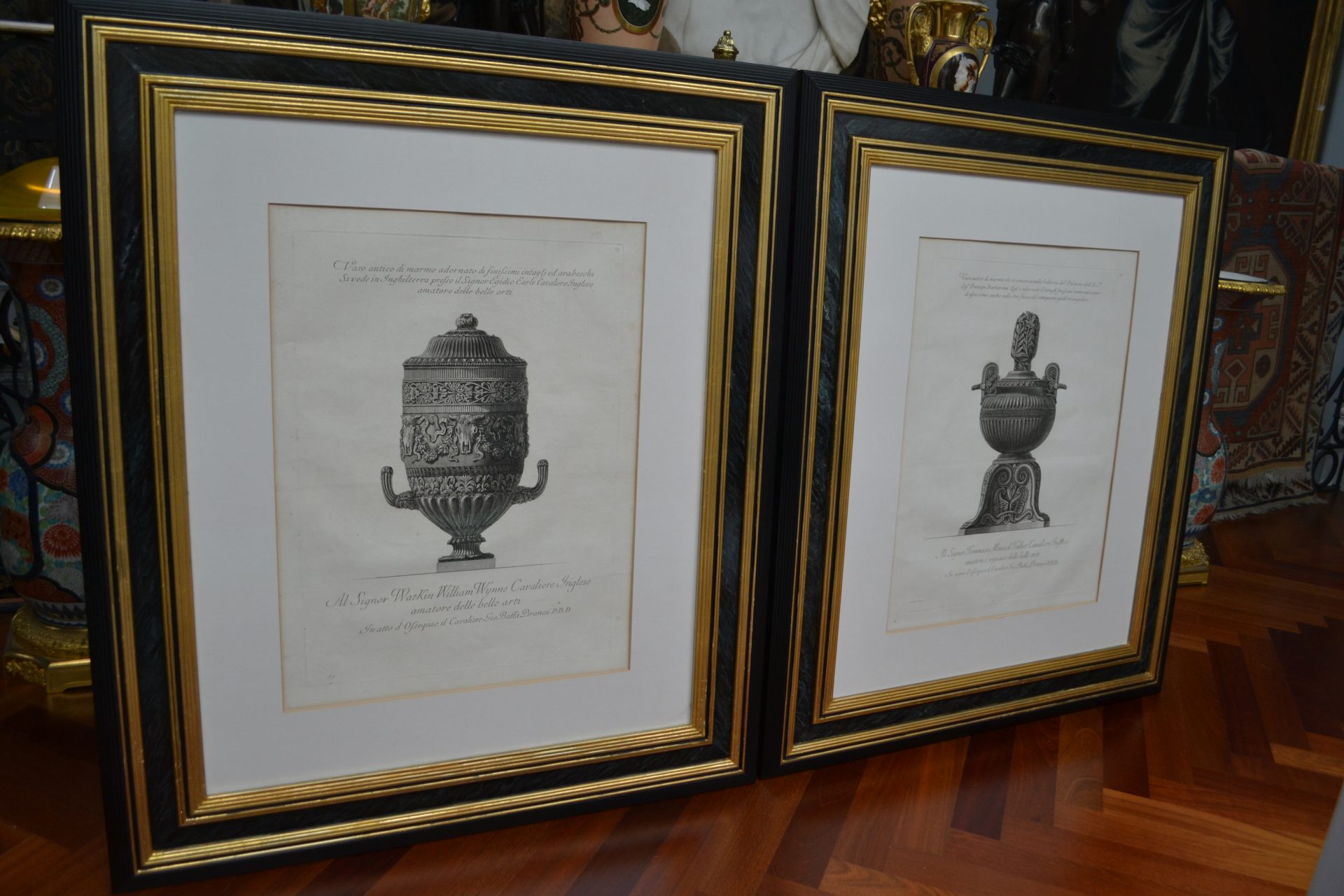
A pair of early 19 Century period framed and matted engravings of neoclassical urns from the copper plate catalogue of Giovanni Battista Piranesi (1720-1778) engraved posthumously by his eldest son Francesco Piranesi ( 1758–1810)
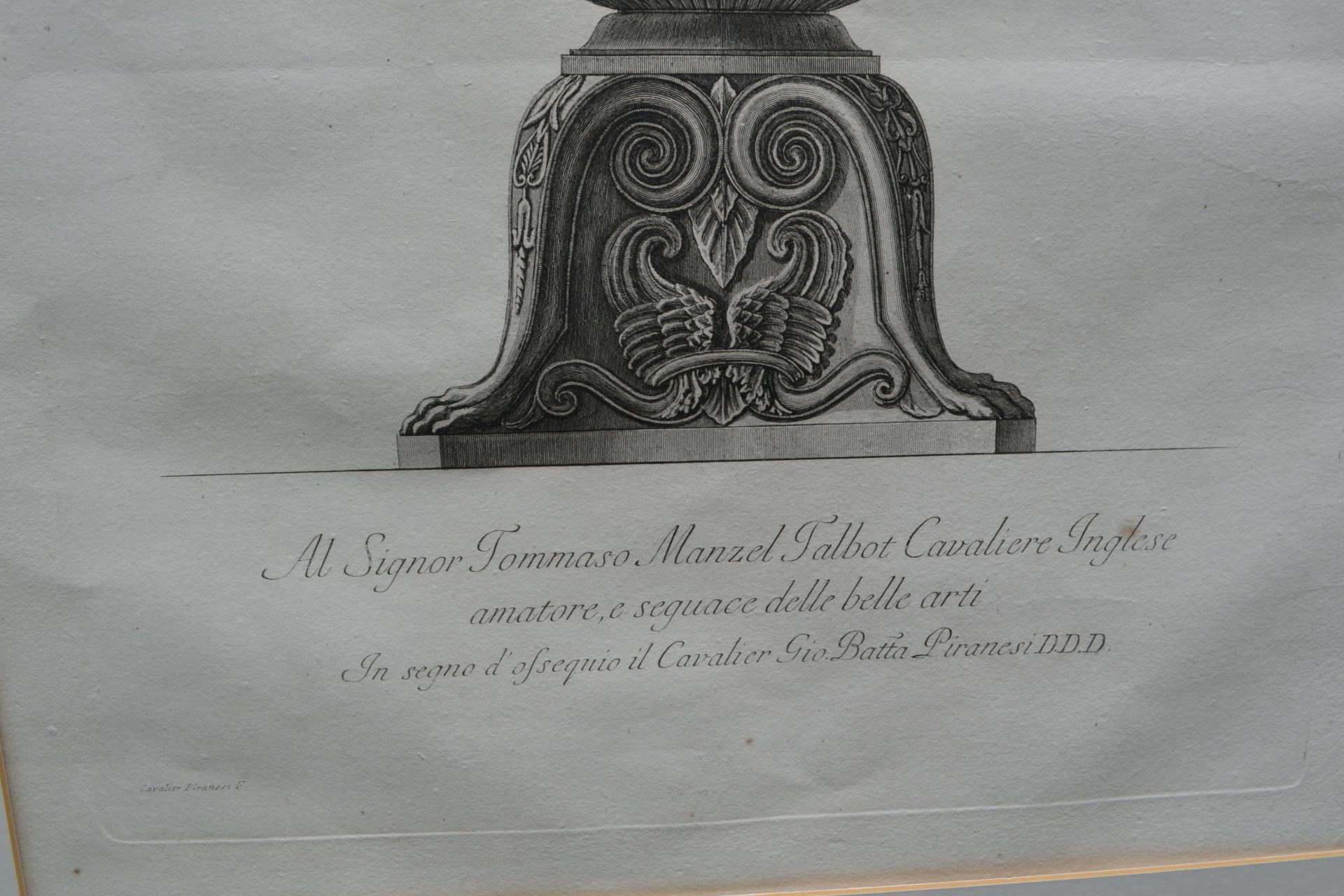
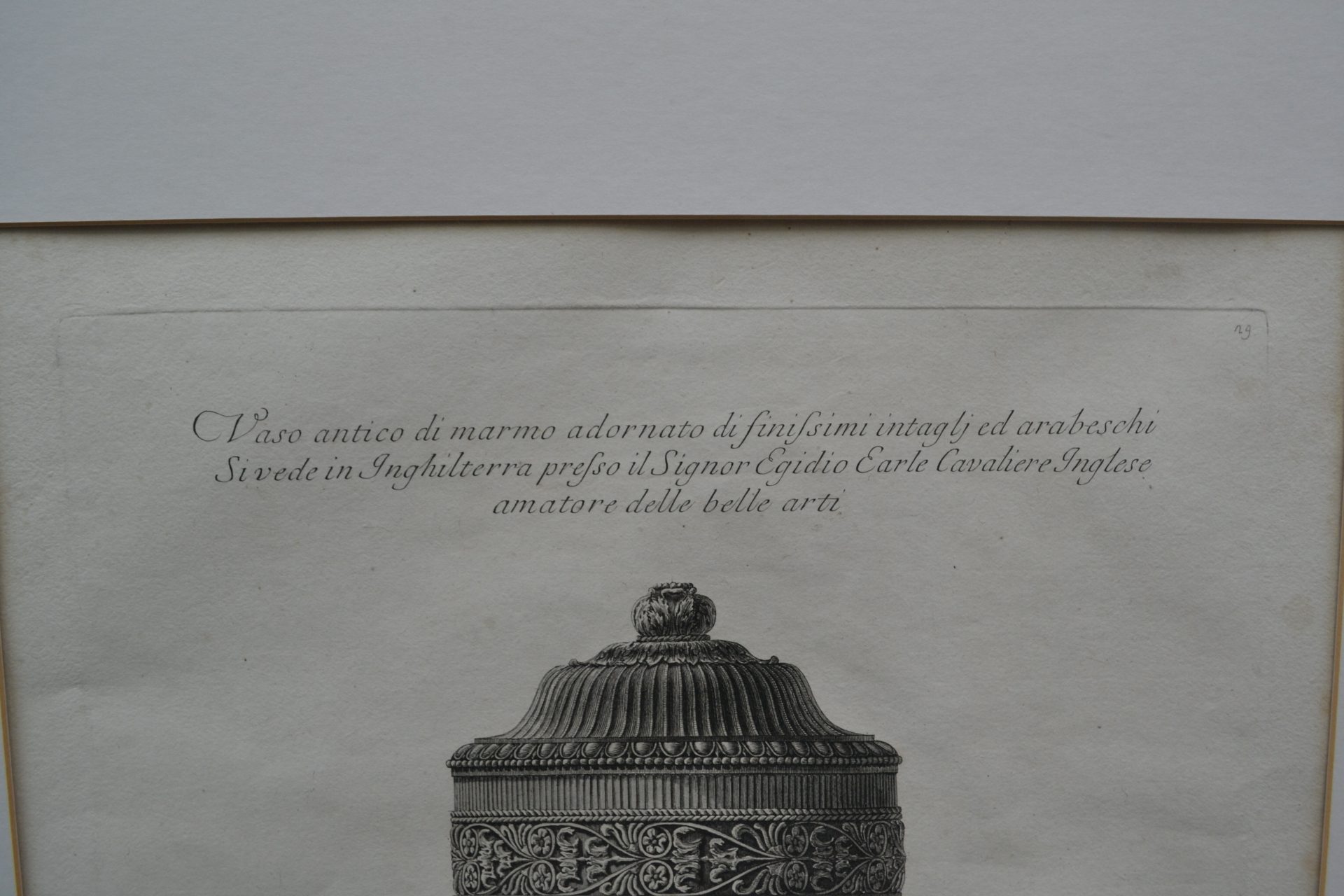
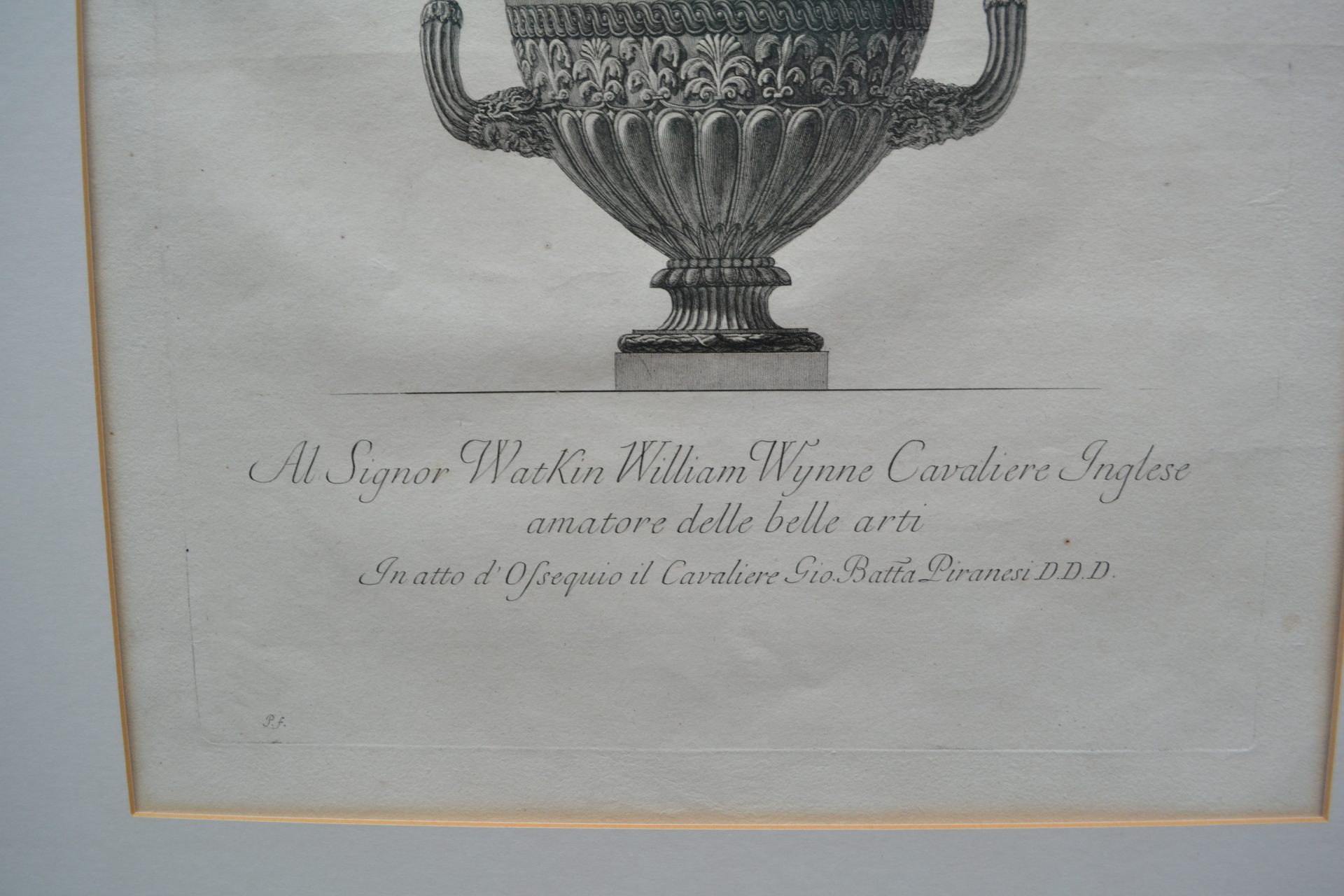
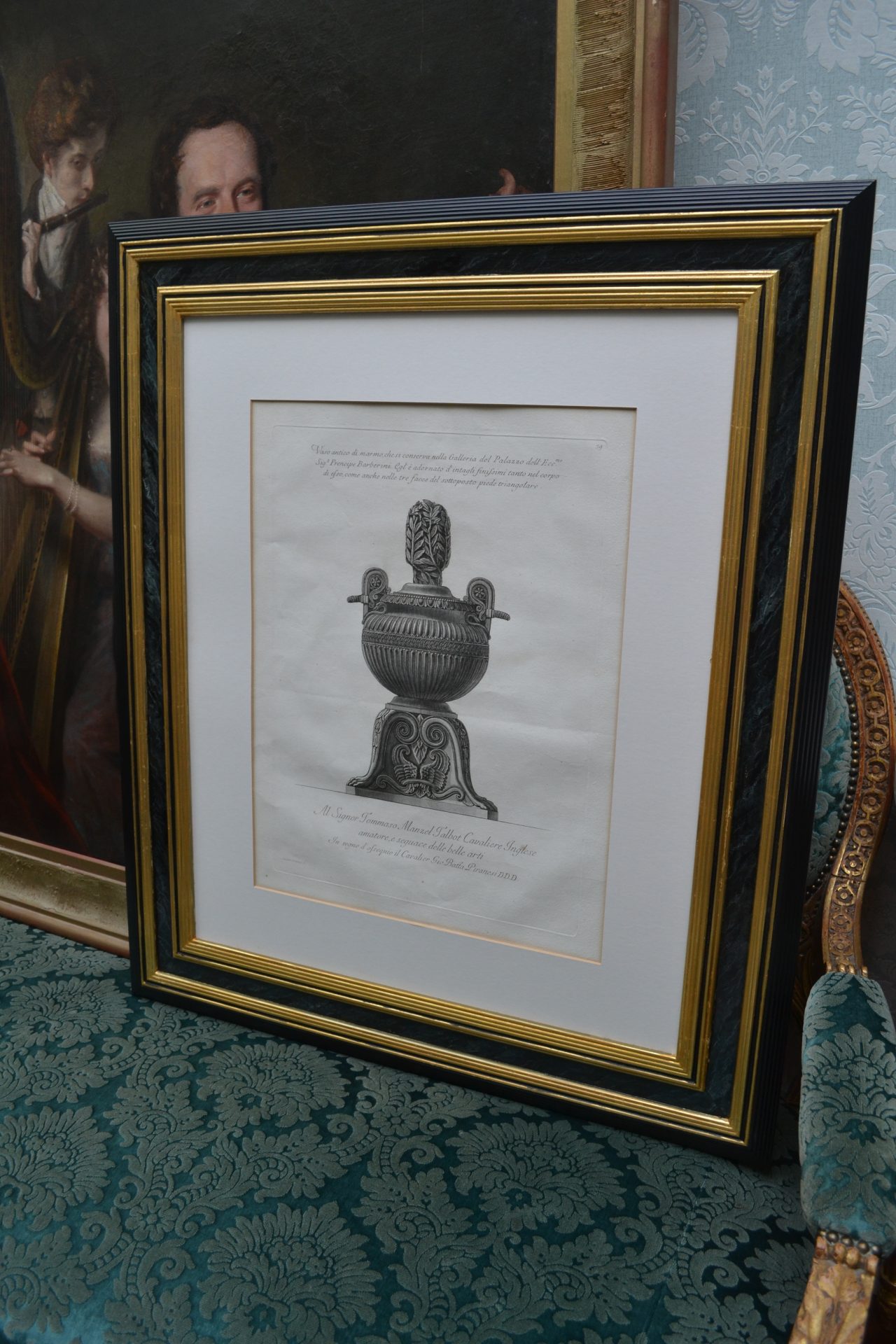
Both engravings are centred by very finely detailed neo-classical monument urns with with calligraphic headers and footers expressing who the engravings were made for suggesting that they were made to order.
One was for Sir Walkin William Wynne English Cavaliere,. The other was dedicated to Sir Manzel Talbot. According to Wikipedia, both gentlemen were respected and renowned Welsh politicians contemporaries of Francesco Piranesi. The engravings go on to say that both men were patrons of fine arts, and the engravings are intendedto serve as a mark of profound respect from Cavaliere Gio. Batta. Piranesi D.D.D.”.
According to the headers, the urn engraving dedicated to Sir Walkin resides in the collection of a certain English Earl Egidio Cavaliere in England while the one to Sir Manzel Talbot is at Galleria Dell Palazzo of his excellency Prince Barberini Cavaliere in Rome, now known as Gallerie Nazionali Barberini Corsini
The engravings are numbered 29 and 39 at the top right corner and signed with the initials at P.F. for Francescon Piranesi and Cavaliere Gio.Battista Piranesi at the bottom left corner respectively.
Francesco Piranesi was instructed in the art of engraving by his father, and by 1775 when he was just 17, he was both engraving his own works of art and assisting his father’s work.
Francesco accompanied his father on two trips to the ancient Roman ruins in Paestum, Pompei and Ercolano, first in 1770, and again in 1778. In this he was part of a group of engravers which collaborated with Benedetto Mori and the architect Augusto Rosa, considered the inventor of felloplastica, the art of constructing scale models of ancient monuments in cork. Giovanni Battista created a series of preparatory drawings about Paestum, which were completed by Francesco. Upon his father’s death, shortly after the second trip, Francesco acquired his father’s publishing house and was responsible for printing most of the later editions of his prints. These two engravings are from this period.
The occupation of the Italian peninsula in 1798 by the French Revolutionary Army led to the establishment of the short-lived Roman Republic. Piranesi soon won the admiration of the French officials directing the republic, becoming a government official. When the republic fell the following year, , he moved to Paris where he soon gained the admiration of Talleyrand. They opened a new branch of the family enterprise there, called Piranesi Frères, which decorated a line of terracotta vases manufactured in imitation of the ancient Etruscan works by Joseph Bonaparte.
In 1807 Francesco fell upon hard times but the Emperor Napoleon who knew his work well, came to his help, issuing an imperial decree granting the sum of 300,000 French francs, upon the condition that Piranesi dedicate himself solely to his engraving work, then considered the best in Europe. He died unexpectedly in Paris, however, before he could fulfill his contract.
In 1839, the surviving collection of his engravings was purchased by the Calcografia Camerale, founded by Pope Gregory XVI, and brought to Rome. That institution is now the Istituto Nazionale per la Grafica.
Dimensions: 23.5″H x 17.5″W