
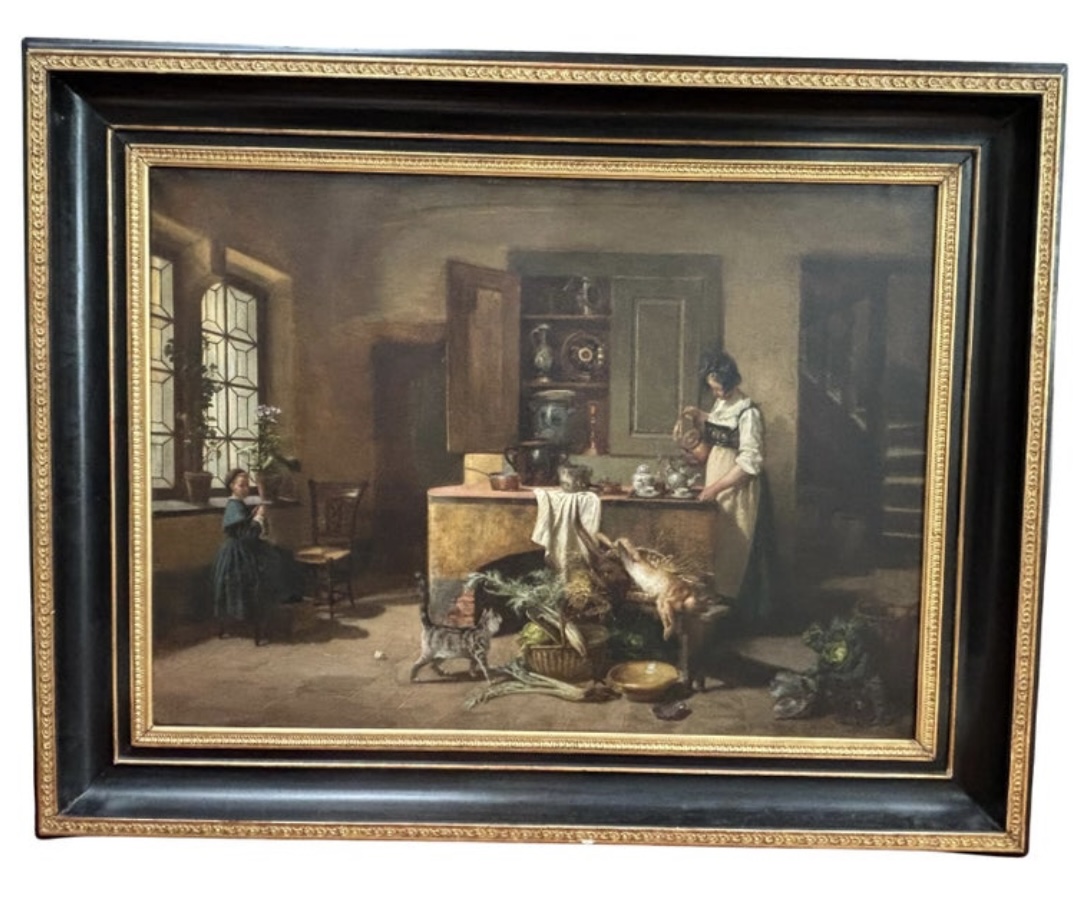
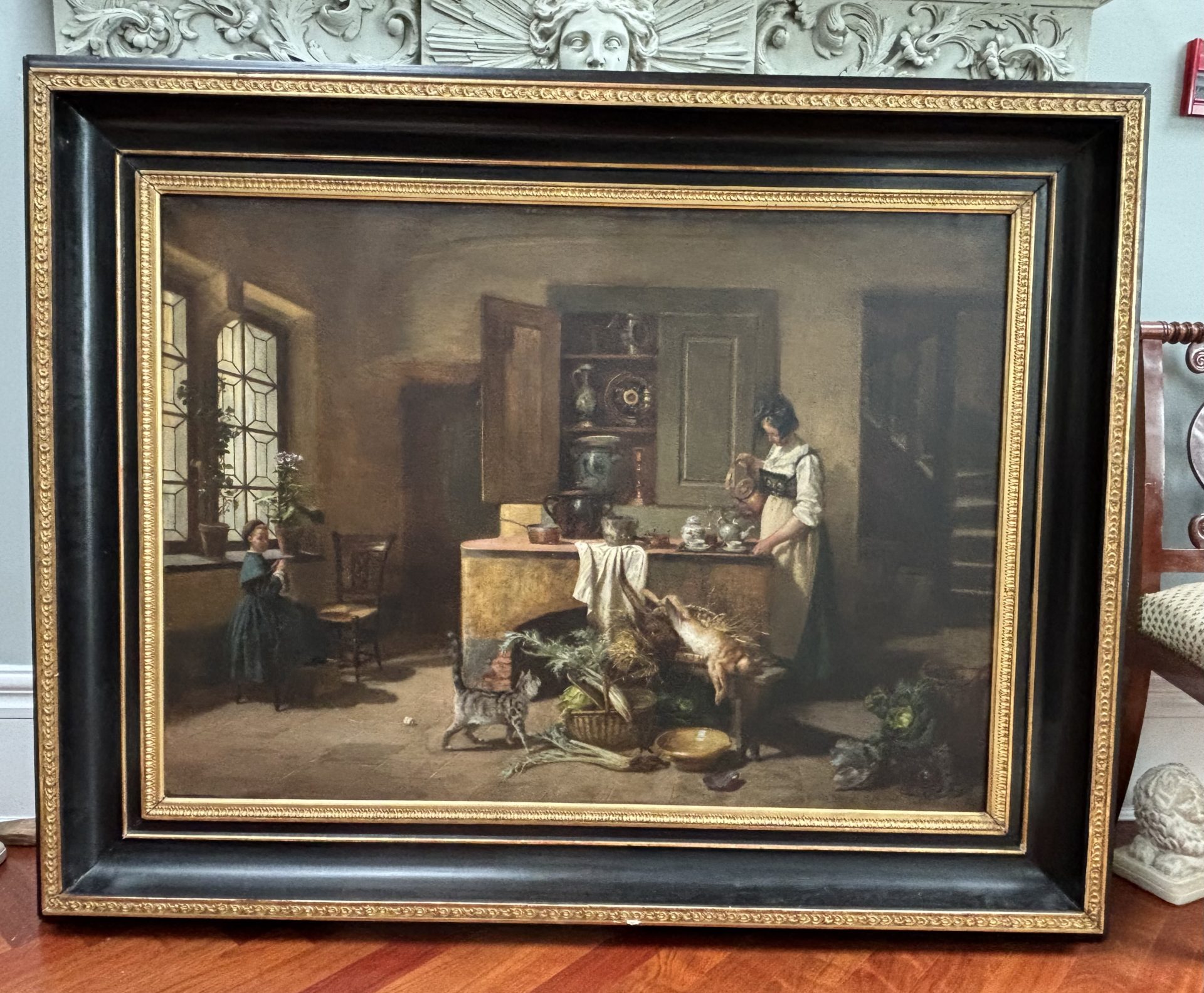
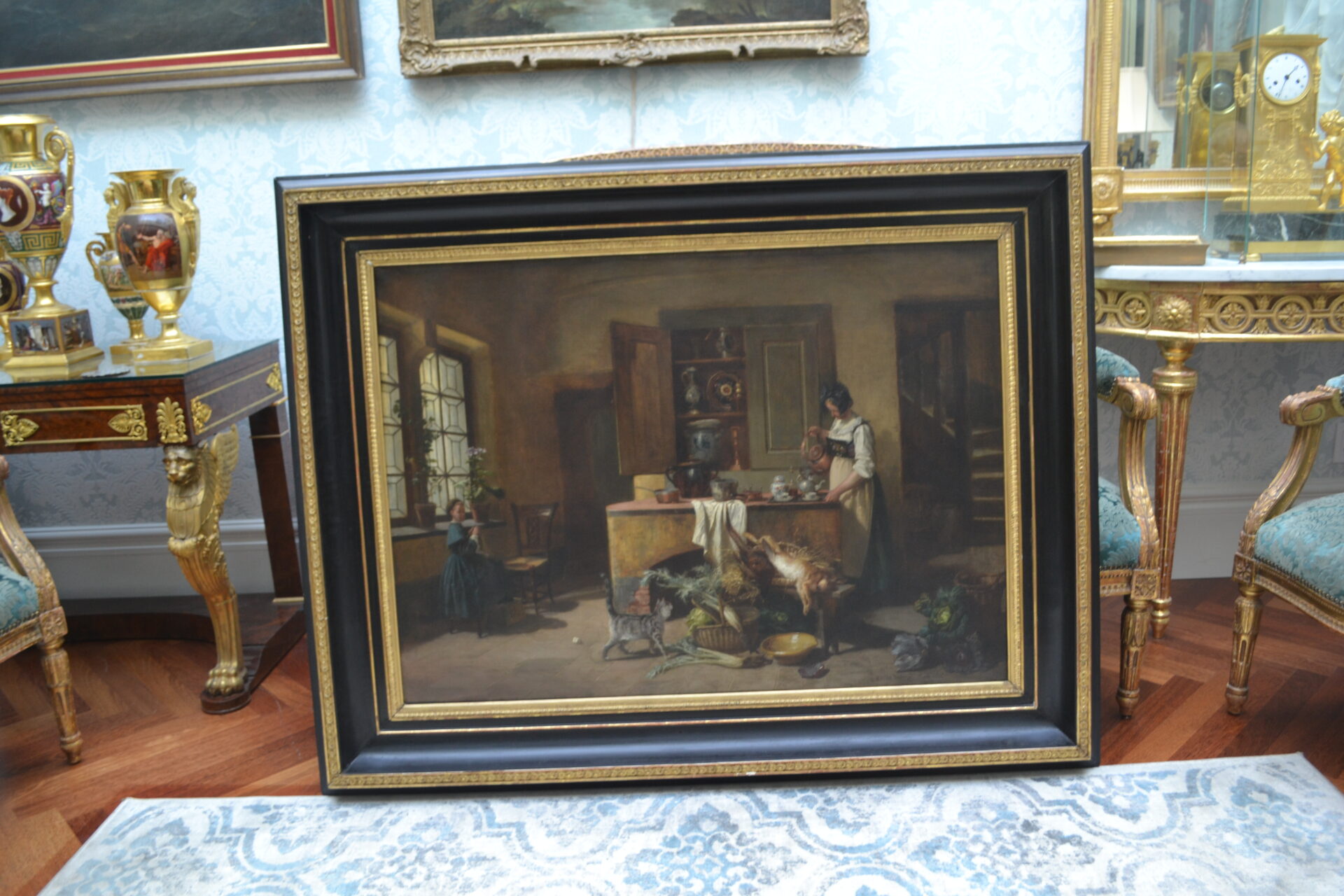
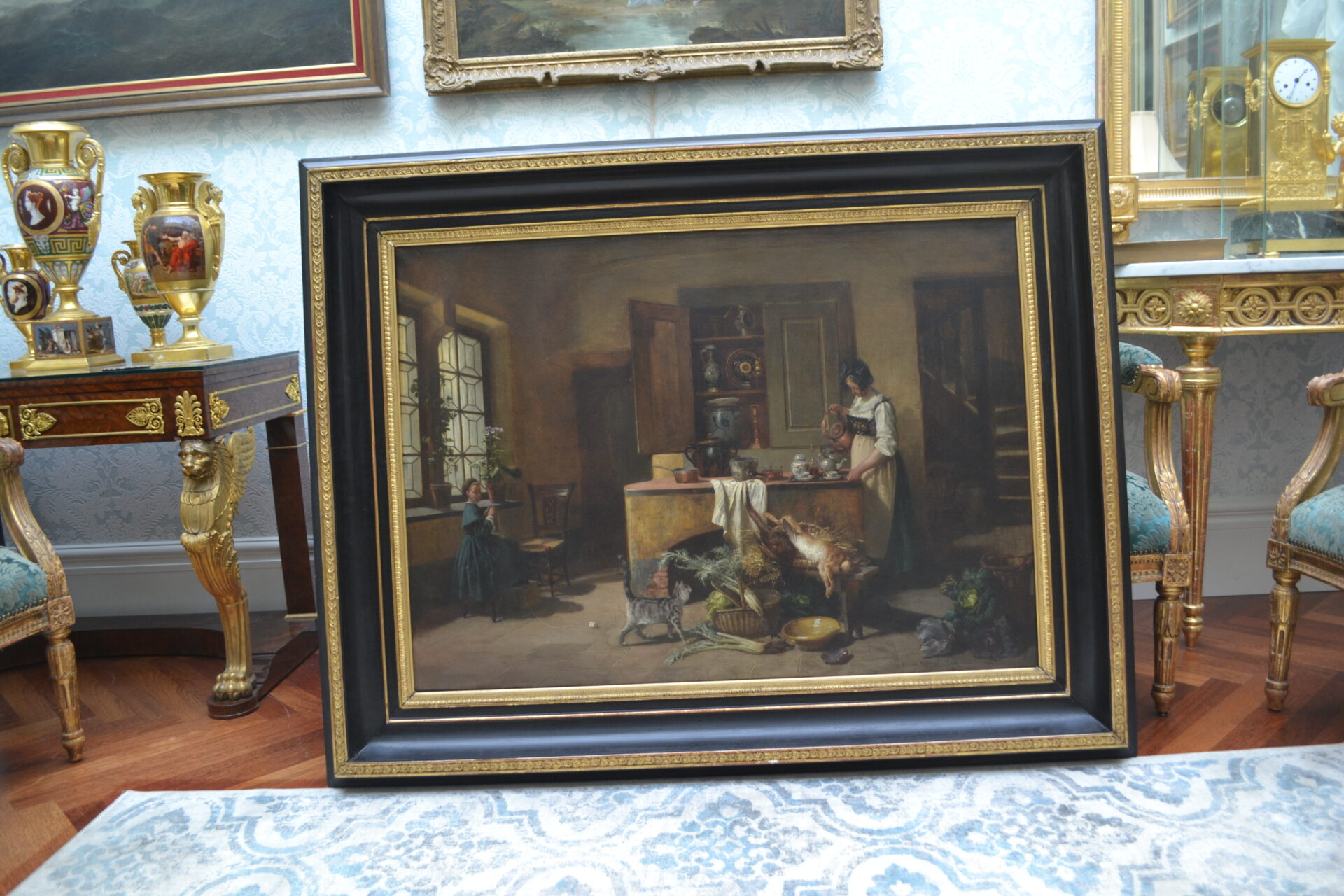
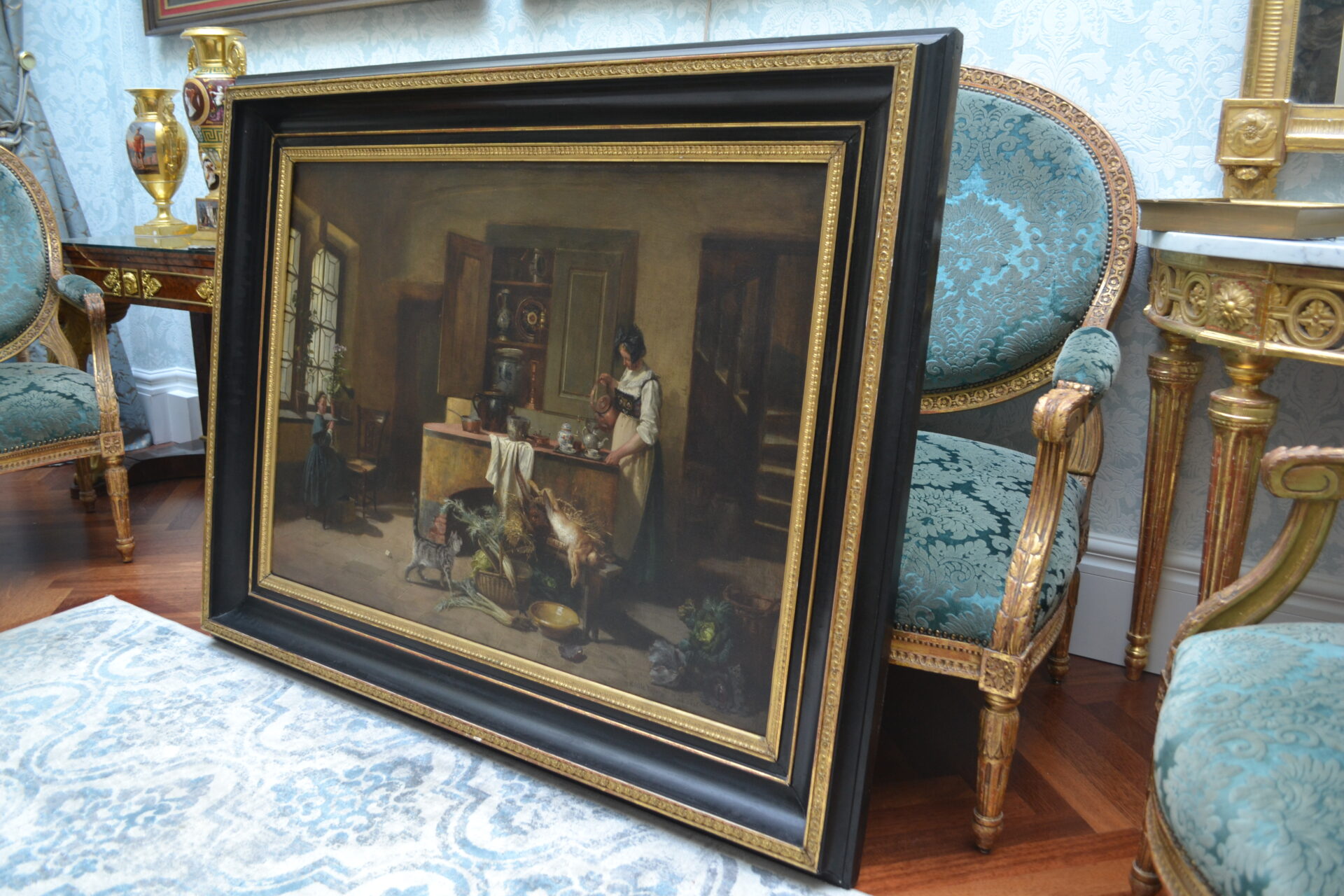

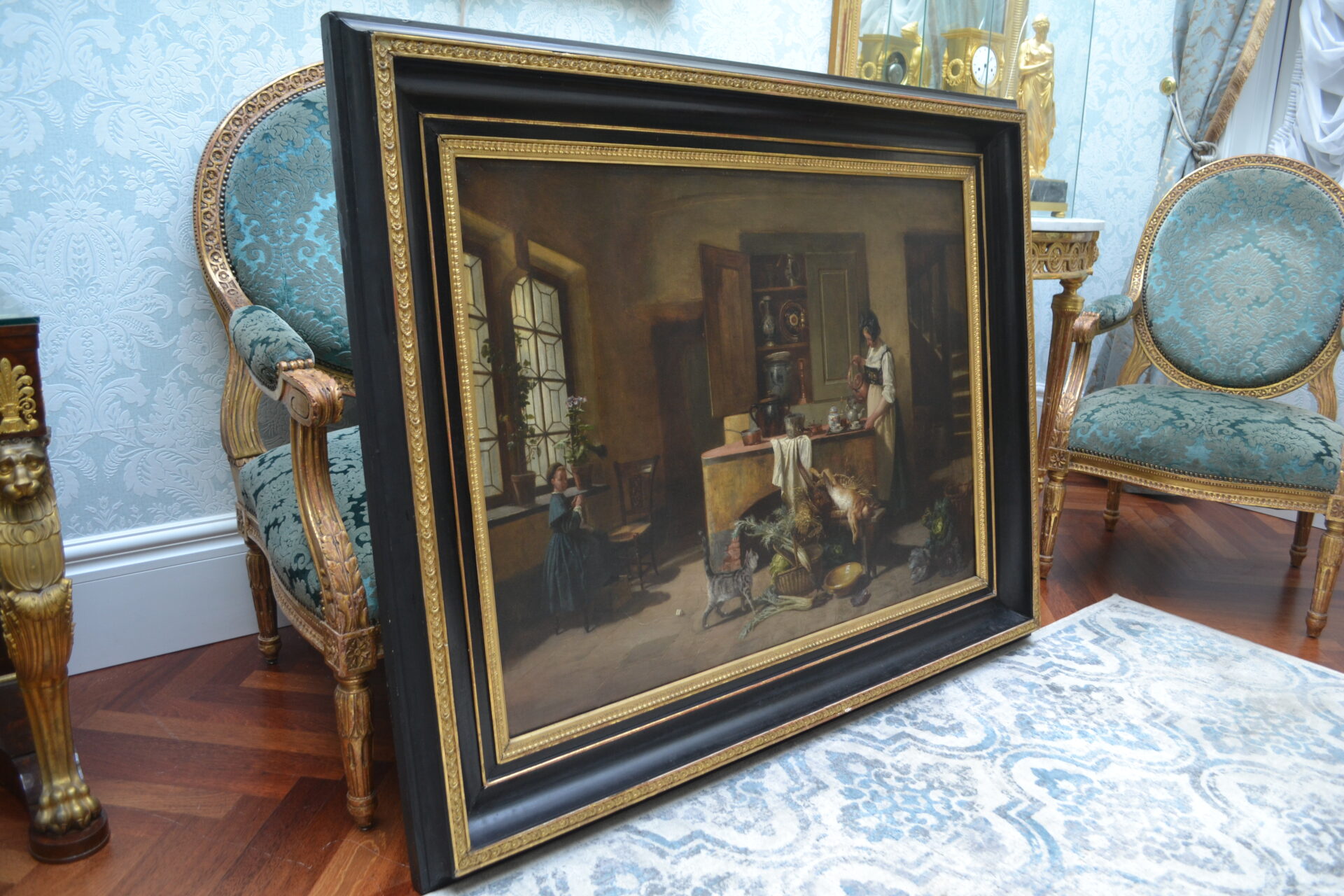



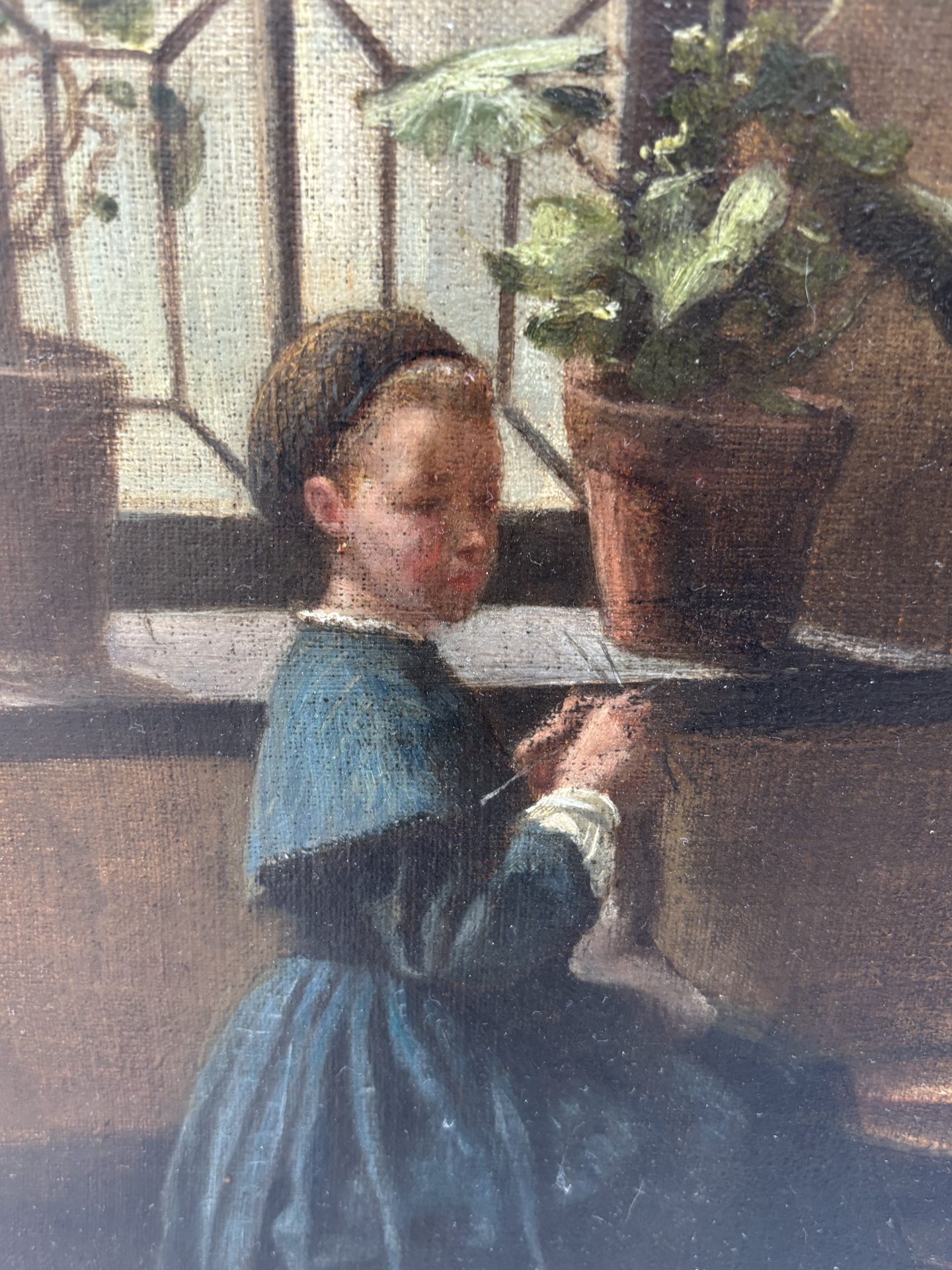
A Genre style oil painting of an interior scene by Paul Emile Faivre dated 1864
$44,000.00
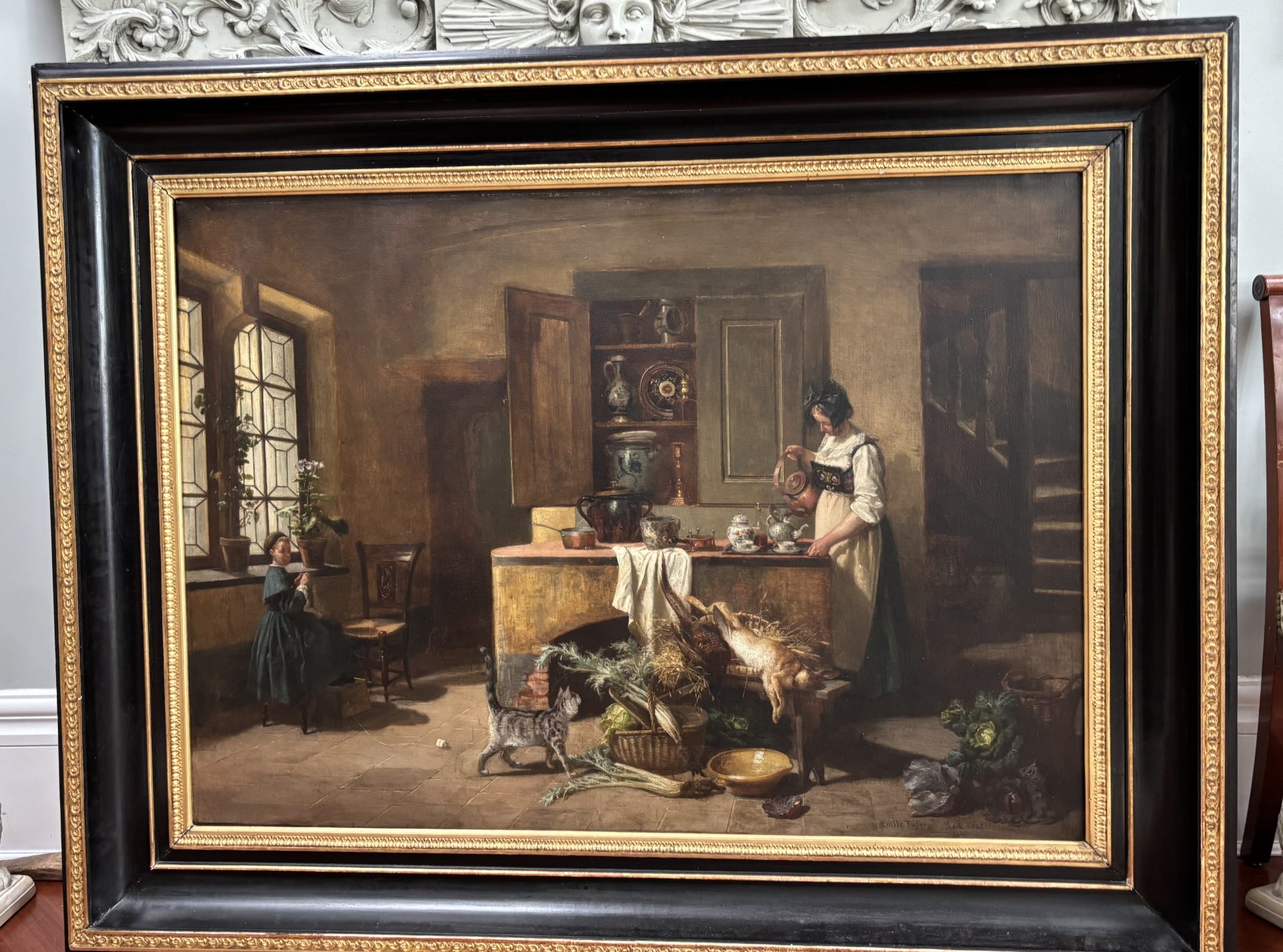
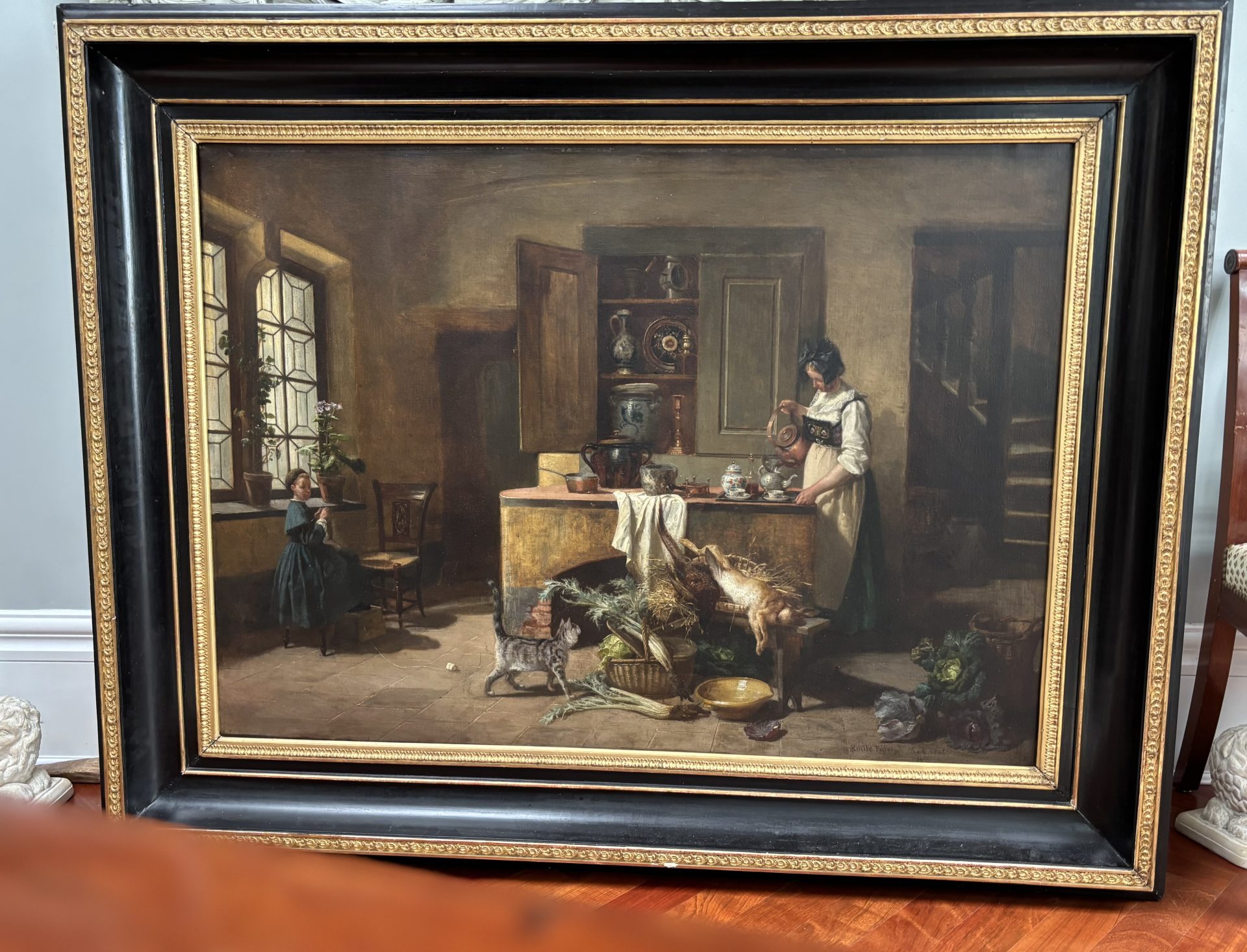
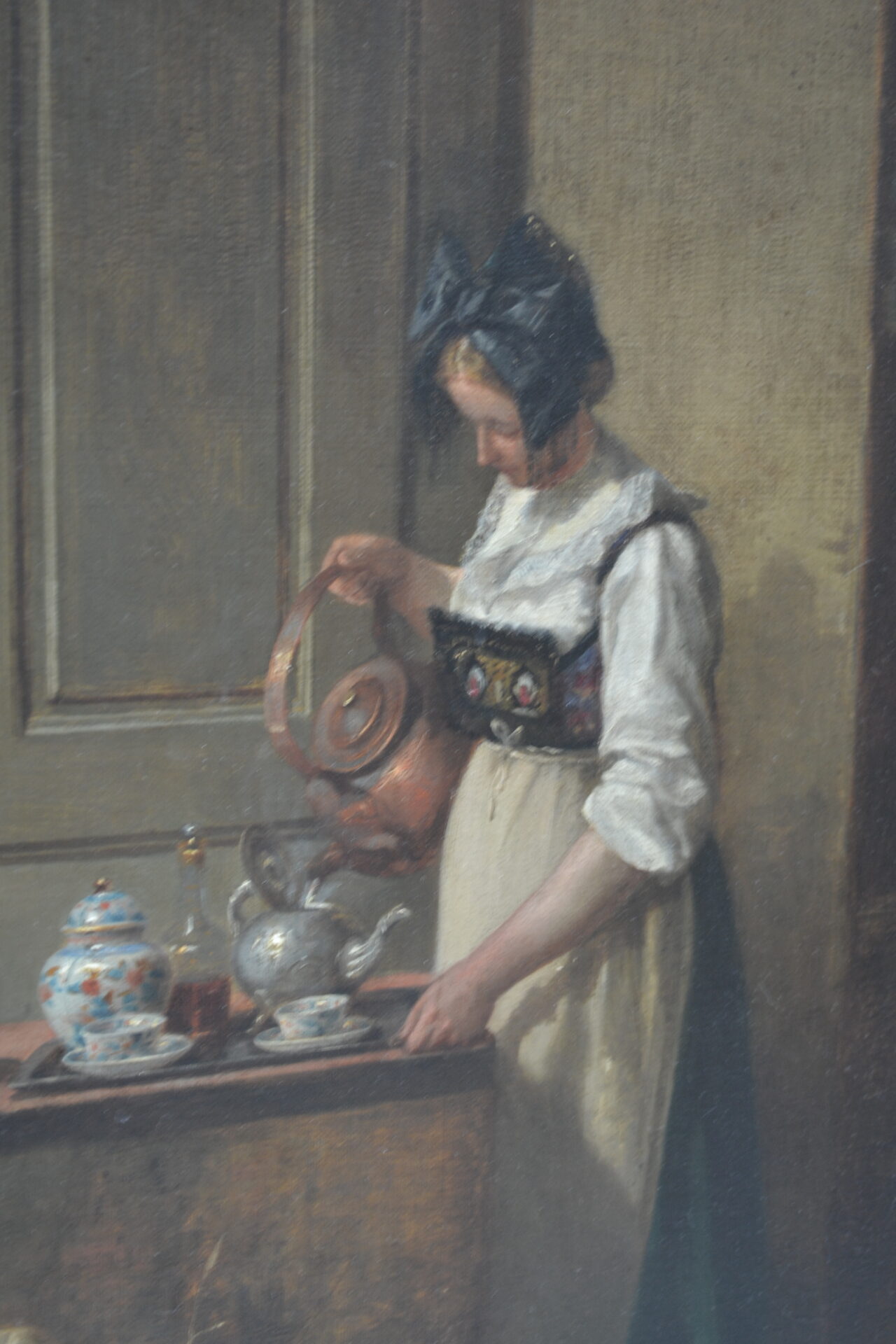
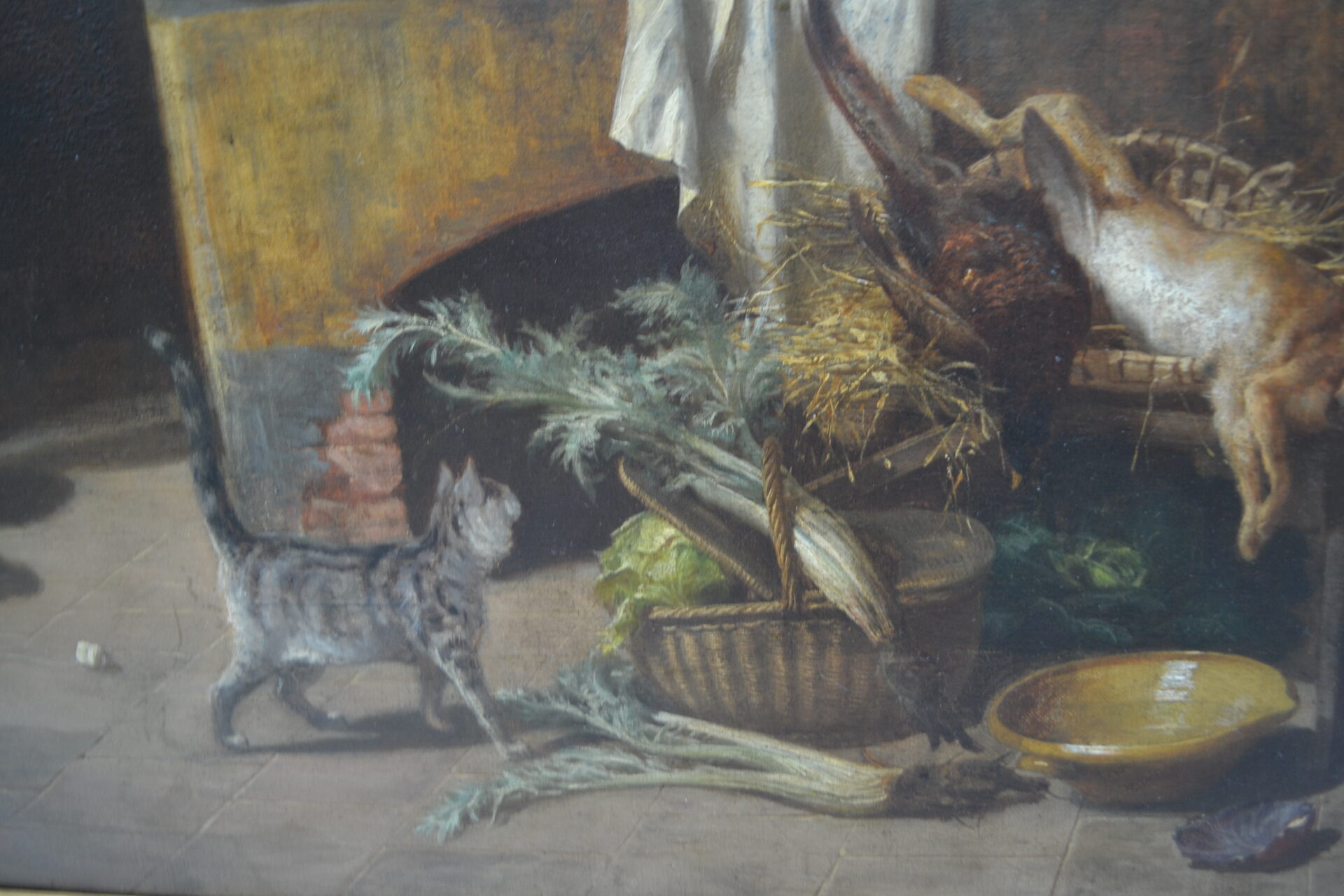
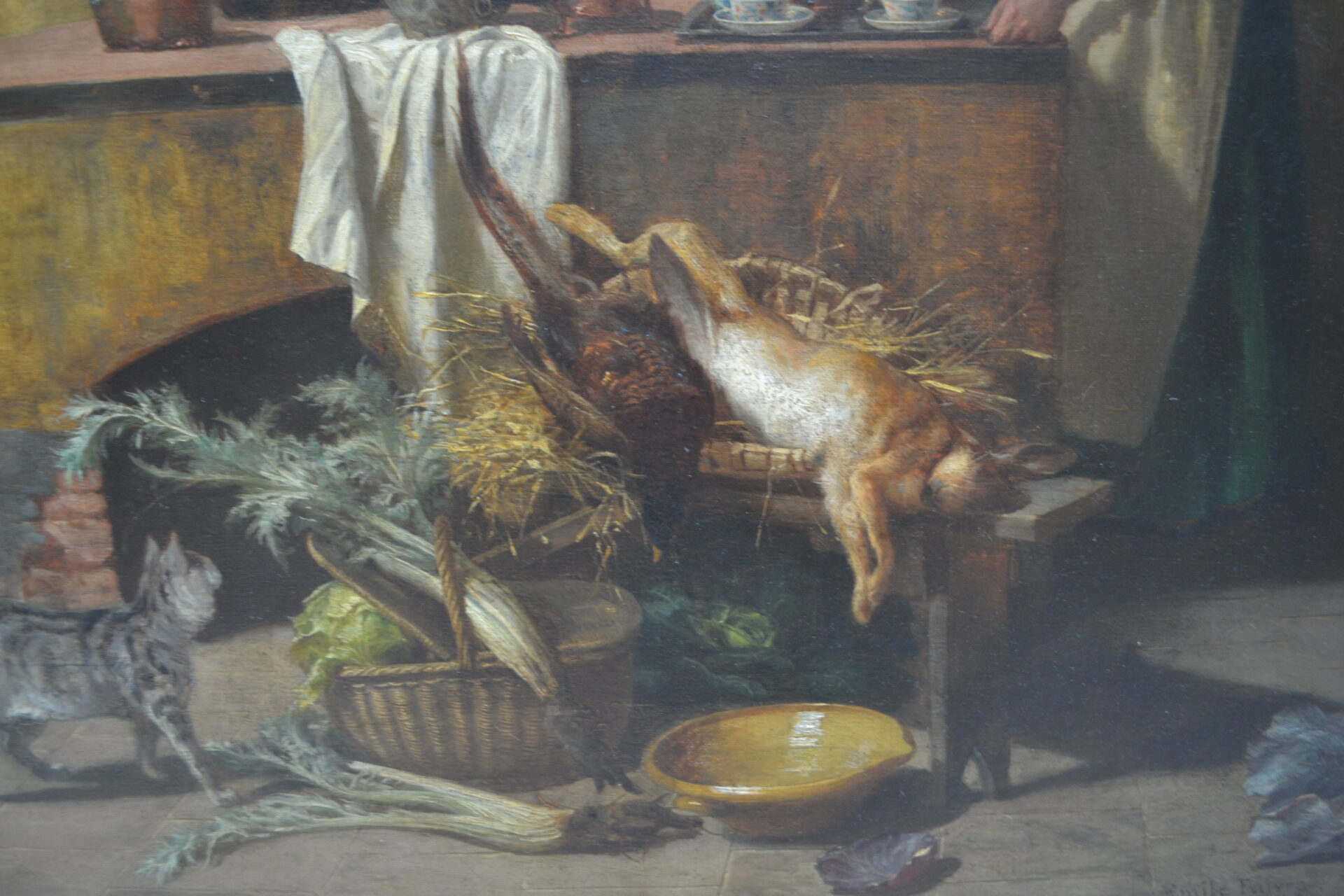
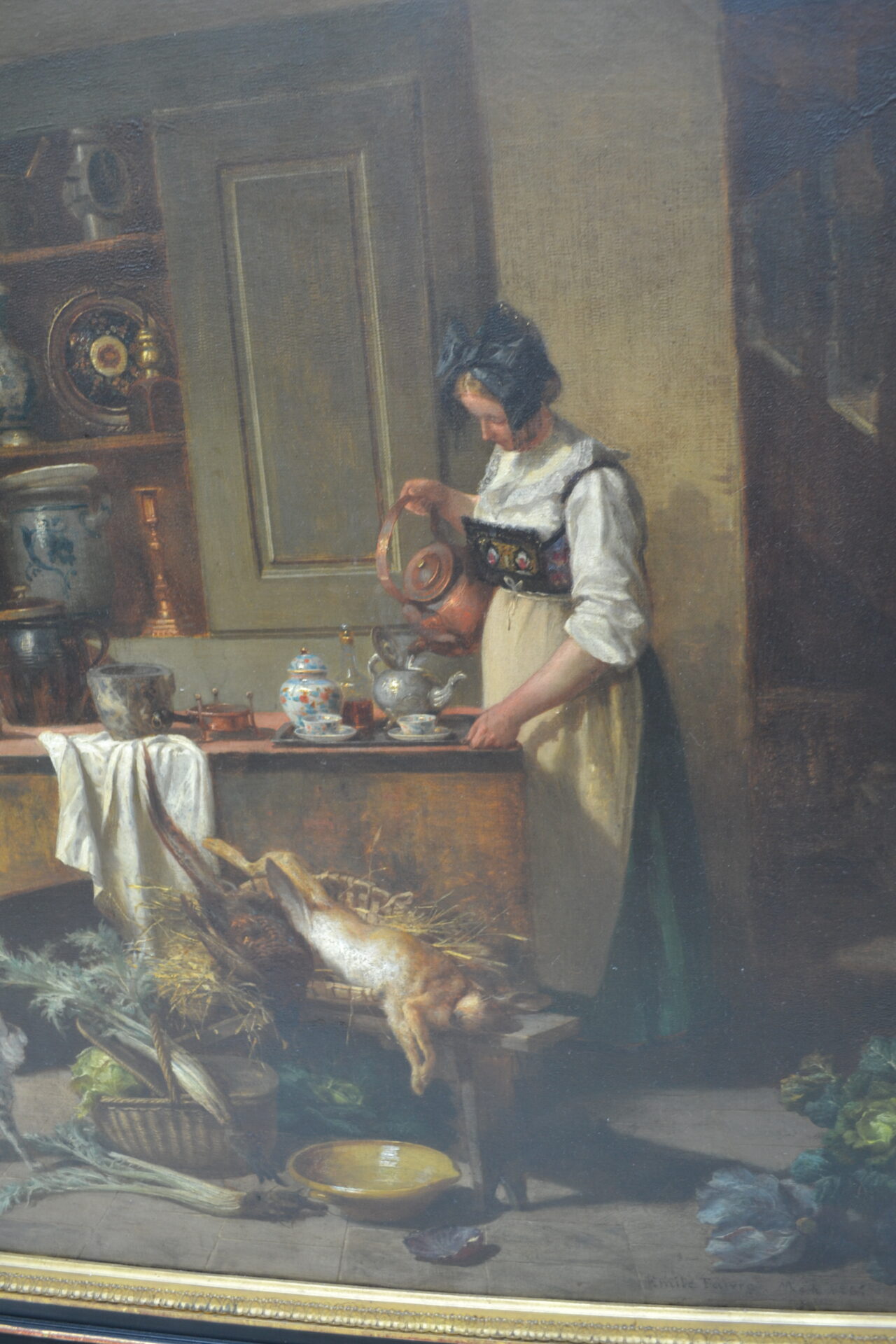
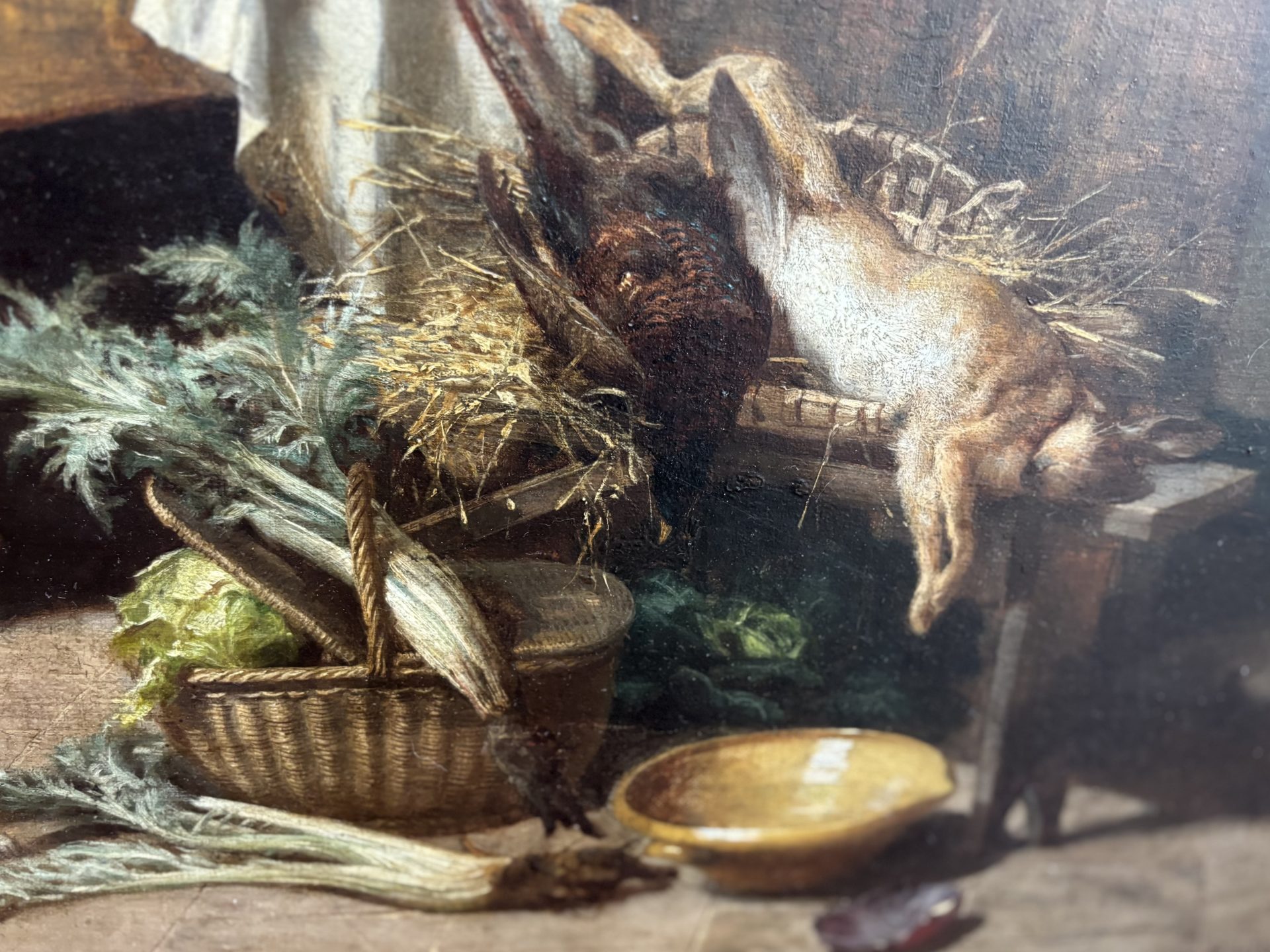
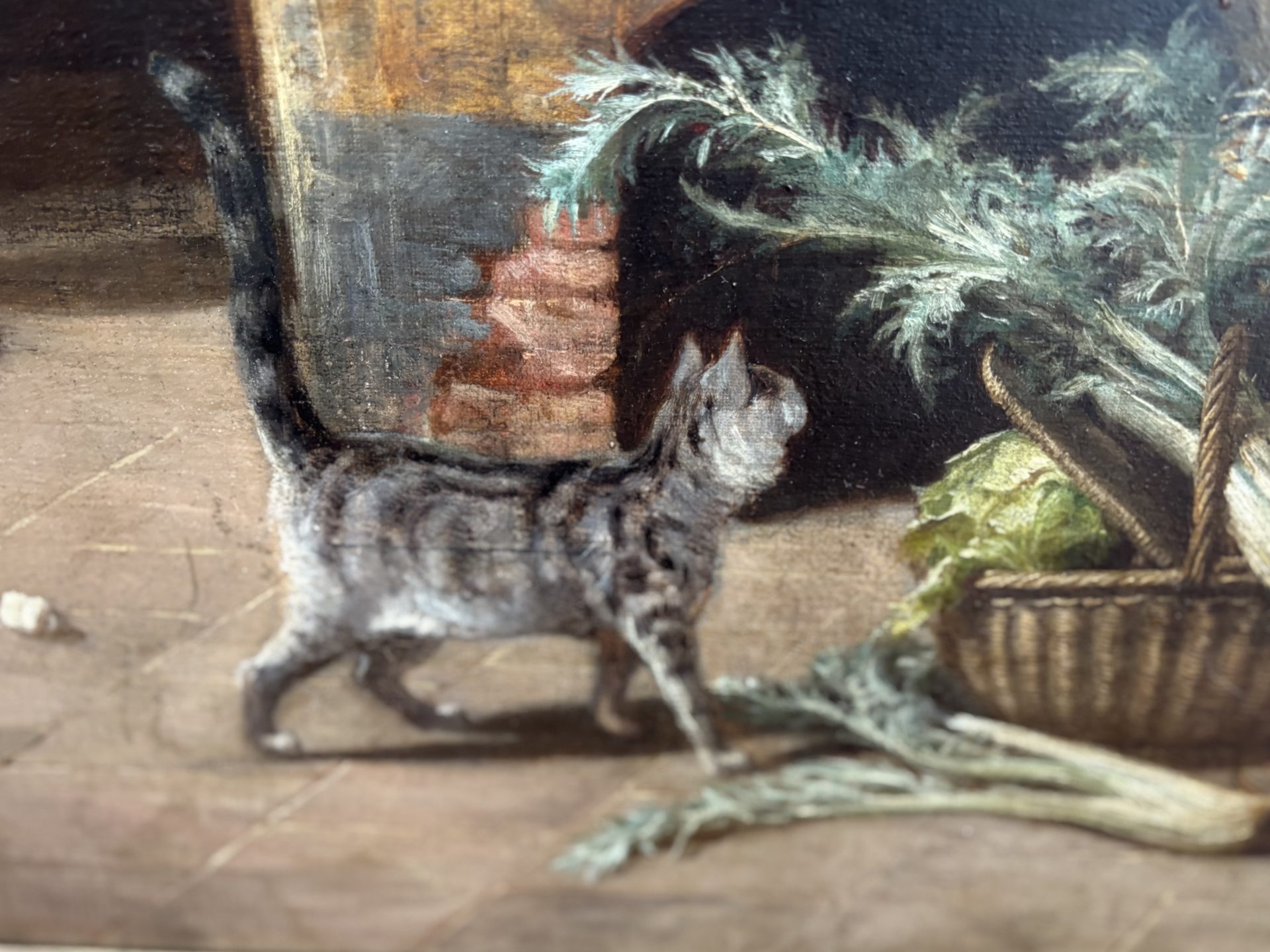
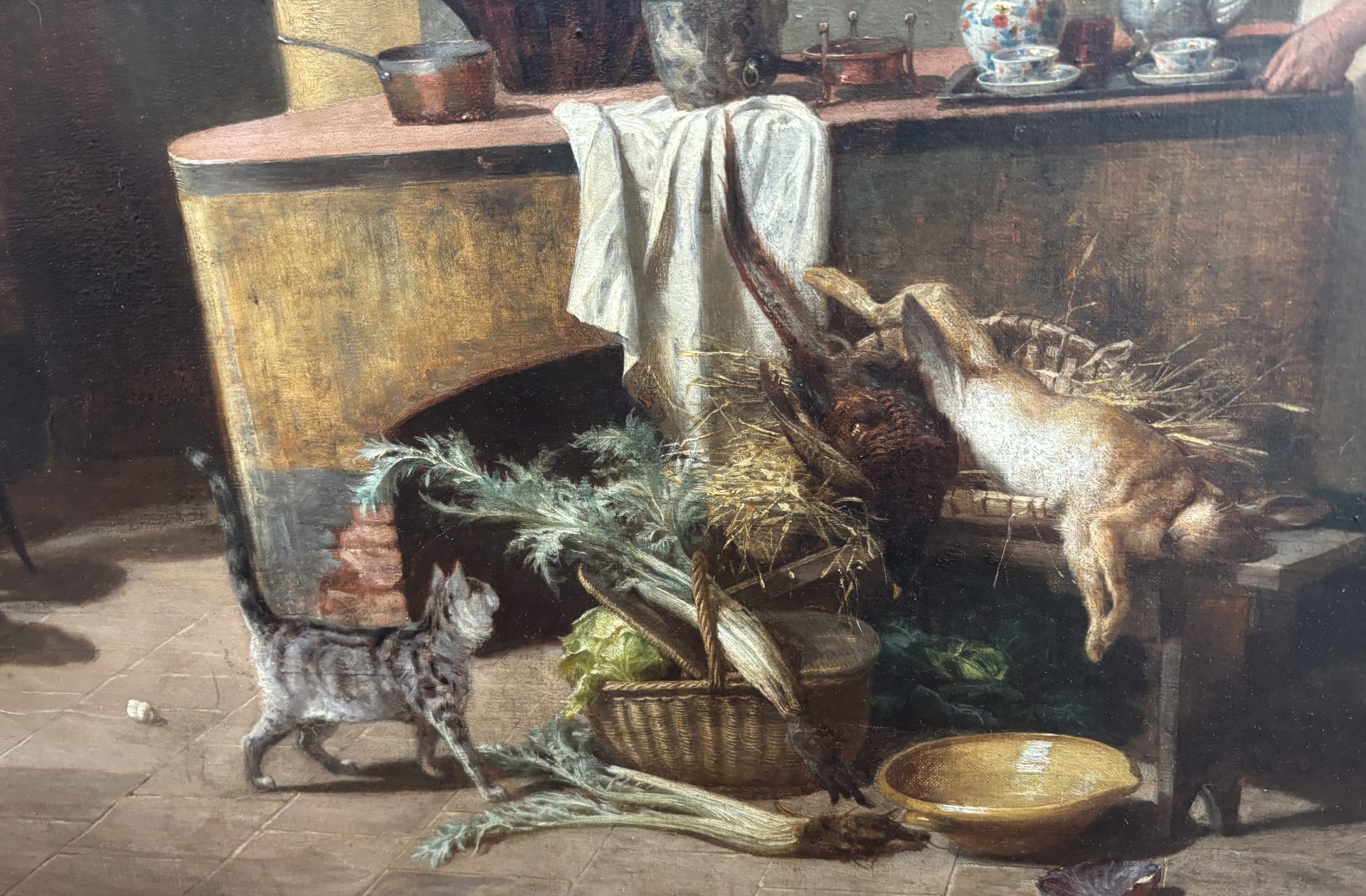
A large oil on canvas painting depicting a woman pouring hot water from a copper kettle into a silver teapot from the mantelpiece of a hearth in a large kitchen of a wealthy home. Central to the painting is a still life arrangement of basket full of vegetables and dead fowl on the floor in front of the hearth.
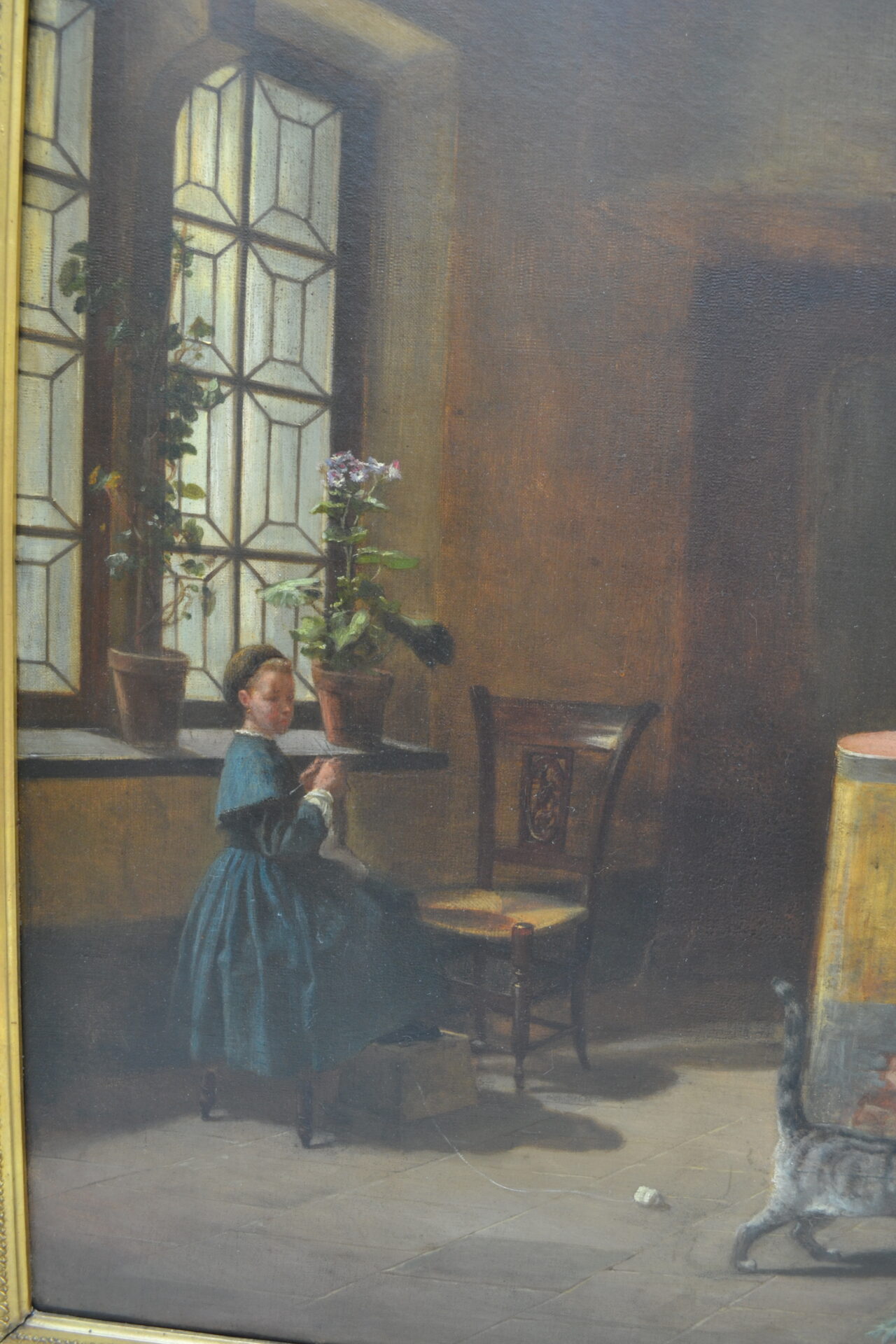
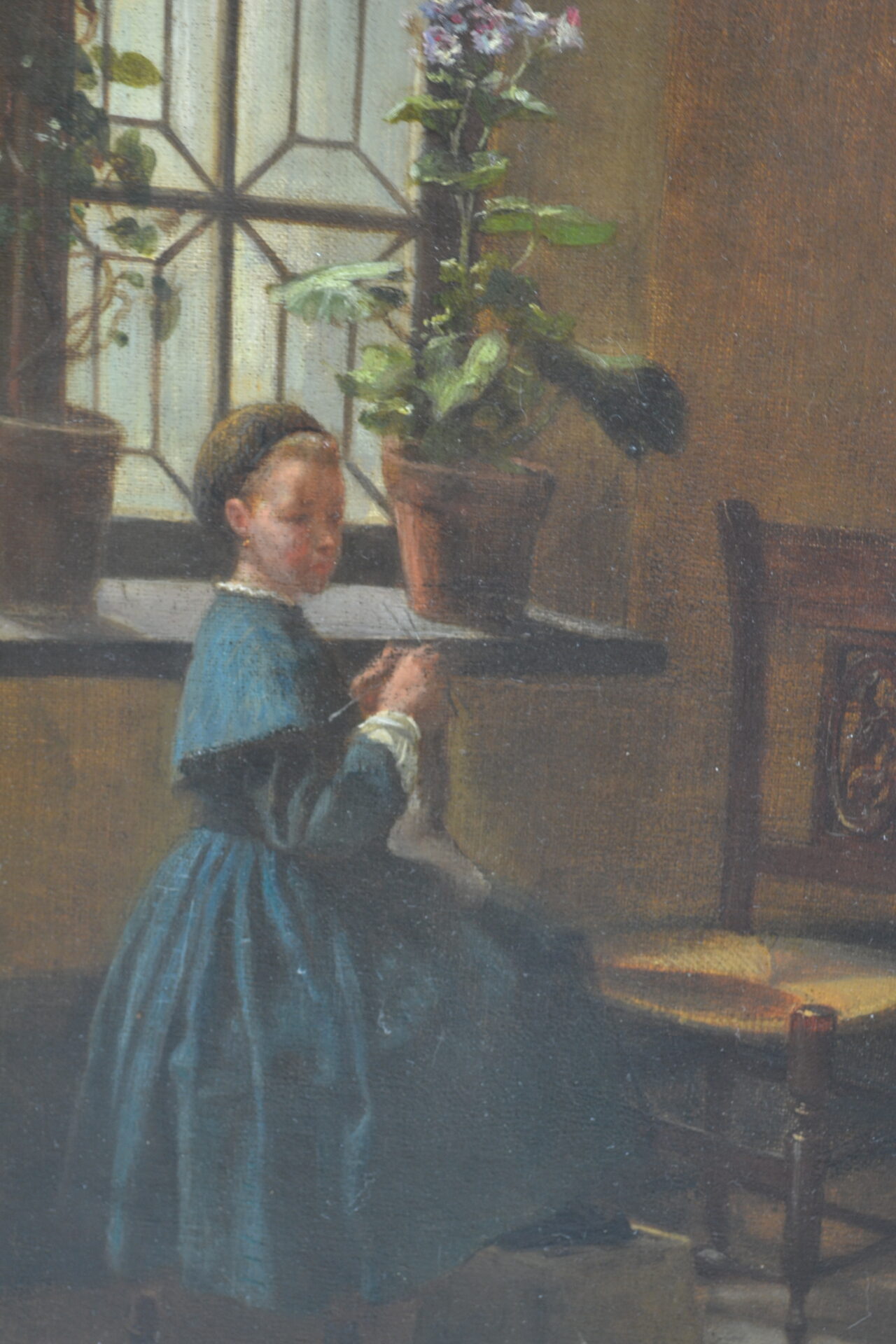
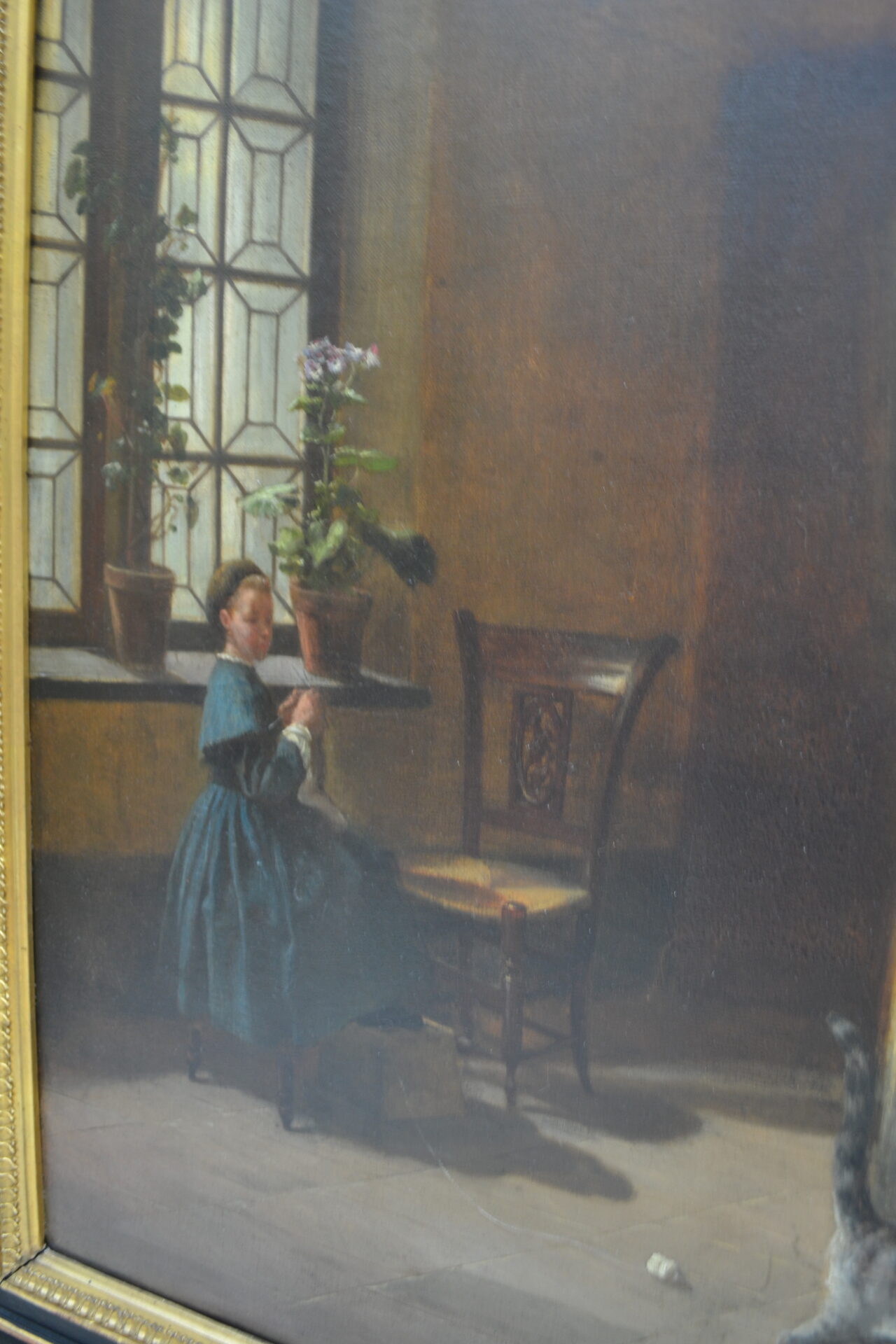
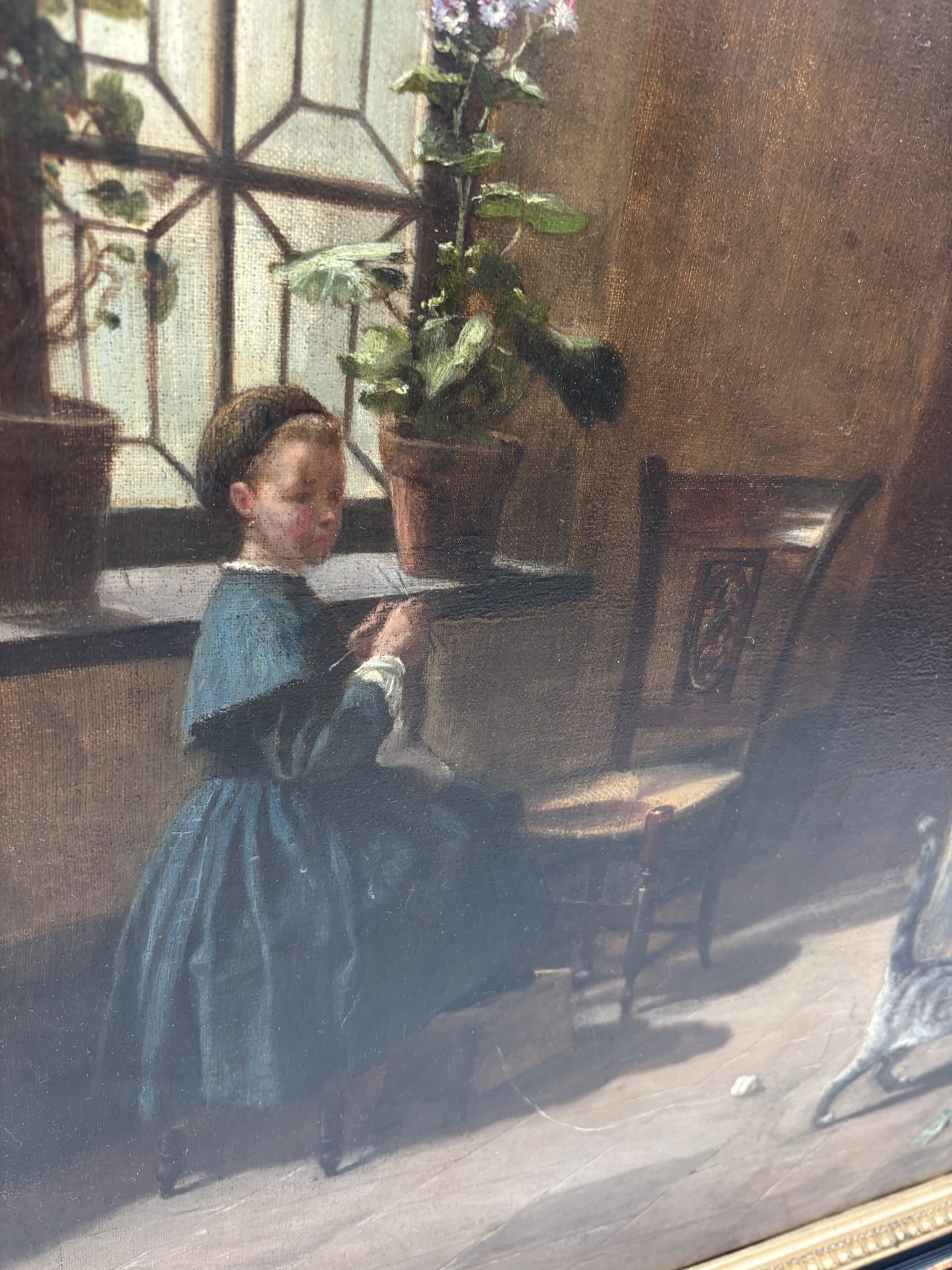
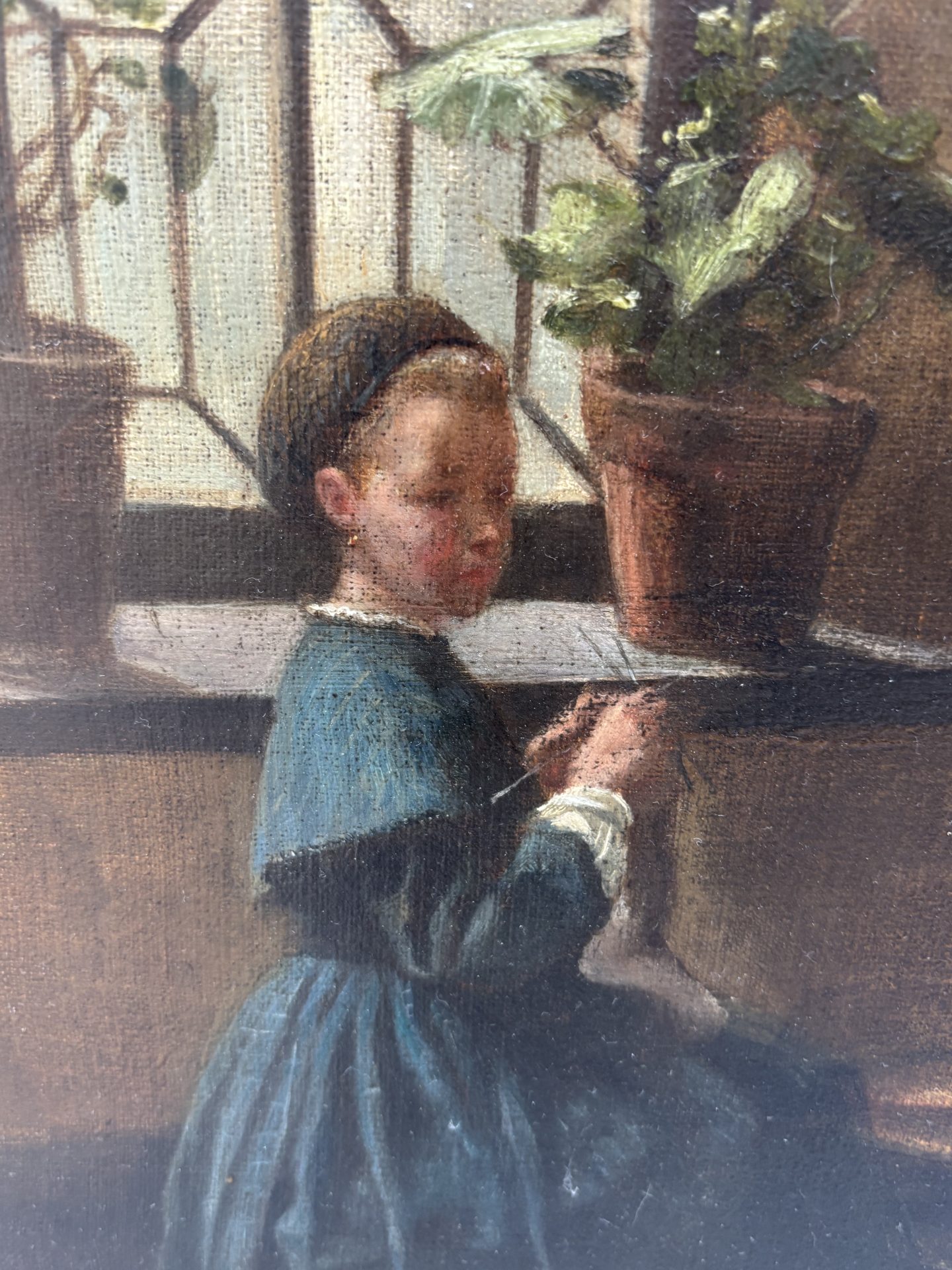
Looking across the kitchen from near a large leaded glass window bathed in sunlight is a young girl dressed in a blue dress and seated on a stool. An empty chair near her suggests that she is waiting to have tea with what could be her mother preparing it. The painting is presented in a period ebonized wood frame with gilt trim, and is signed and dated Emile Faivre Metz 1864 at the bottom right hand corner of the canvas
In the classic art world, this type of work is known as a genre painting and was introduced and made popular in the 17 Century in the Netherlands. Dutch genre painters as they were known, of which Johannes Vermeer is perhaps the best known, became the first to depict scenes of everyday life, both high and low, defining the subject and creating images such as this work with a housewife quietly absorbed in work, to a guardroom of gaming soldiers plus weddings and village fairs, markets, domestic settings, interiors, parties, inn scenes, and so on.
From the Netherlands the style spread to other European countries including France Italy and England and remained fairly popular in the art scene until the late 19 Century. This painting which is presented in a period ebonized wood frame with gilt trim, is signed Emile Faivre and dated 1864 at the bottom right hand corner of the canvas
Paul Émile Faivre was born in Metz Lorraine France in 1821 and died in his home town 1868. He was not very prolific but painted mostly still lifes featuring a combination of flowers, fruits and game. He exhibited in the Paris salons on and off for 10 years between 1855 and 1866 and was awarded an Honorable Mention at the Paris Universal Exhibition in 1855. He also exhibited regularly in the Salon of Metz his home town where he received a First Class Medal in 1861.
Dimensions of Canvas ” 46.5″W x 33″H