
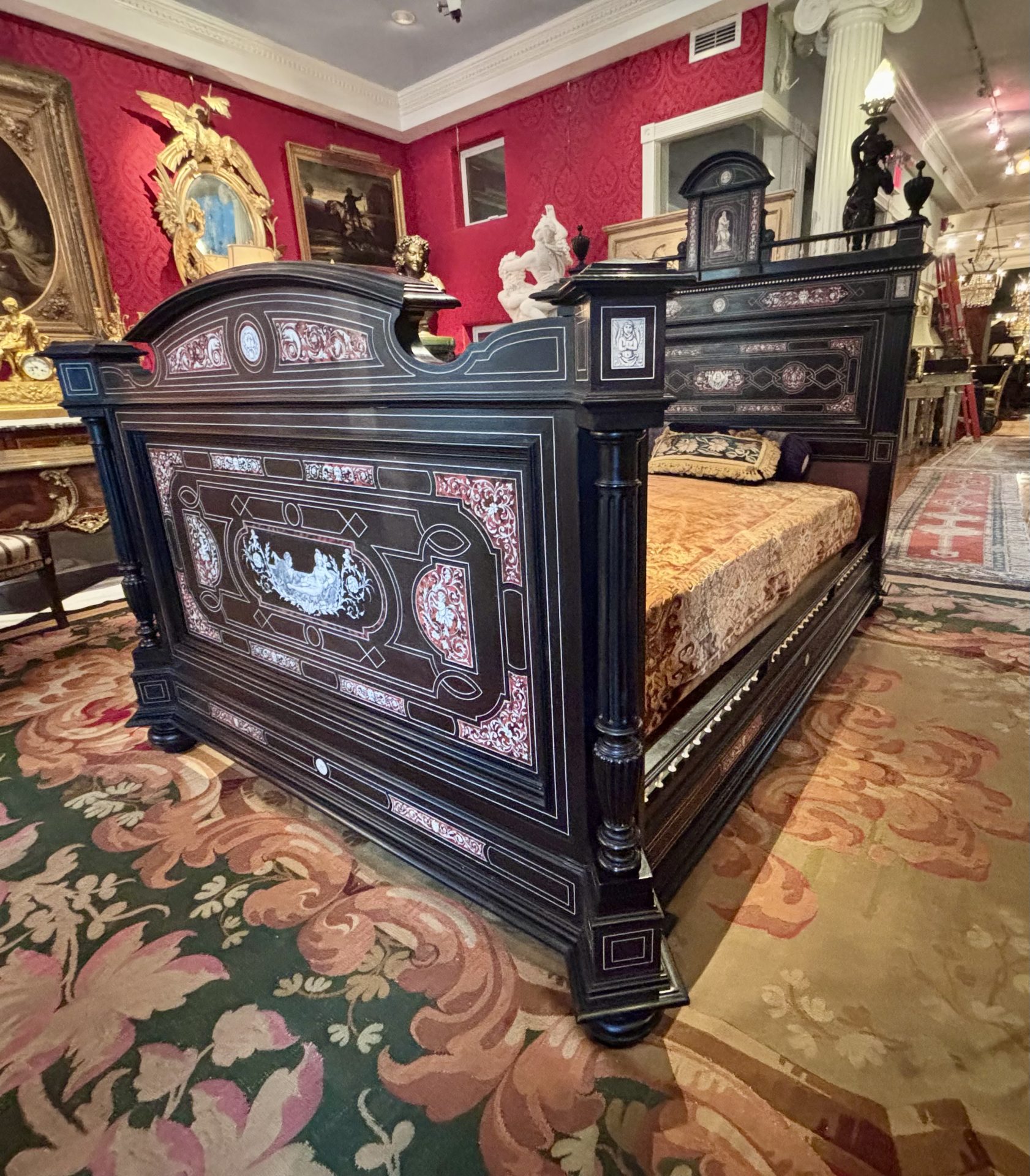
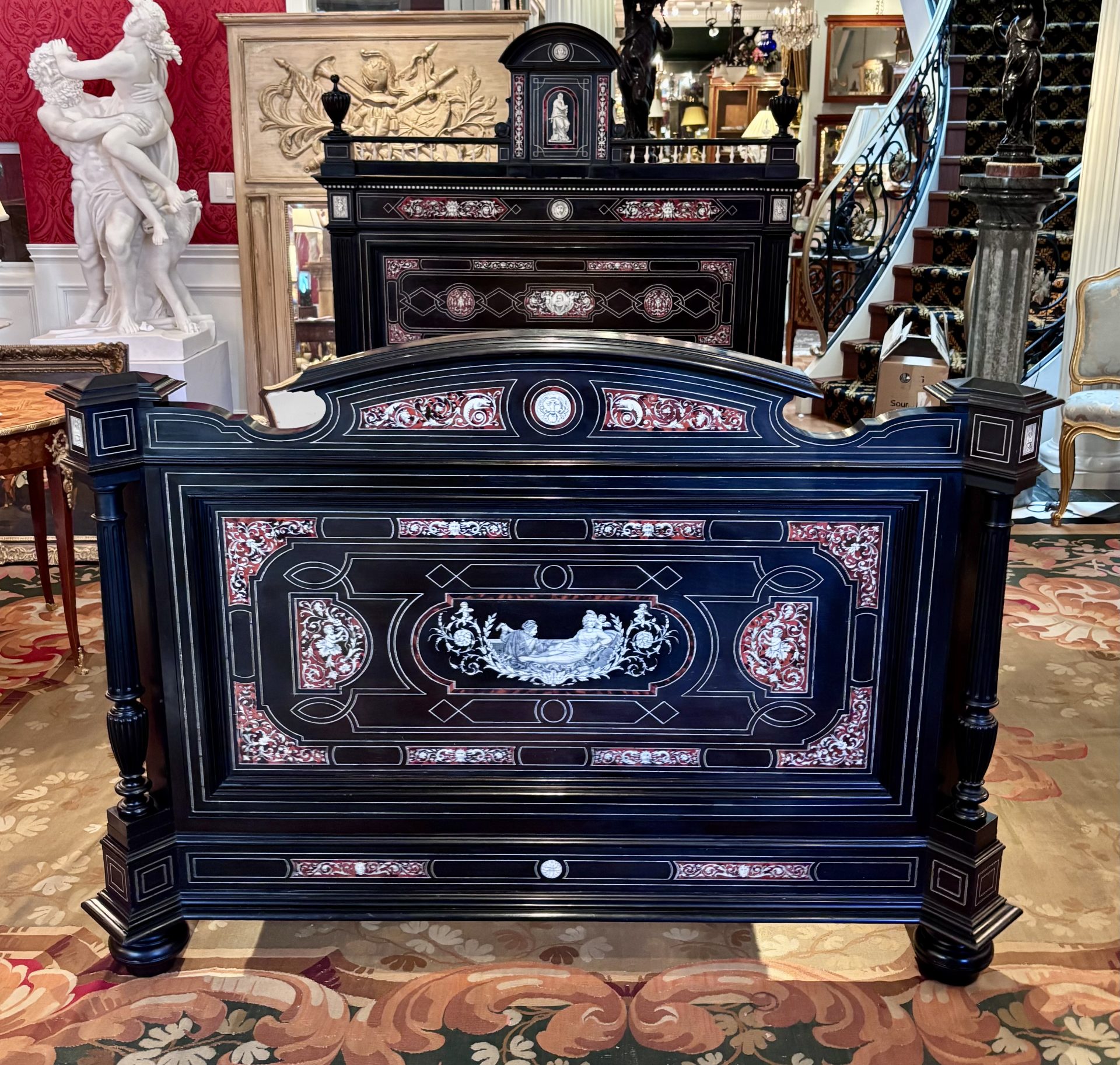
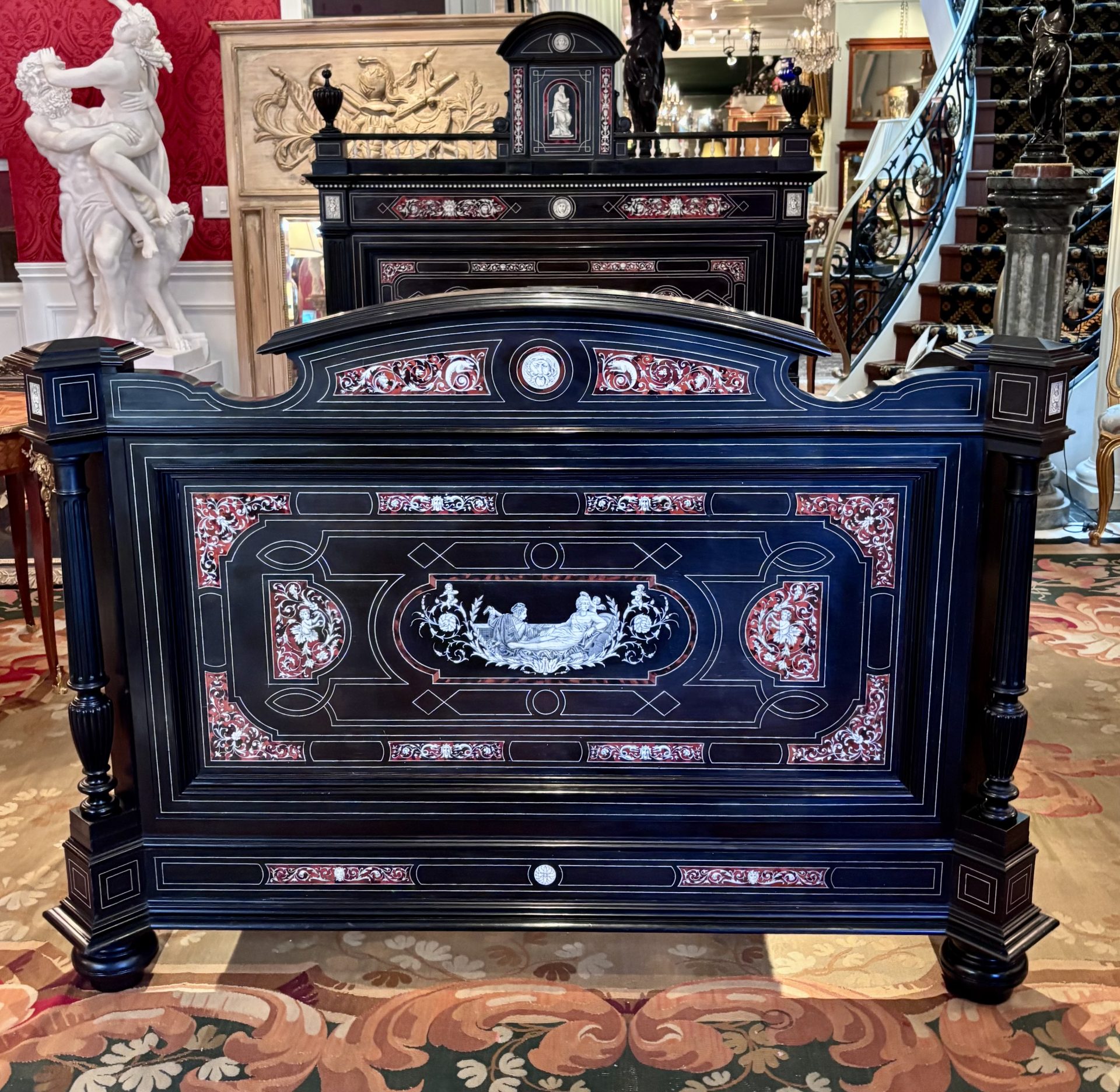
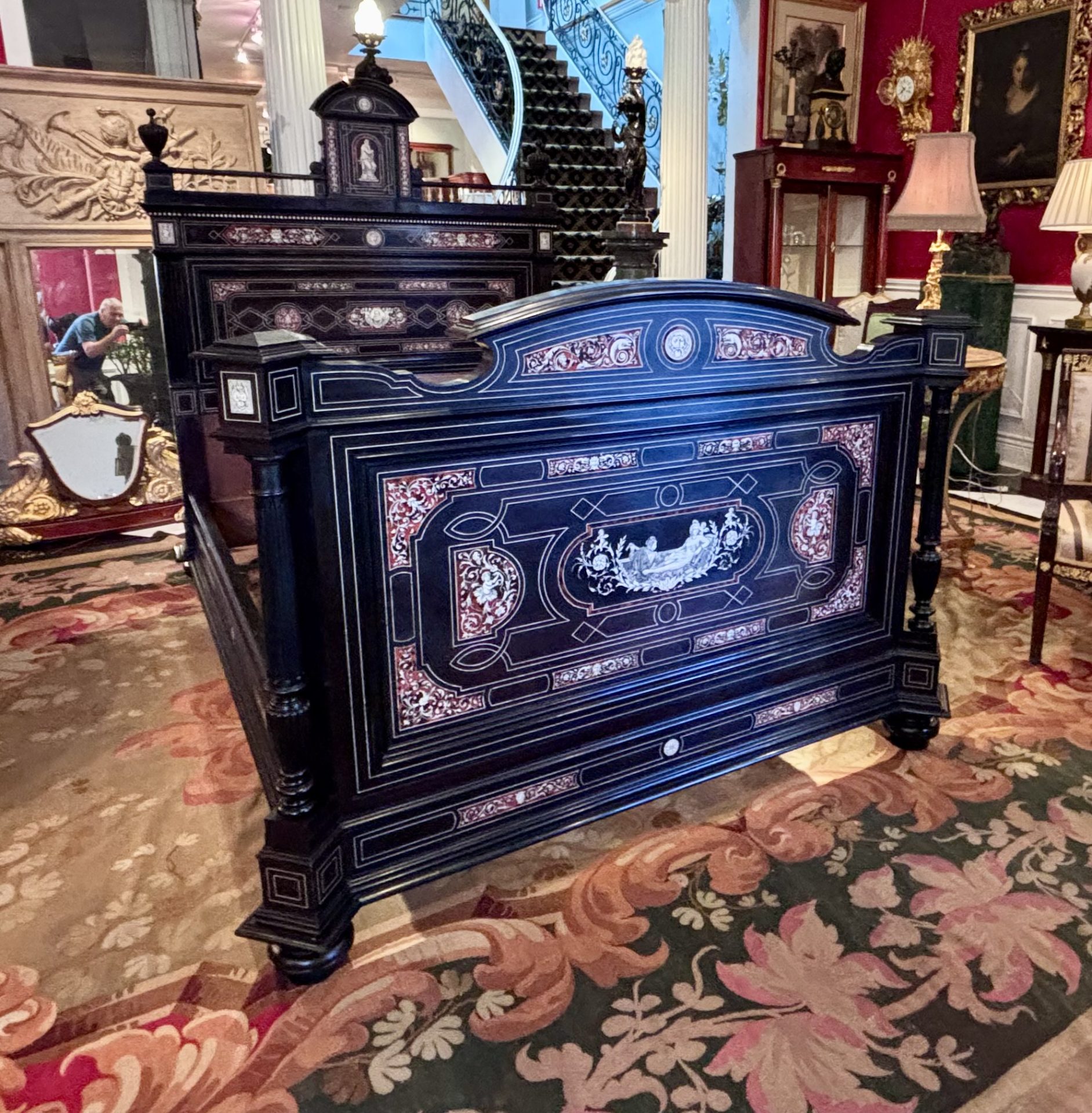
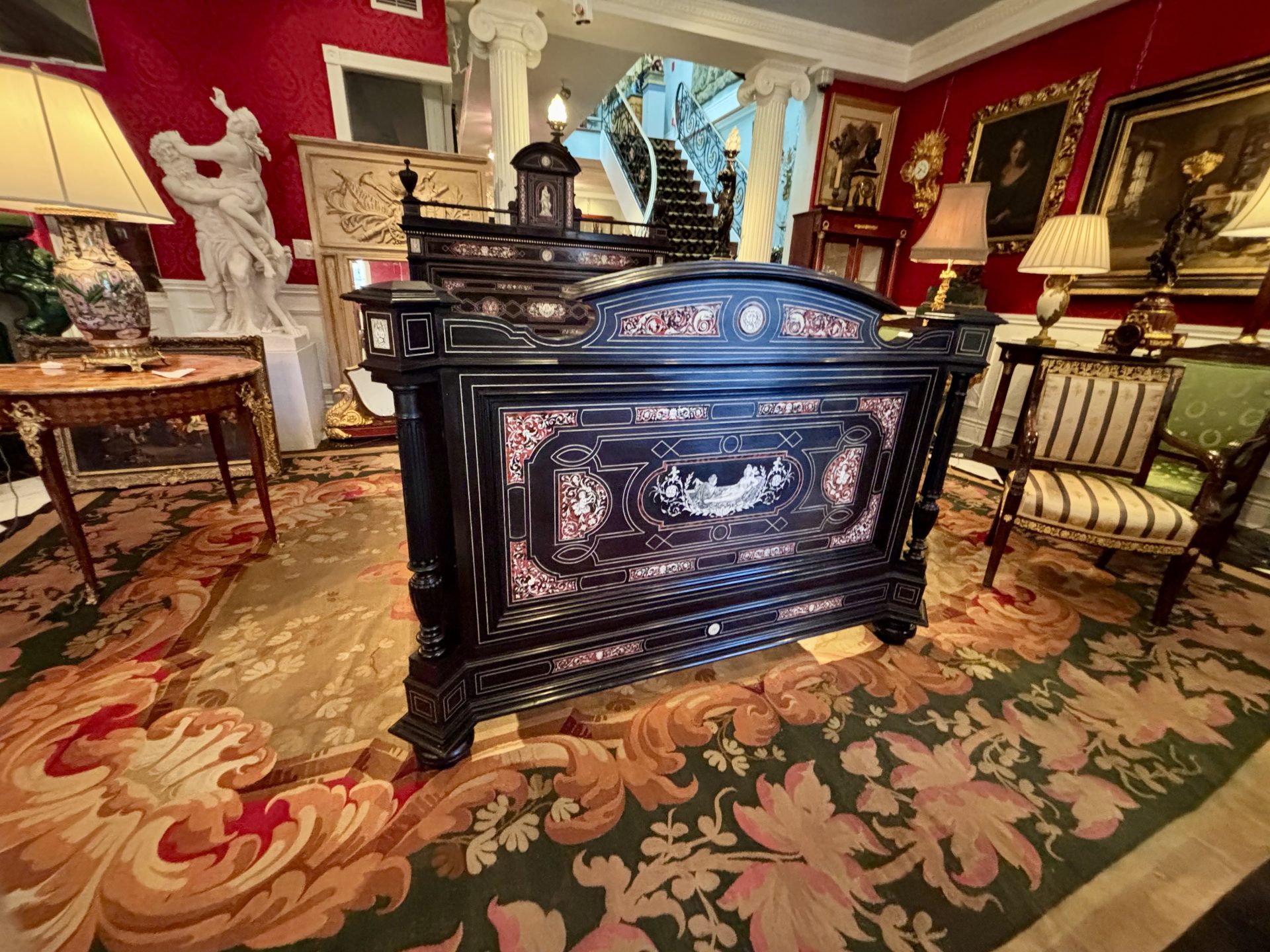
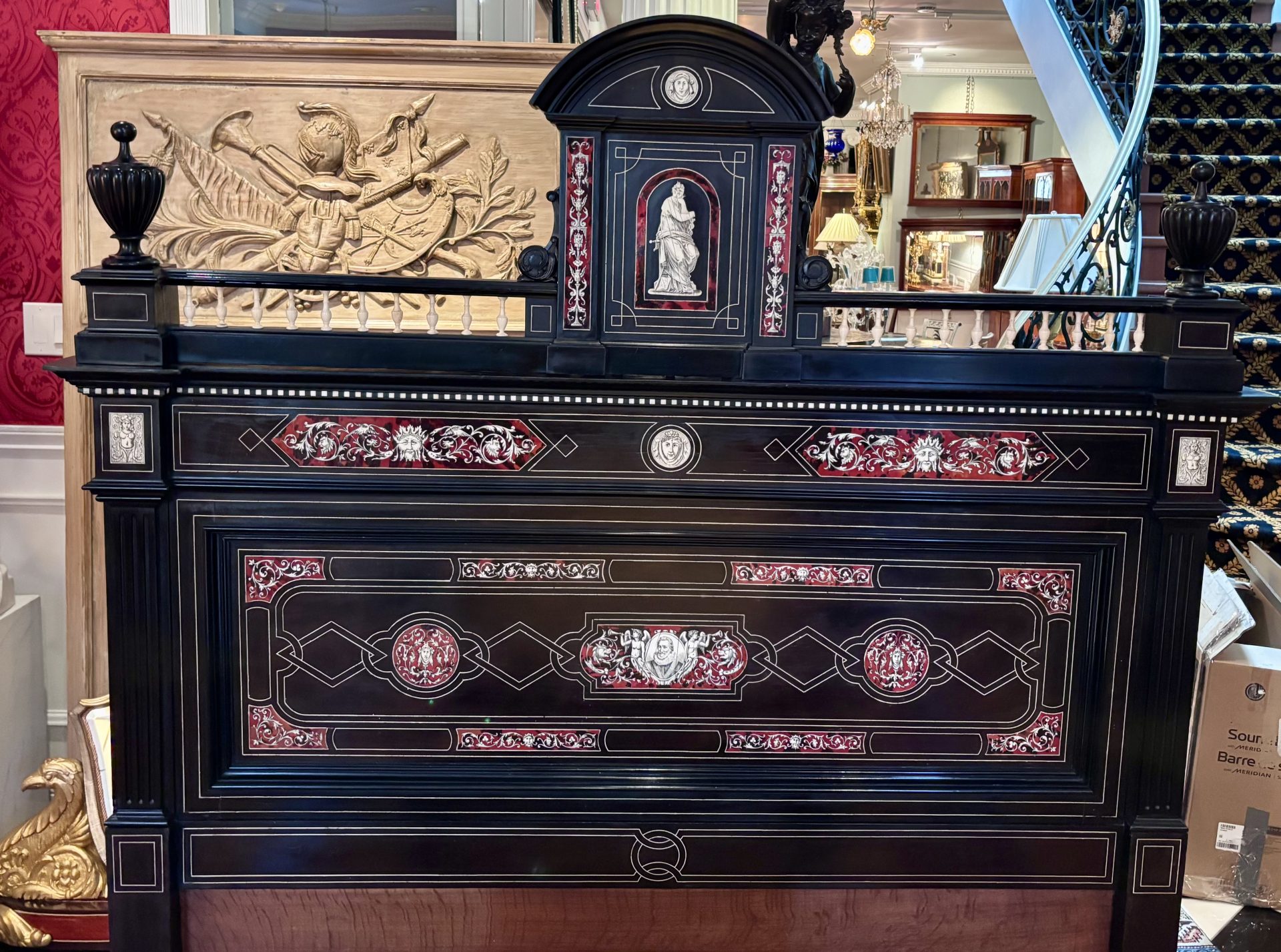
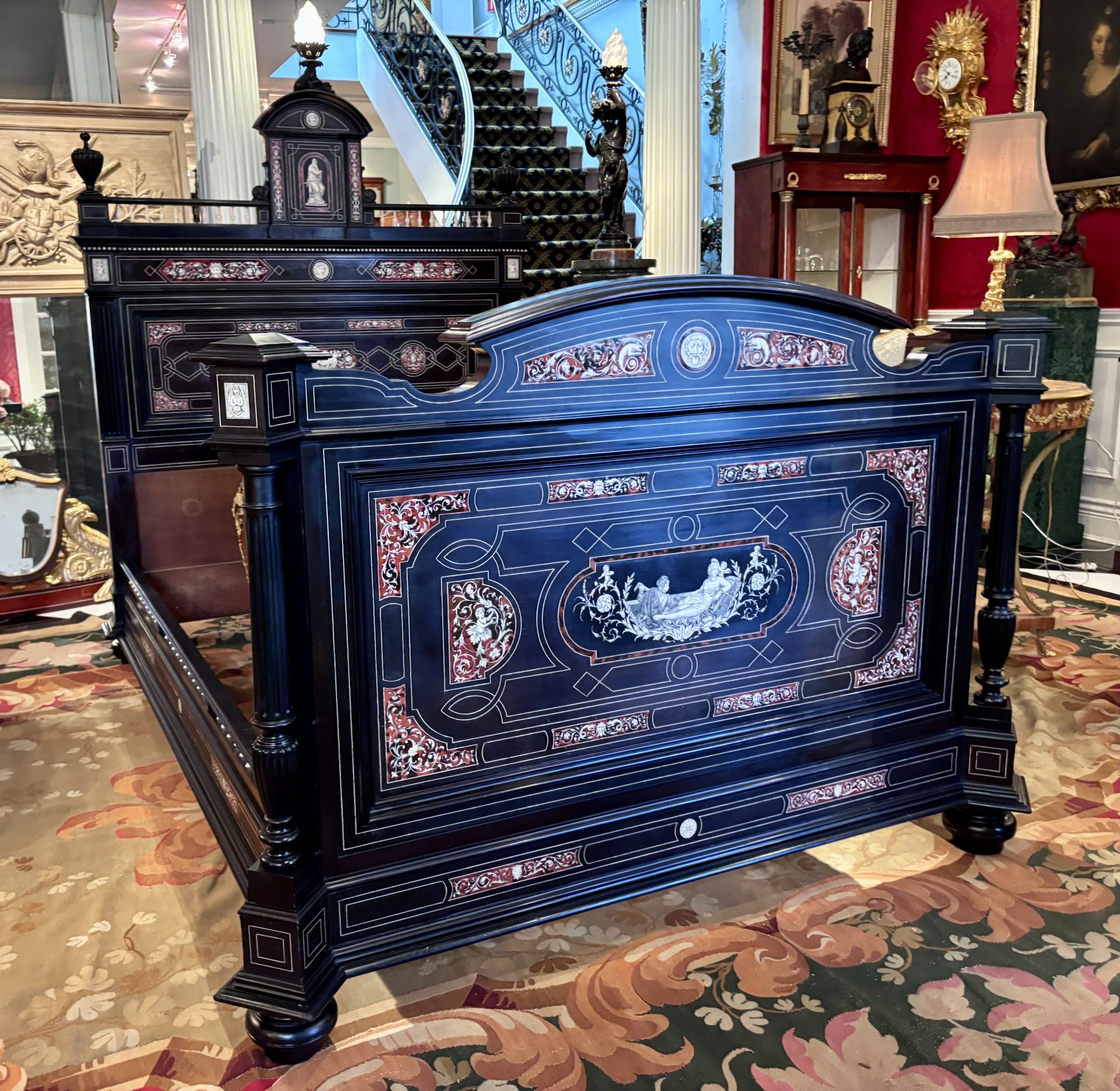
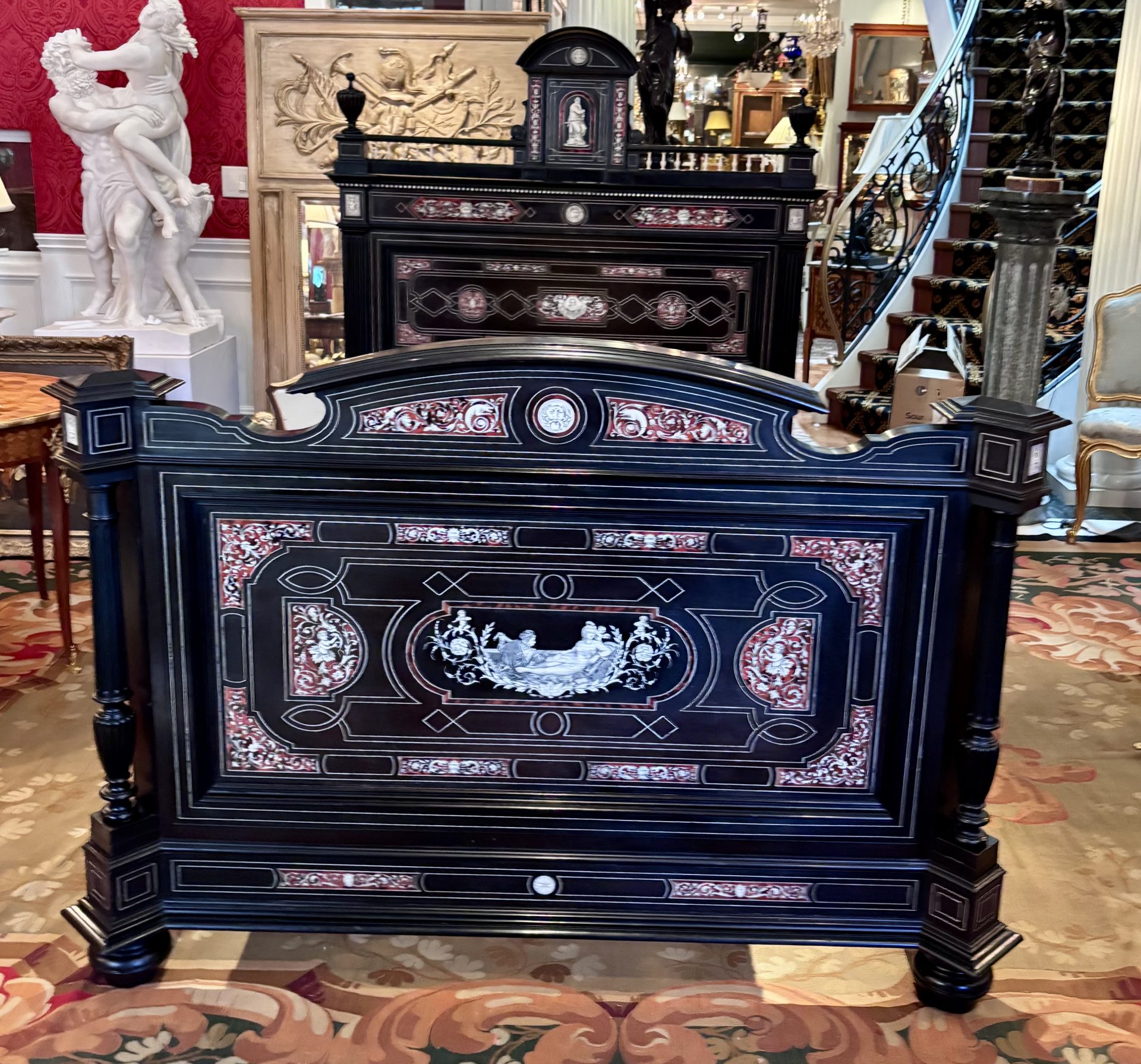
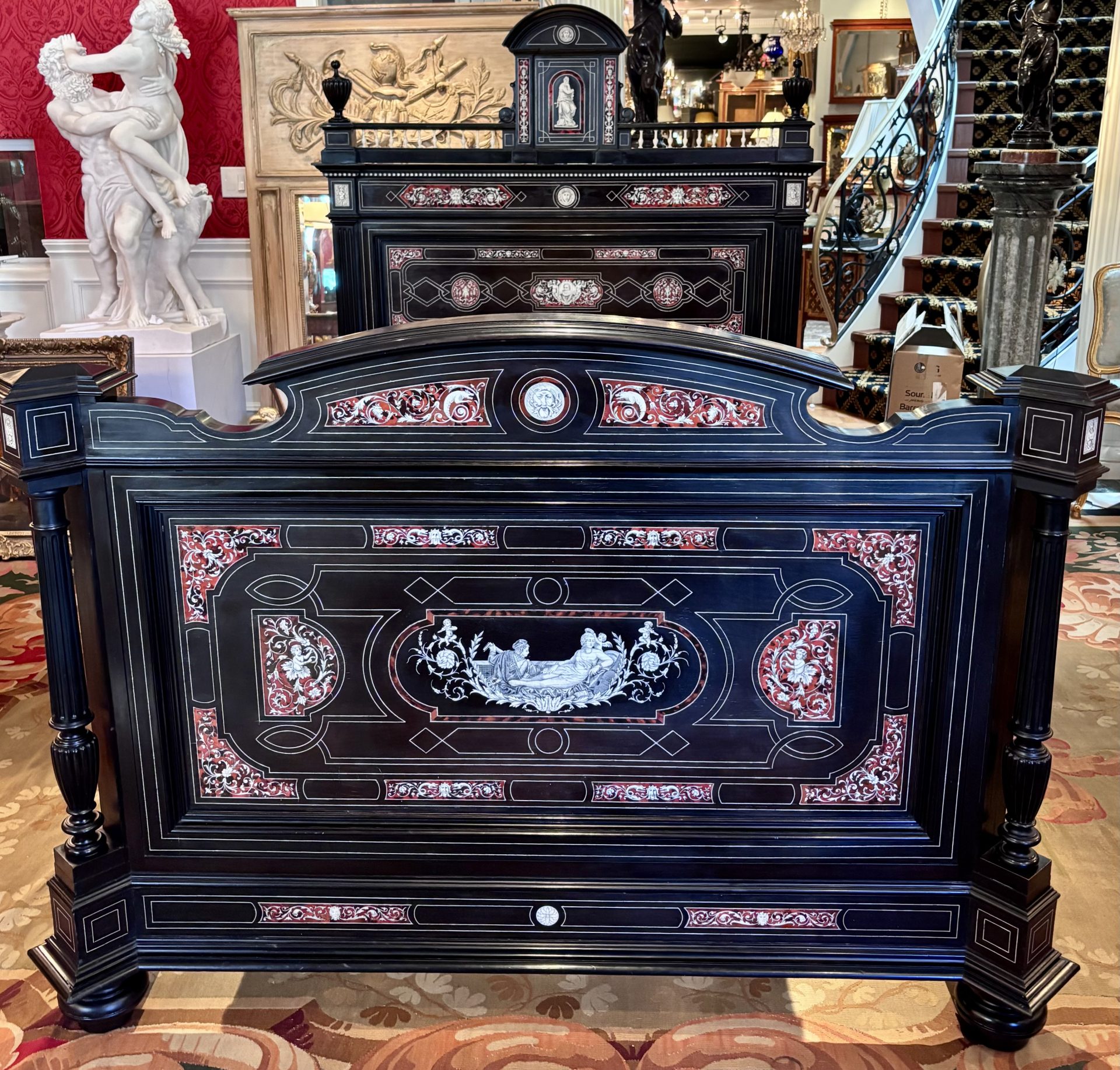
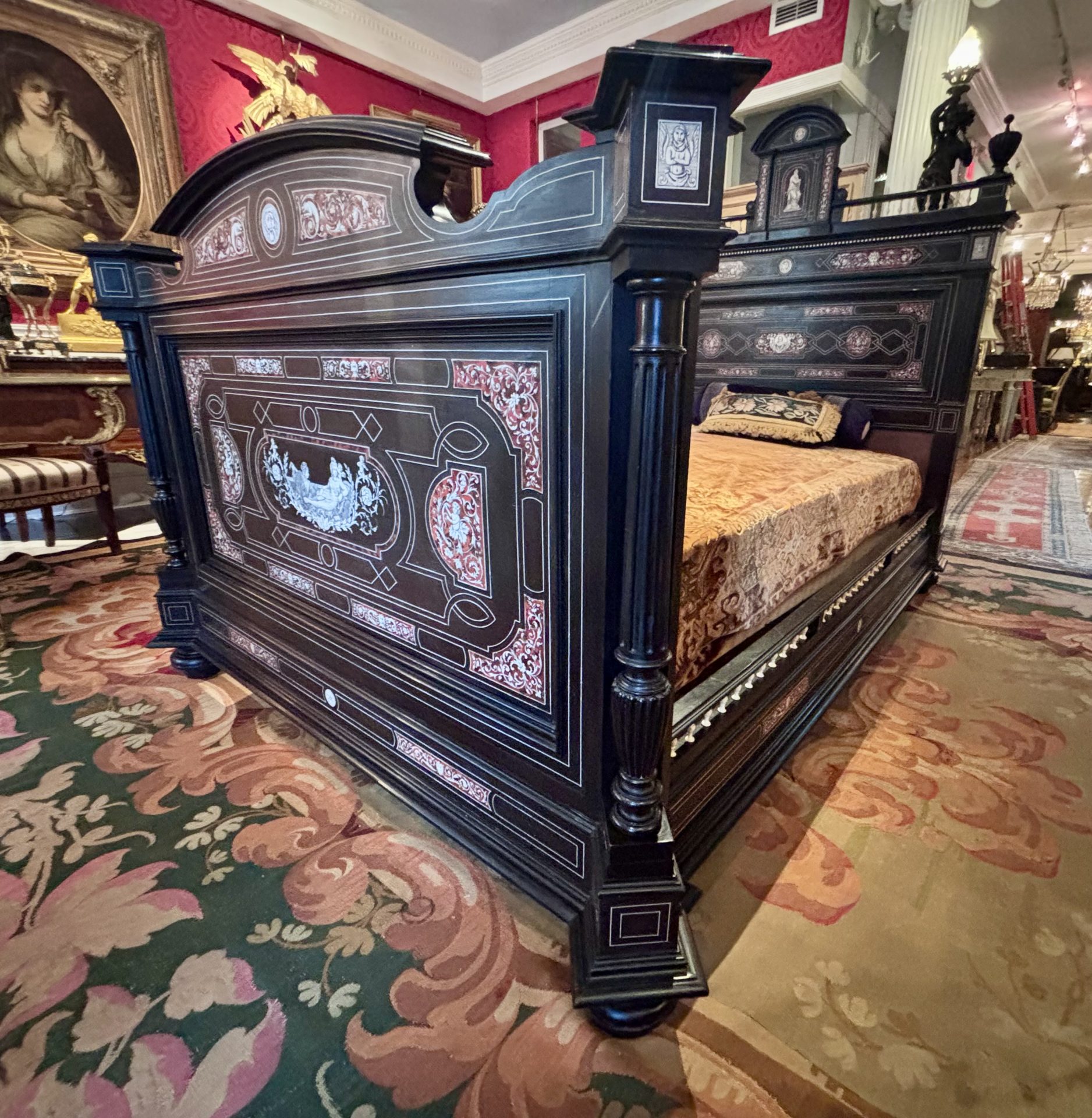
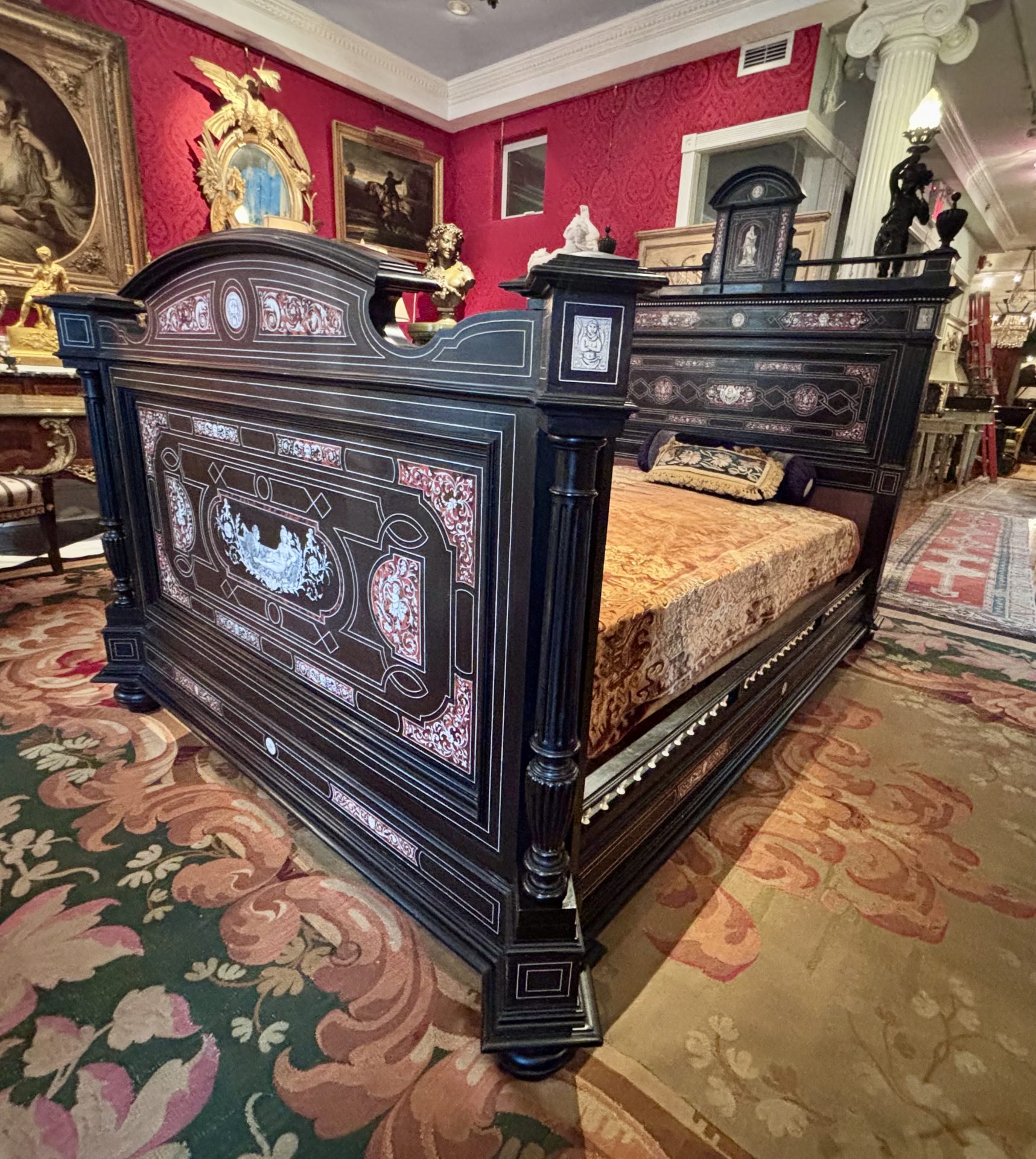
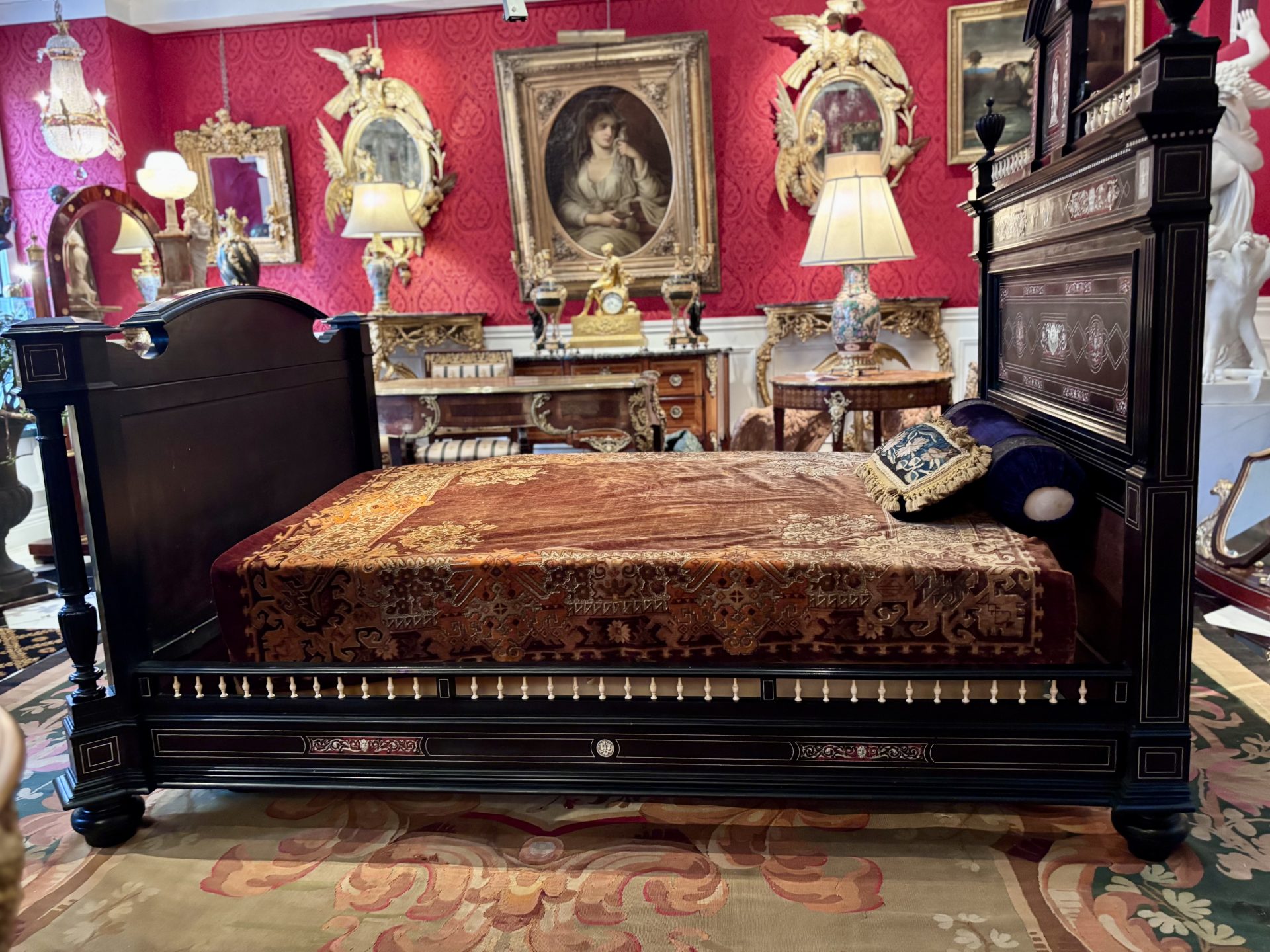
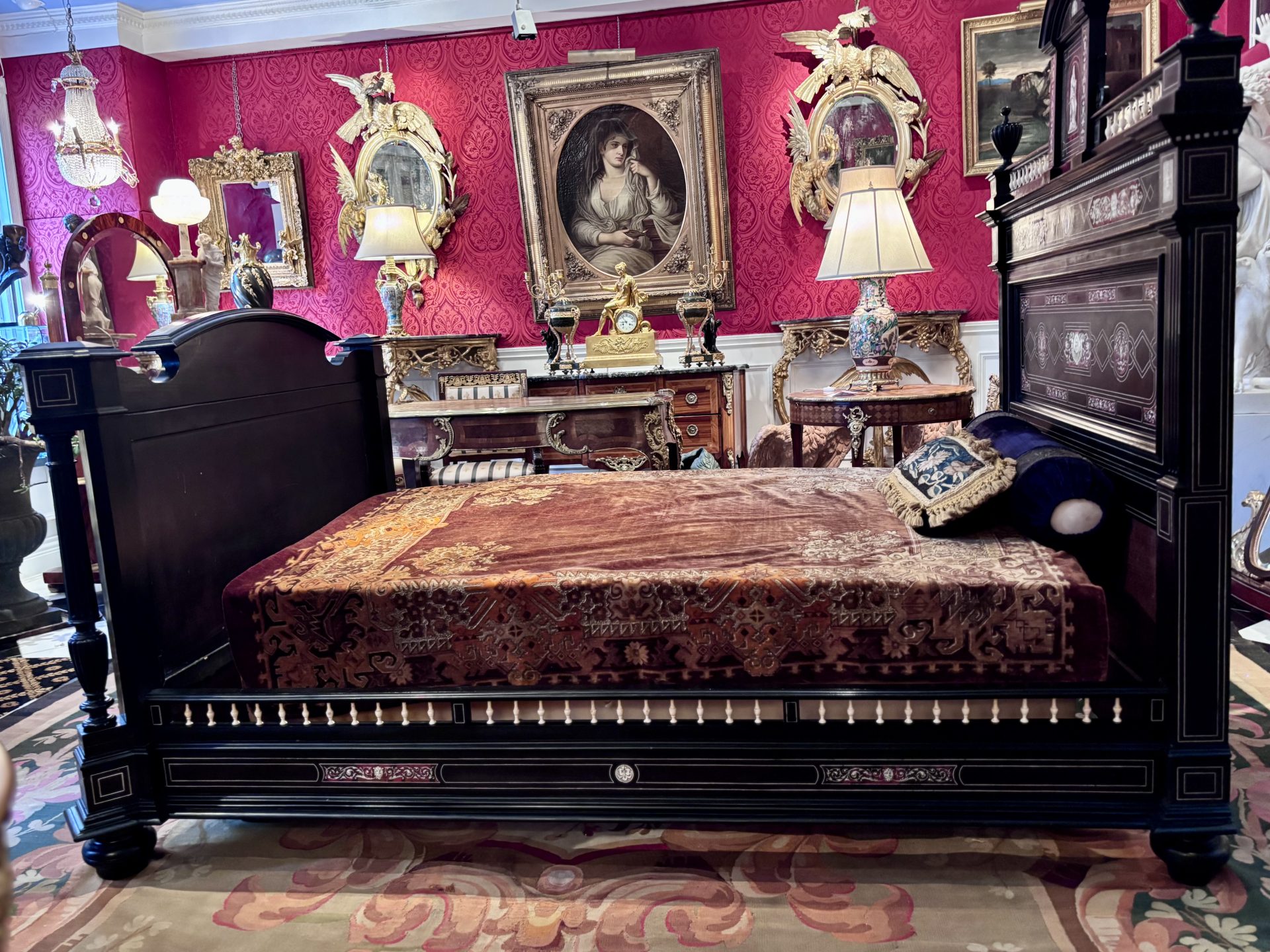
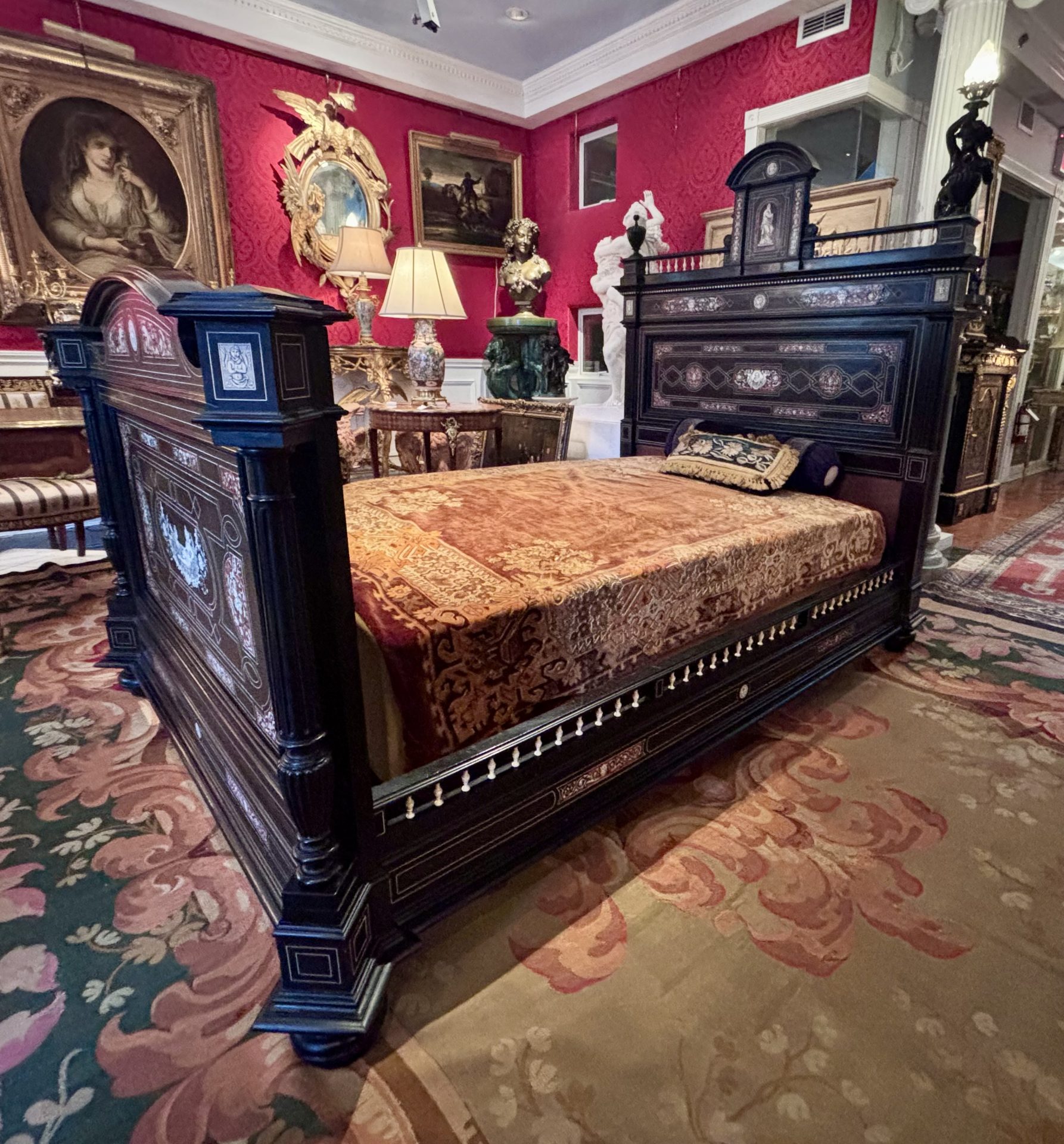
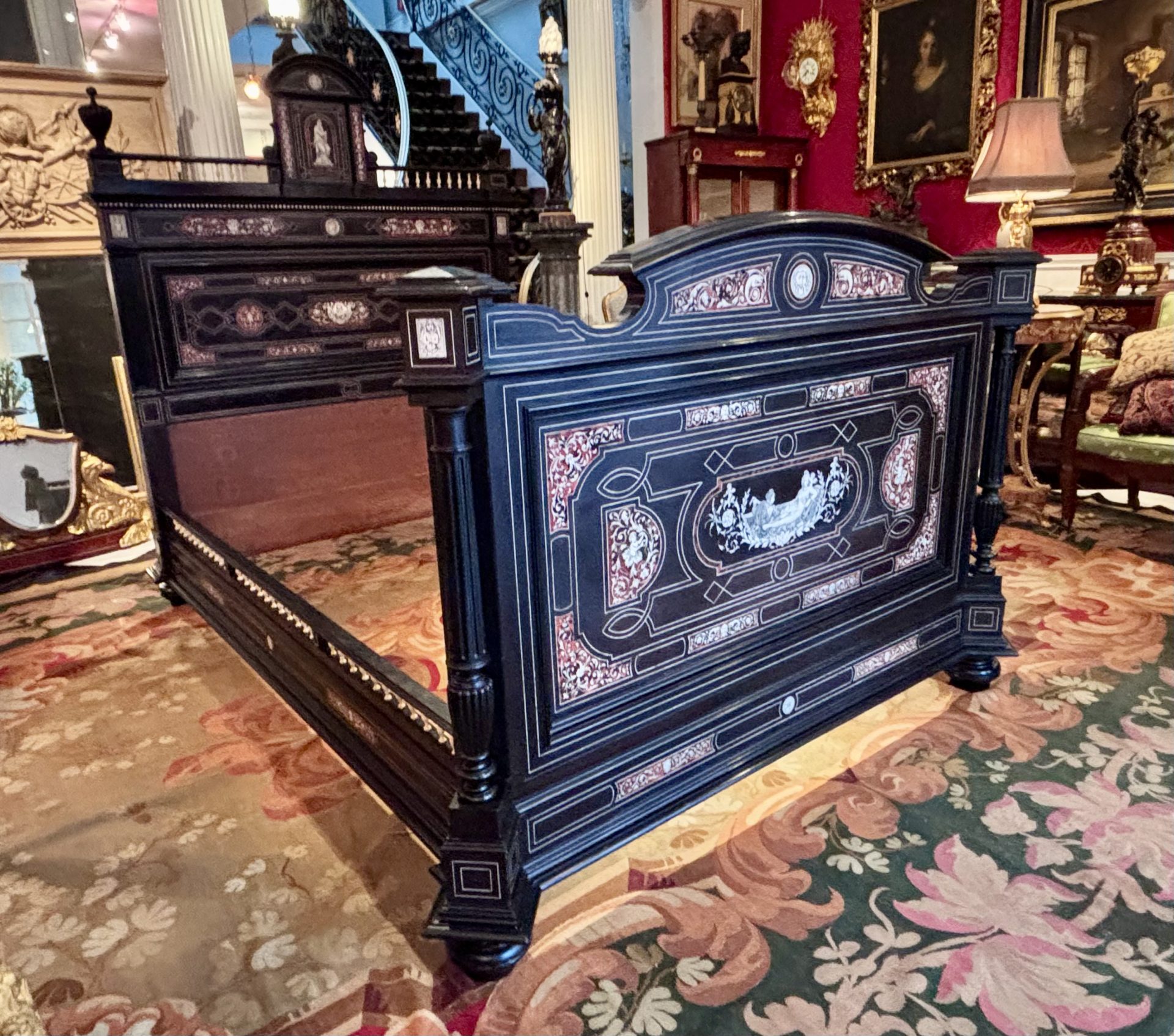
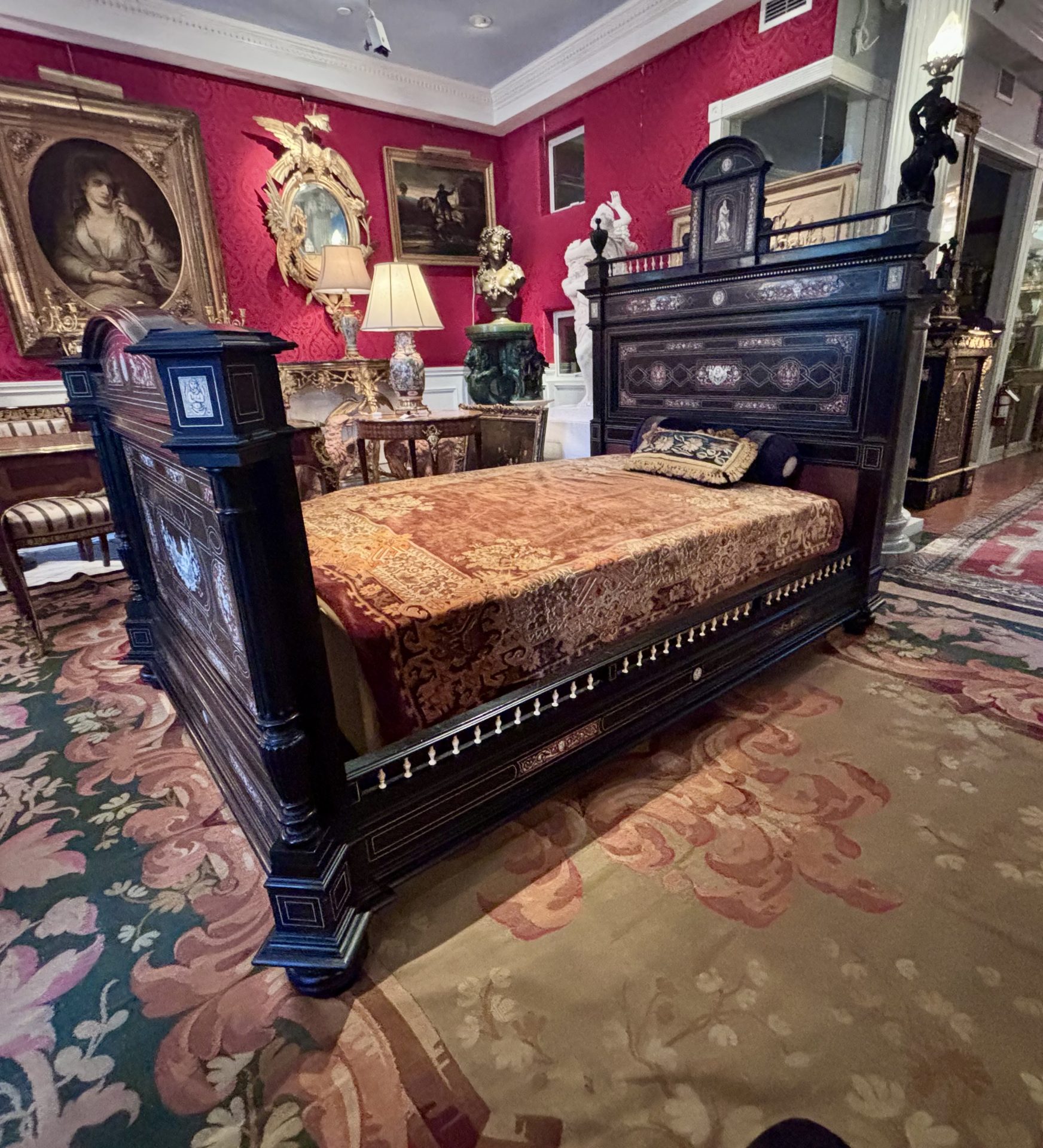

A 19 Century Renaissance Revival Ebony Veneered and Inlaid Bed After G.B.Gatti
$35,000.00
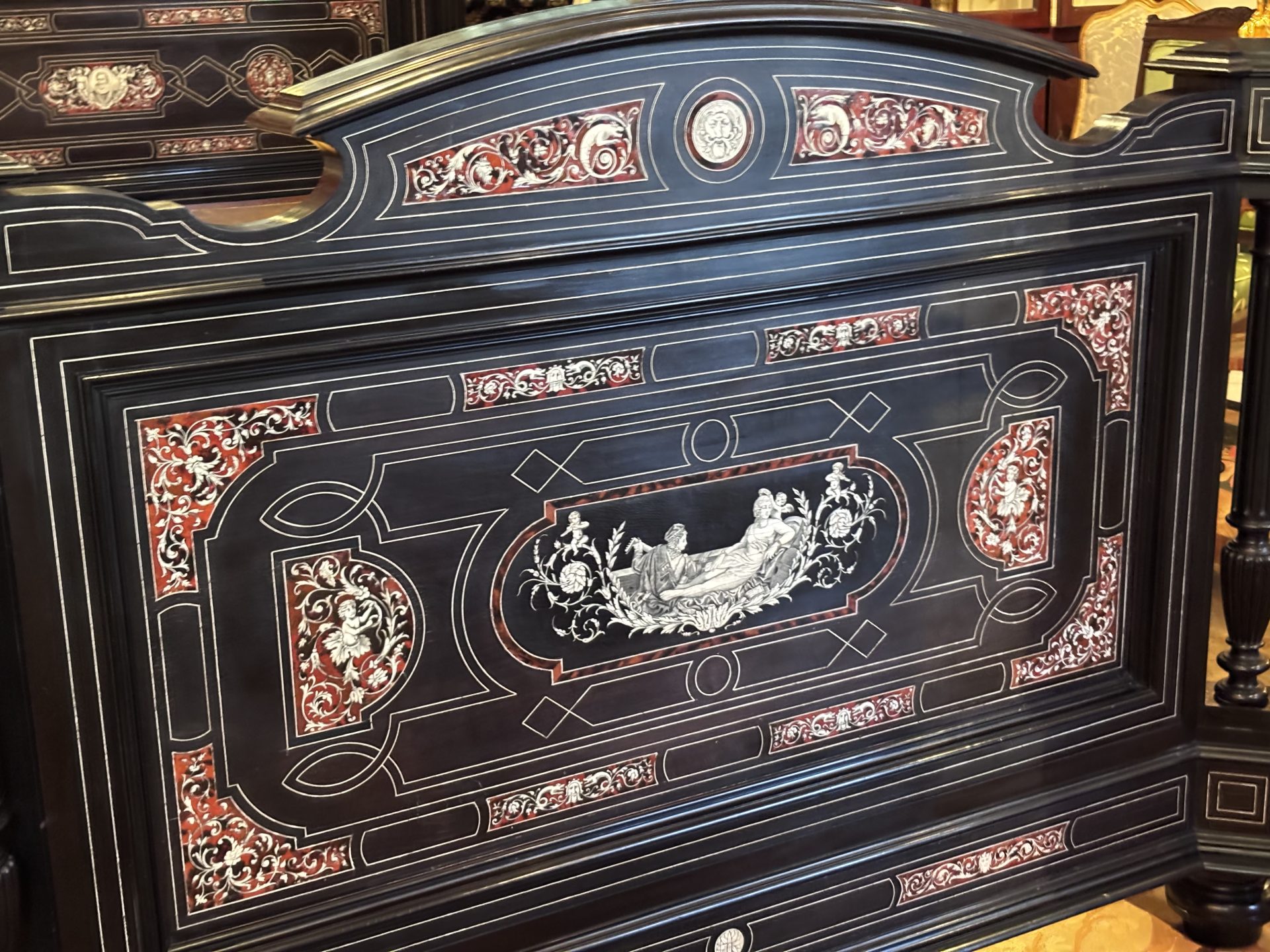
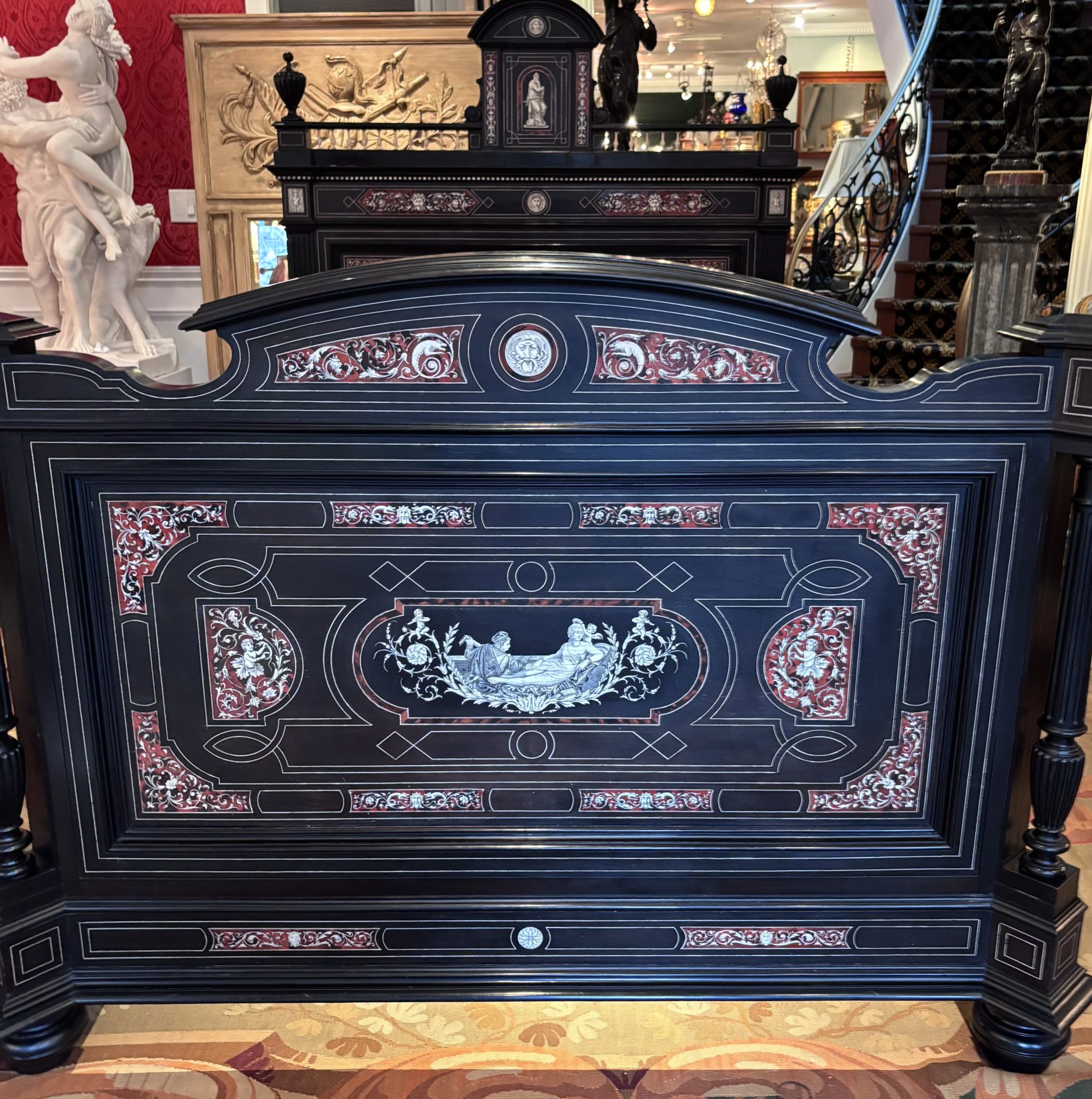
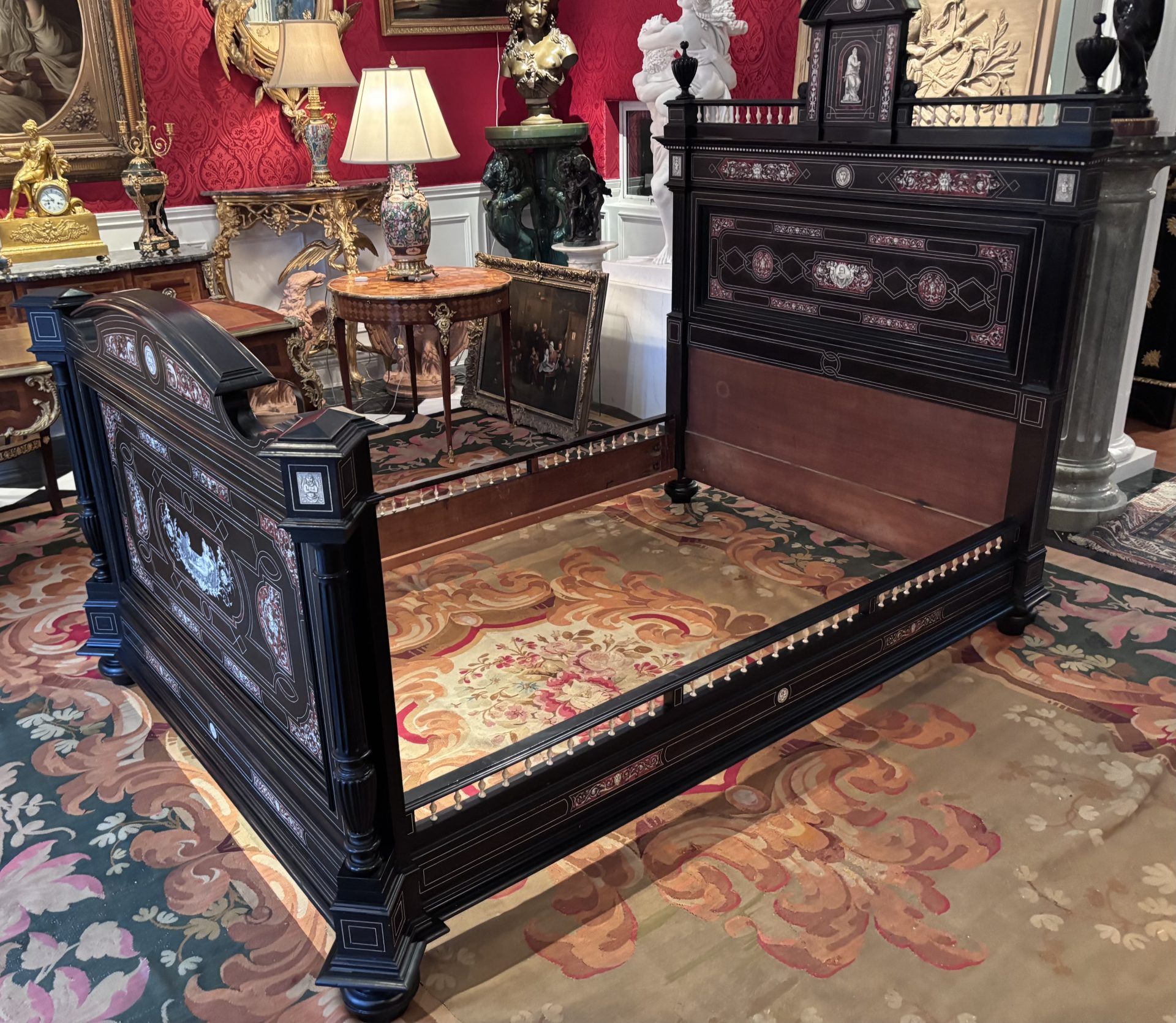
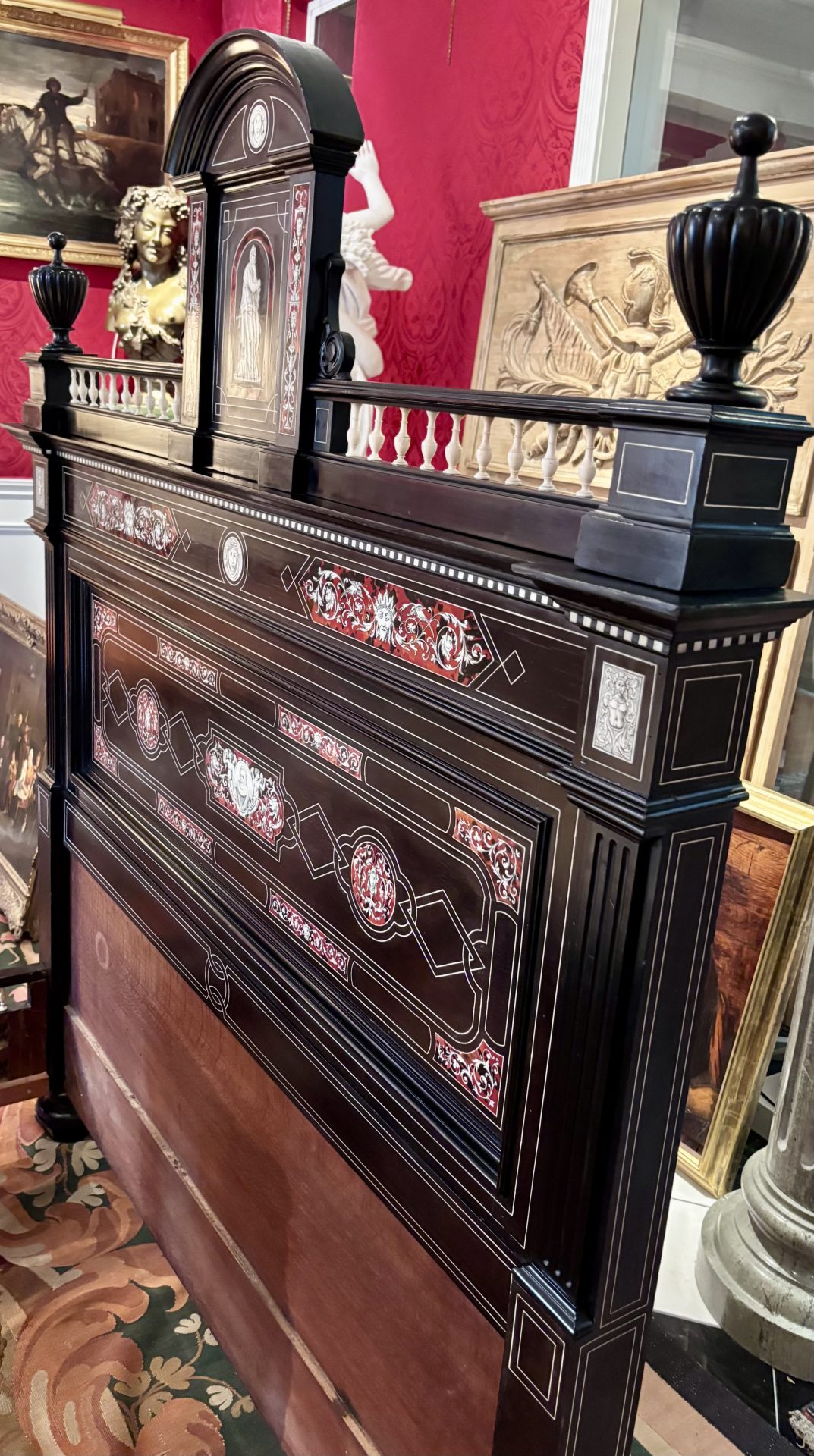
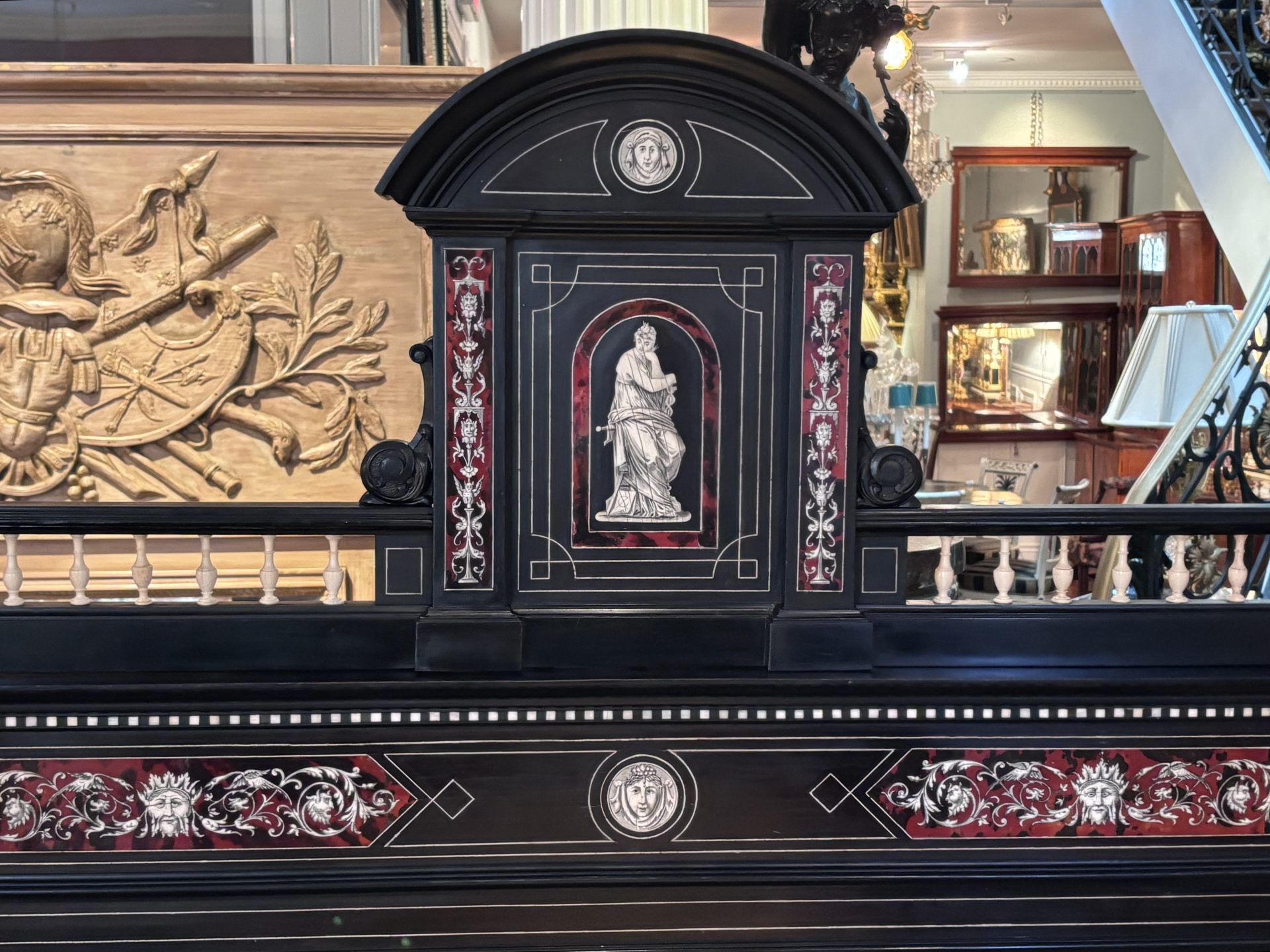
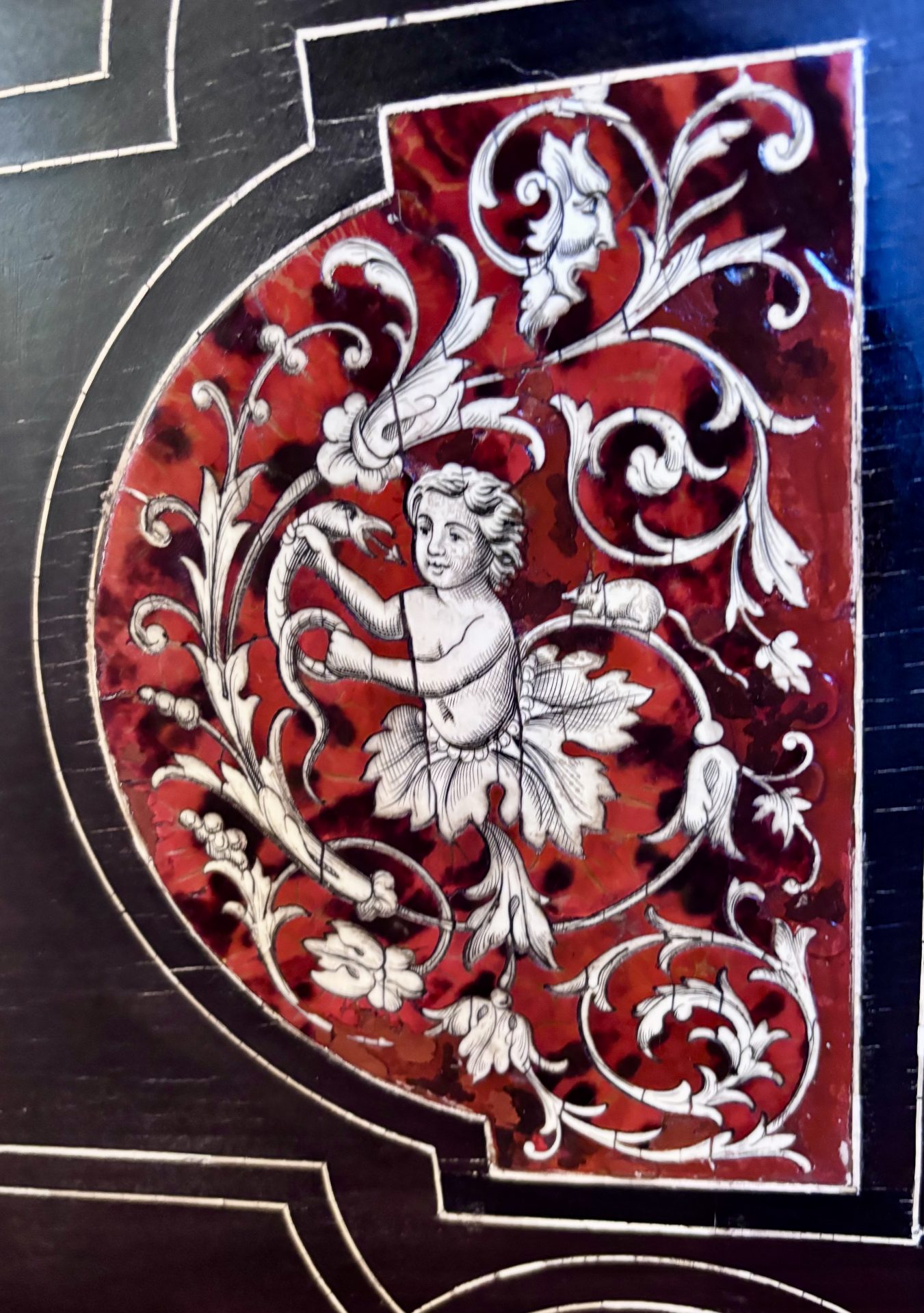
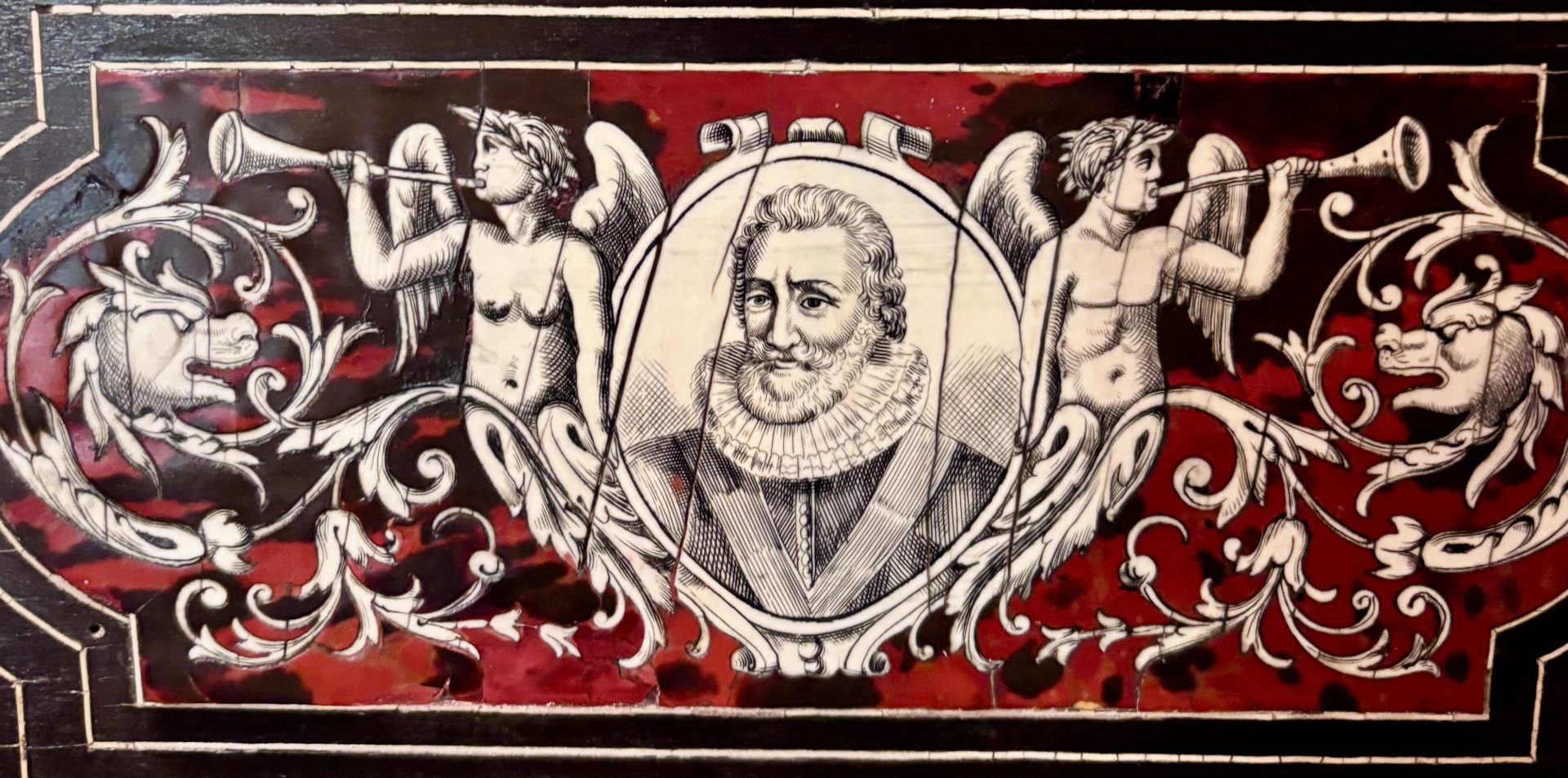
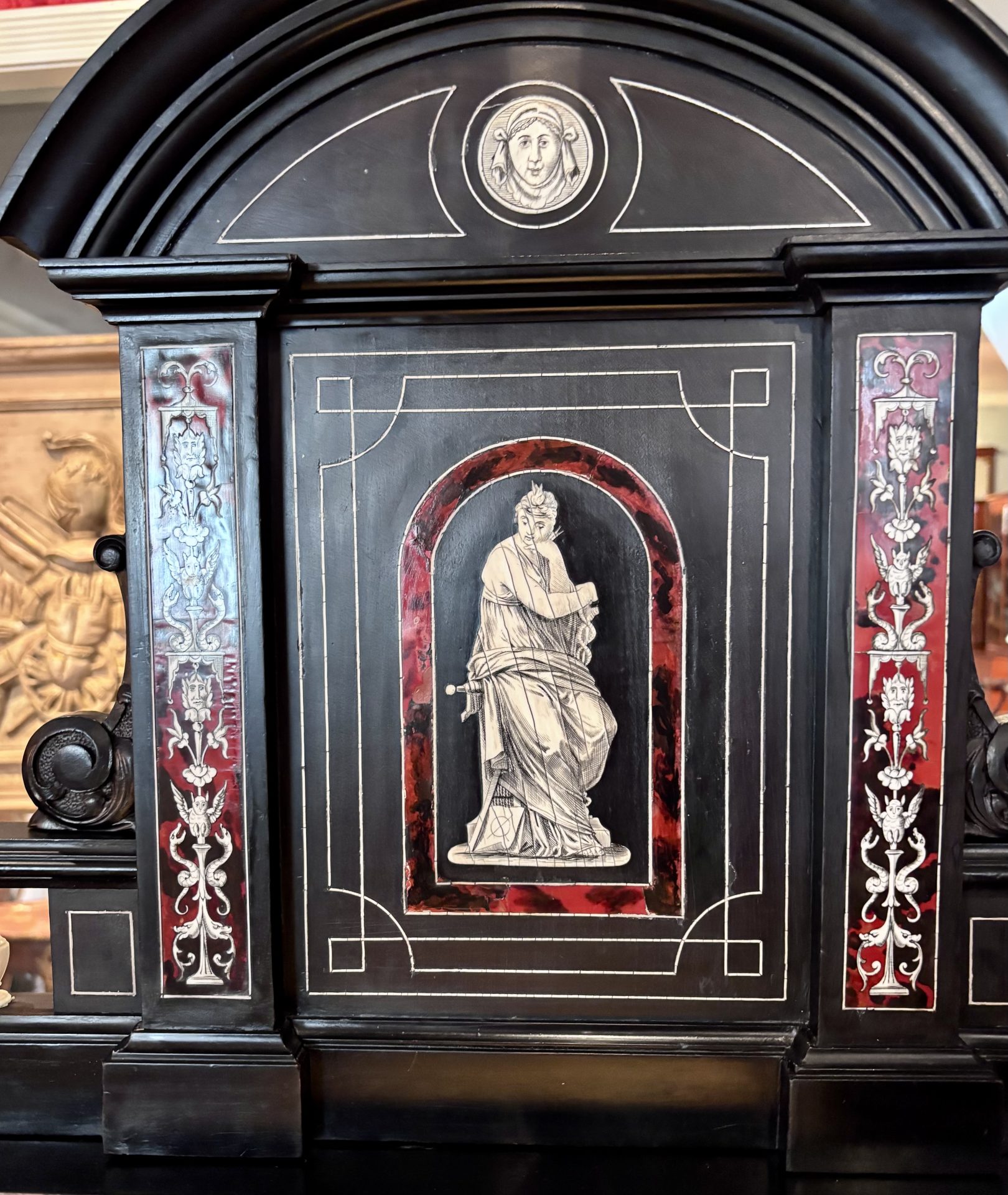
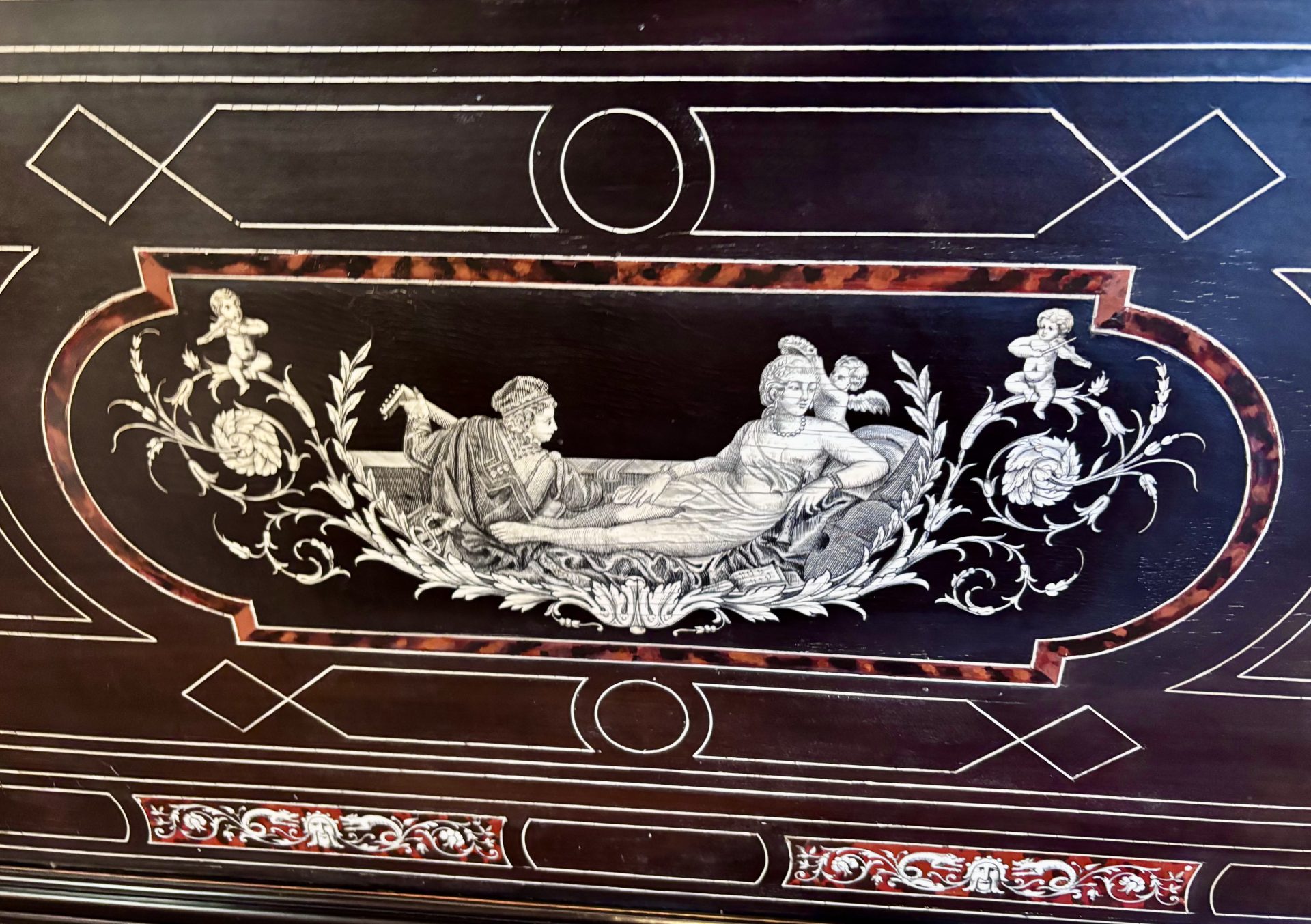
An exceptional and rare Milanese late 19 Century Renaissance Revival ebony framed bed profusely inlaid and encrusted with scrolling arabesques of entwined scrolled foliage, honeysuckle, dragons, animals, griffins, portrait medallions, dragons, masks, gargoyles, exotic birds serpents, putti, angels blowing trumpets, mythological figures and scenes and on and on, all fashioned out of bone. While there is no maker’s stamp, the quality of the workmanship and the subjects used points squarely to the workshop of Giacomo Battista Gatti.
G.B. Gatti was born in Florence where he became apprentice to the brothers Luigi and Angelo Falcini, who specialised and excelled in marquetry, before establishing a workshop of his own in Rome under the patronage of Cardinal Amant. Gatti was famed for his ebony and bone intarsia, combining rinceaux ornament of stylised vines, urns and flowers, with cameo portrait medallions and Cinquecento strapwork. .
Gatti enjoyed the support of imperial, aristocratic and ecclesiastical patrons in Europe including the Austrian Emperor and the Duke of Hamilton. He was also popular amongst American industrial collectors such as Wright E. Post and William Gilstrap. Examples of his work are found in the Victoria and Albert Museum, in the Nelson-Atkins Museum in Kansas City and the Institute of Arts in Minneapolis. Gatti was awarded numerous prizes for his work at the International Industrial and Cultural Exhibitions during the second half of the 19th century: a First Class Medal in 1855 at the Paris Exposition Universelle, a Diplome d’Honneur in Paris 1867 and a Gold Medal likewise in Paris, 1878. He also received a prize at Vienna’s Internationalische Ausstellung in 1873.
It is noted that Gatti occasionally incorporated a small cat—a play on his surname—into his intricate designs. The footboard of this bed incorporates a small mouse. So did other furniture by Gatti. Could this be another” cat and mouse” play by the master himself! Food for thought that only an expert on Gatt’s work can determine.
Dimensions: 83″L x 60″W x 70″H